
Canine Parvovirus Vaccine Side Effects in Dogs: What’s Normal and When to Worry
If you’ve recently vaccinated your puppy against the highly contagious parvo virus, you may have noticed a difference in their behavior. While your new dog may appear sleepy, have no appetite or perhaps just be acting strange, it is common for many first-time dog owners to feel anxious about how their pup is behaving after getting the vaccination.
The good news is that these reactions are usually very minor and typically last only a short time. This is a good indication that the vaccine has begun working to build your puppy’s immune system.
In this guide, you will see what is considered normal and what you should watch for in the first one or two days after vaccination. I’ll also provide you with guidelines about when to call your veterinarian’s office should you feel something is not quite right. There will be no complicated medical terminology; instead, you will find straightforward, straightforward advice for feeling secure and keeping your new puppy healthy.
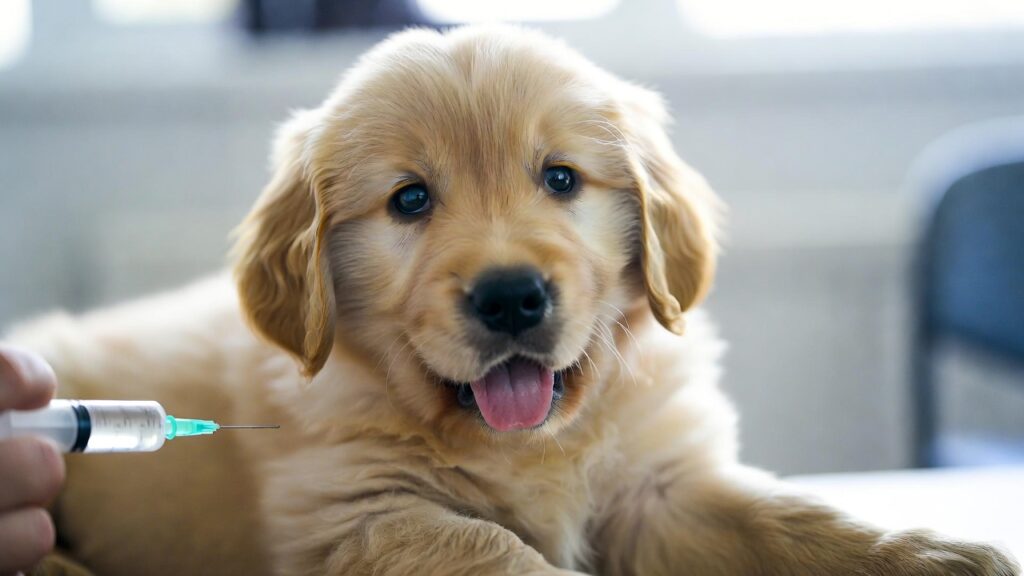
What Is the Parvo Vaccine and Why Side Effects Happen?
The parvo vaccine protects against a very bad virus that can cause stomach issues in puppies and make them sick. The vaccine itself cannot make a puppy sick. Rather, it helps train the body to recognize and attack the virus if it comes in contact with it. After being vaccinated, the immune system becomes active and starts building defenses against the virus. Puppies may appear to be slightly tired, have some tenderness in the area where they received the vaccination, or run a low-grade fever after being vaccinated.
The good news is that most puppies will be back to their normal selves within 24-48 hours after being vaccinated. As you can see, the mild signs of fatigue, tenderness, and/or low-grade fever are actually good indications that the vaccine is working correctly and that your puppy is learning how to fight the virus.
Common & Mild Side Effects (Normal)
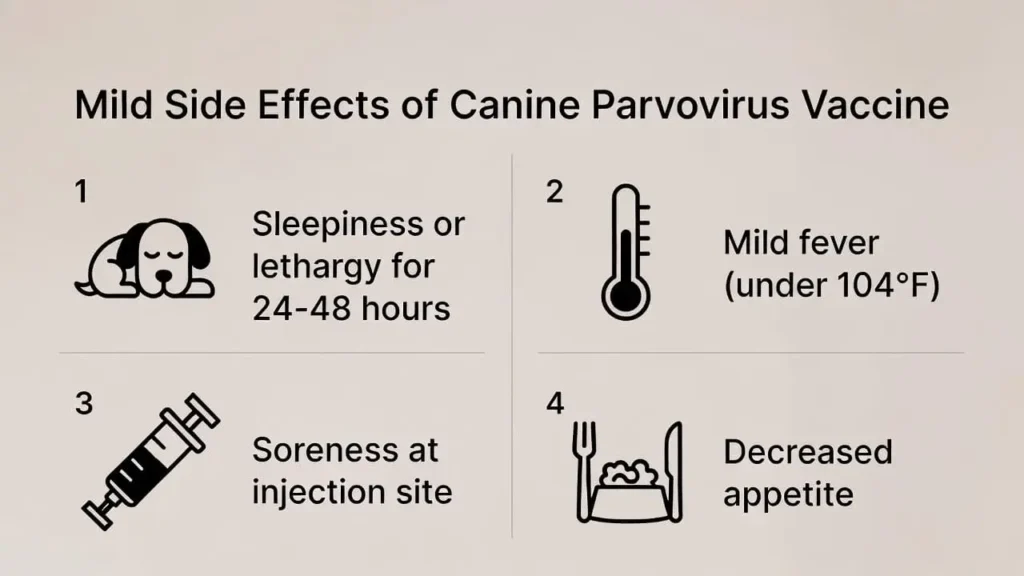
After the canine parvovirus vaccine, many dogs experience mild side effects. These reactions are normal and usually go away on their own within a day or two.
Common and mild side effects include:
- Sleepiness or low energy – your puppy may nap more than usual
- Mild fever – the body is responding to the vaccine
- Soreness or swelling at the injection site – similar to a sore arm after a human vaccine
- Low appetite for 24–48 hours – some puppies skip a meal, then return to normal
These side effects are not dangerous. They simply mean your puppy’s immune system is building protection. As long as symptoms are mild and improve within 48 hours, there is usually no reason to worry.
Less Common but Serious Side Effects (Rare)
Serious side effects from the parvo vaccine are rare, but it is also important to know the warning signs, so you can take a step immediately. These reactions usually happen within a few hours after vaccination and you should never ignore them.
Call your vet immediately if you notice:
- Persistent vomiting or severe diarrhea
- Facial swelling, especially around the eyes or muzzle
- Difficulty breathing, wheezing, or extreme weakness
- Collapse or sudden inability to stand
These symptoms may signal an allergic reaction and may need urgent medical care. While they are uncommon, acting fast can save your dog’s life. If you feel something wrong or your puppy’s condition gets worse instead being better, trust your instincts and contact a veterinarian right away.
How Long Do Parvo Vaccine Side Effects Last?
Most parvo vaccine side effects are short-lived and improve quickly.
Typical timeline:
- Mild side effects like sleepiness, soreness, or low appetite usually last 24 to 48 hours
- Most puppies start acting normal again by the second day
Puppies vs adult dogs:
- Puppies may seem more tired because their immune systems are still developing
- Adult dogs often recover faster and show fewer reactions
When to be concerned:
- Side effects last longer than 48 hours
- Symptoms get worse instead of better
- Your dog stops eating completely or seems very weak
If anything doesn’t feel right, it’s always best to call your vet for advice. A quick check up can give you peace of mind and keep your dog safe.
Is the Parvo Vaccine Safe for Puppies?
The parvo vaccine is completely safe and is recommended by veterinarians all across the United States. The American Animal Hospital Association (AAHA) and the American Veterinary Medical Association (AVMA) consider the parvo vaccine to be a “must have” for all puppies.
Each year, approximately 3 million puppies in the United States receive the parvo vaccination with very few issues. It is extremely rare for anything serious to occur as a result of the vaccination. Most mild reactions that occur will resolve within a short time period.
The bottom line is that the risk of any significant reaction to the parvo vaccine is very small; on the other hand, the risk of a puppy becoming infected with parvo without that vaccination is significantly greater and may be fatal to a young puppy.
The parvo vaccine will provide your puppy with the best opportunity to live a long and healthy life.

Can the Parvo Vaccine Cause Parvo?
Short Answer: The parvo vaccination does not cause parvovirus in dogs, though many owners fear this possibility. This is a myth that has been perpetuated over time. When you administer the parvo vaccine to a dog, it does not contain a live, pathogenic strain of parvovirus that infects and makes a dog ill; rather, it is meant to be used to “teach” the dog’s immune system how to fight off the real parvovirus if it becomes infected. After getting vaccinated against the parvovirus, a dog may experience some mild side effects, such as being tired or feeling slightly unwell for 24 hours.
However, this does not mean your dog contracted parvovirus from the vaccination; it simply indicates that the dog’s immune system is becoming “trained” to fight off the real virus. A case of parvovirus that has actually infected a dog typically exhibits signs of vomiting, bloody diarrhea, and/or severe weakness; therefore, the parvo vaccination will not cause a dog to exhibit any of these symptoms. In other words, the parvo vaccination will help protect your dog from developing a potentially fatal illness when the dog is not vaccinated.
What to Do After Your Puppy Gets the Vaccine?
After the vaccine, your puppy may feel a little tired or off for a day. This is normal. A little extra care can really help.
Let your puppy rest
Give them a calm, quiet place to sleep. Skip long walks and training for the rest of the day
Make sure fresh water is available
Keep clean water nearby and encourage small sips. Hydration helps the body recover.
Avoid rough play or bathing
No jumping, running, or wrestling for 24 hours. Gentle movement is fine, but don’t overdo it.
Keep an eye on their temperature and behavior
A mild fever or low energy is normal. If your puppy feels very hot, keeps vomiting, or acts weak, call your vet right away.
Most puppies are back to their happy, playful selves within a day or two.
When NOT to Delay the Vaccine Despite Fear?
It’s normal to feel scared when you hear about side effects. But delaying the parvo vaccine is far more dangerous.
Parvo without treatment is often deadly
Canine parvovirus has a very low survival rate if it’s not treated in time. Puppies can get sick fast, sometimes within hours, and many don’t survive without aggressive care.
Treatment is extremely expensive
Parvo treatment in the USA often costs thousands of dollars. Hospital stays, IV fluids, medications, and constant monitoring add up quickly. The vaccine costs only a small fraction of that.
The emotional toll is heavy
Watching a puppy suffer is heartbreaking. Many owners regret waiting because they wanted to “be safe.” The stress, guilt, and fear during parvo treatment are far worse than the short-term vaccine side effects.
If your puppy is healthy and your vet recommends the vaccine, delaying it usually creates a much bigger risk than getting it on time.

FAQ’s About Canine Parvovirus Vaccine Side Effects
Are parvo vaccine side effects normal in puppies?
Yes. Mild side effects like sleepiness, low appetite, or soreness at the injection site are common and usually last 24–48 hours. These are signs that your puppy’s immune system is responding to the vaccine.
Can small breeds react more to the parvo vaccine?
Small breeds can sometimes show slightly stronger reactions, like mild lethargy or reduced appetite, but serious side effects are still very rare. Always monitor your puppy and call your vet if anything seems unusual.
Can my puppy go outside after vaccination?
It’s best to avoid public areas or dog parks until your puppy has completed the full vaccine series. Short, safe walks at home are fine, but exposure to unvaccinated dogs or contaminated surfaces can be risky.
When should I call the vet after a parvo vaccine?
Contact your vet immediately if your puppy has persistent vomiting, facial swelling, difficulty breathing, collapse, or any symptoms that seem severe or unusual.
Is the parvo vaccine safe for puppies?
Yes. Millions of puppies receive the parvo vaccine safely each year in the USA. Mild side effects are normal, and serious reactions are very rare. Vaccination is much safer than risking infection with parvovirus.
Final Thoughts
Puppies need Parvo vaccine for their health. The vaccine will make your puppy behave normally (i.e., tired, lethargic), but all healthy puppies may have this side effect for one or two days after receiving the vaccine, which means the vaccines are working as intended. Adverse reactions to vaccines in puppies are extremely rare, but it’s always a good idea to watch for certain signs of possible adverse reaction to the Parvo vaccine for at least 3 days after the vaccination.
If you fail to vaccinate your puppy against Parvo, let too much time elapse before vaccinating your puppy, or your puppy receives the vaccine with a compounding factor (e.g. a sick or stressed-out puppy), he/she is more likely to get Parvo. Getting Parvo is a dire, serious and highly communicable disease to treat; it can also become financially burdensome.
It is important to maintain the vaccination schedule provided by your veterinarian, carefully observe your puppy after receiving the vaccine, and contact your veterinarian should you observe any signs of abnormal behavior in your puppy. In conclusion, you should vaccinate your puppy according to the schedule provided by your veterinarian to reduce your puppy’s chances of contracting the deadly disease of Parvovirus.
The mild side effects that may occur during the first 24 to 72 hours are nothing compared to the risk of your puppy contracting the three types of parvovirus that can infect dogs vis-a-vis the simultaneous shots. Getting your puppy vaccinated and thereby ensuring his/her continued health and happiness is the best investment you’ll make for the life of your puppy.
If you need more help you can find more details on posts given below:
- Learn the full puppy vaccine schedule and cost – Canine Parvovirus Vaccine Guide
This page gives detailed information on timing, boosters, and safety for your puppy’s vaccines. - Step-by-step puppy care for beginners – Puppy Care Tips
Covers feeding, training, and daily routines to support a healthy immune system. - Prevent crate anxiety after vaccination – Puppy Crate Training Tips
Helps manage puppy stress, especially when mild post-vaccine lethargy occurs. - Keep your puppy’s teeth healthy at home – Dog Dental Care
Maintaining dental hygiene supports overall health and reduces risk of infections.
📅 Last Updated:
✅ Reviewed & Verified by: M. Nouman, Pet Care Researcher
📖 This article on Canine Parvovirus Vaccine Side Effects: Normal vs Dangerous explains everything puppy owners need to know about side effects — which are normal, which are serious, and when to call the vet. Read the full guide here.

About the Author 📚
M. Nouman is a dedicated pet insurance researcher with over 7 years of experience helping U.S. pet parents find affordable, trusted coverage. Working closely with veterinary professionals, Nouman ensures that every article on PetCoverUSA is accurate, reliable, and backed by real data.