Some links may be affiliate links. We may earn a small commission at no extra cost to you.
Information may change over time and should be verified with official providers. We are not responsible for any decisions made based on this content.
Does Pet Insurance Cover Dog Dental Wash? Here’s the Part Nobody’s Telling You
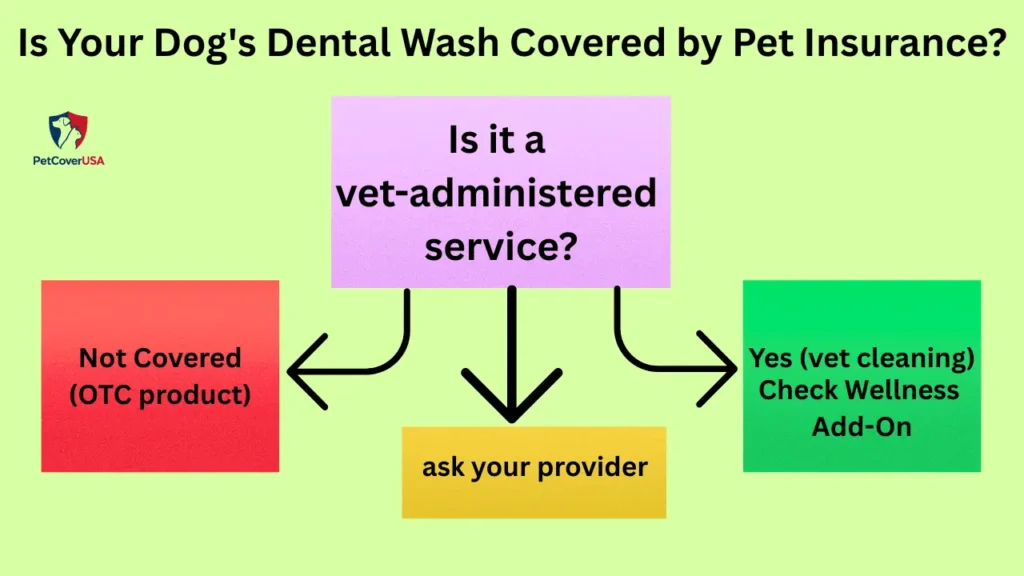
Does dental wash fall under the purview of pet insurance? Simply stated, no. Insurers do reimburse professional veterinary service, but they don’t cover over-the-counter products. This is true regardless of whether the policy provides for an additional expense for preventive healthcare.
Most of the publications focus on expensive surgeries and periodontal disease while completely glossing over the range of products. For example, unless you have been interested in the dental water additives and did not find anything relating to them in your research, you do not need to panic, since this erroneous perception of the industry actually exists.
We should be honest about this. Insurance companies classify water additives and gels as homemade products and do not take such items into consideration when reimbursing. Therefore, whenever you are taking a policy for your pet, you have to distinguish retail products from professional services.
Table of Contents
- What a Dog Dental Wash Actually Is
- Why Insurance Won’t Cover the Product Itself
- The Gap: Does Using a Dental Wash Affect Your Insurance Claim?
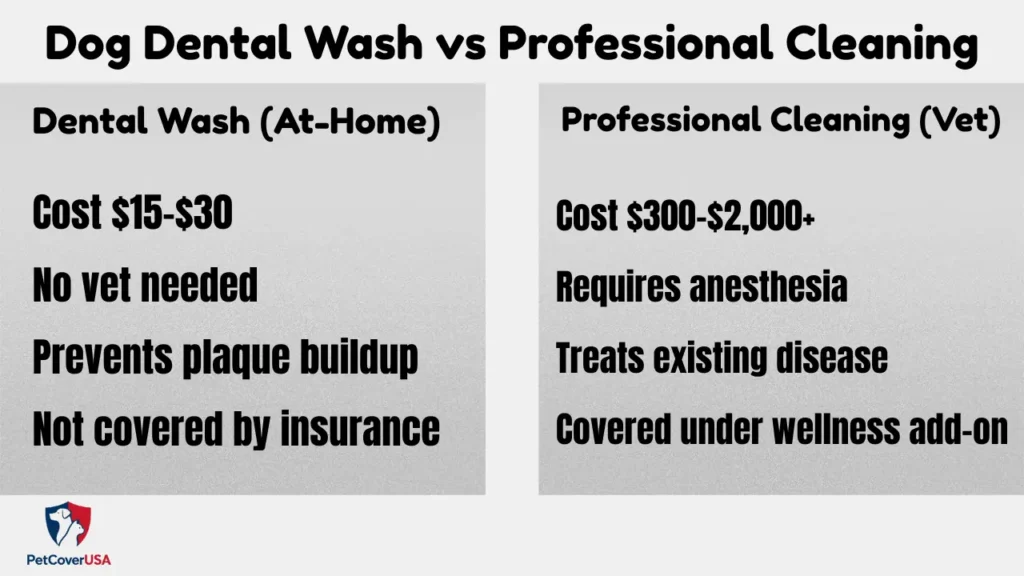
- Dental Wash vs. Professional Cleaning vs. Insurance: A Quick Comparison
- A Safety Detail Most Articles Leave Out
- Is a Dental Wash Worth It If Insurance Won’t Cover It?
- FAQs About Dog Dental Wash and Insurance
What a “Dog Dental Wash” Actually Is
Confusion tends to arise from the fact that the term “dental wash” can refer to three entirely different things.
- The liquid substances that you put in your dog’s water bowl are put directly into the bowl. (like the brands you find on Chewy or Amazon)
- The professional, medical-grade substances are used by the vet to conduct the cleaning.
- Colloquial term used by some pet owners to denote the process of dental scaling.
This can be a very important distinction as far as insurance goes.
Those items that you buy from Amazon or local pet shops are at-home preventive products. They usually contain mint oils, sodium bicarbonate, or enzymes aimed to refresh a dog’s breath and reduce plaque. Since it’s the pet owners themselves who purchase this product and don’t need the vet’s help in any way, insurance companies qualify this product as a simple lifestyle product.
The bottom line is that the insurance companies only cover medical treatments that have been administered or prescribed by a licensed professional. Insurance does not reimburse a pet owner for the product bought in a retail store, even though this product is good for a pet’s daily breath. When a pet owner files a claim, he/she should always keep in mind that the insurance providers clearly differentiate between what is done at home and what is done in a clinic by a professional.
Why Insurance Won’t Cover the Product Itself
The way the process operates is as follows:
Accident and Illness Coverage: This refers to the coverage of all medical issues. Whether it is a case wherein your pet has broken his/her tooth, is suffering from an infection, or has to undergo surgery to deal with the problem of gum disease or oral tumors, no matter what happens, and as long as it fits the definition of being an injury, you are going to receive help with paying for these expenses.
Wellness or Preventive Add-ons: This is not something obligatory. When you choose to purchase this option, it means that the insurer will reimburse you a certain amount of money for a specific procedure done by the doctor, for example, a yearly checkup, a professional cleaning performed by the vet, or an X-ray if needed.
The Gap of Consumer Products: Such products as additives for drinking water, dental treats, and toothpaste are included in the area that cannot be covered under any of the previous two terms. As long as these substances can be purchased at any pet shop or store, they are treated as “consumer retail products” and not a medical service. Regardless of how good one’s warranty coverage could be, he/she cannot expect reimbursements without a veterinary invoice. If it is not the veterinary doctor who billed these products, the expenses will not be compensated.
My Advice:
Use your insurance budget just for big medical risks like surgery or chronic disease, and consider these dental treats and additives as part of your monthly grocery budget.
The Gap: Does Using a Dental Wash Affect Your Insurance Claim?
While many insurance articles are concerned with whether or not a procedure is covered, they completely ignore the very first stage to be fulfilled for your claims to be approved: the process of documentation for your pet’s preventive health care.
Insurance companies need proof or evidence from you that you have regularly conducted dental maintenance before they will accept your claim for dental diseases (such as periodontal disease). Should you file a claim, the insurance provider will check whether your medical records show that you have regularly conducted annual check-ups and dental cleaning. Without such history, your claim might be dismissed even if the condition itself is covered by your policy.
The “Home Care” Issue
This leads us to the question that almost all websites ignore: can you consider using dental rinses and additives as preventive dental treatments?
The answer to this question is: usually, no.
Insurance companies require a veterinary history that includes an official examination report and a professional cleaning record or a note from the vet describing the pet’s dental health.
Although a pet dental rinse can do wonders for your dog or cat’s mouth between veterinary check-ups, it does not take the place of the medical records that the approval process demands. According to the insurance company’s claims adjuster, if an event is not documented by a licensed veterinarian, the event is virtually nonexistent!
How to Protect Your Coverage
Do not leave anything to chance when filing your claim. To keep your policy valid, follow these three simple steps.
- Check Your Pet’s Doc’s Records: Log into your pet’s health care portal. If you have not had your pet’s teeth checked in over a year, book an appointment right away.
- Get the Dental Note: When you go in for the visit, let the veterinarian know what your pet’s oral condition is.
- Confirm Your Requirements: Always confirm your requirements with the insurance company.
The Bottom Line: Treat dental records as if they are as important as vaccination records.
Dental Wash vs. Professional Cleaning vs. Insurance: A Quick Comparison
| Dog Dental Wash (Water Additive) | Professional Dental Cleaning | Covered by Base Pet Insurance? | Covered by Wellness Add-On? | |
|---|---|---|---|---|
| What it is | OTC liquid added to water bowl | Vet procedure under anesthesia: exam, X-rays, scaling, polishing | — | — |
| Typical cost | $15–$30 per bottle | $300–$2,000+ depending on location and pet | — | — |
| Requires a vet | No | Yes | — | — |
| Covered by accident/illness policy | No | Only if medically necessary to treat a covered illness | Rarely as routine care | — |
| Covered by wellness/preventive add-on | No | Often yes, up to an annual cap | N/A | Yes, in many plans |
| Counts as “documented preventive care” for claims | Uncertain/unlikely on its own | Yes, typically |
A Safety Detail Most Articles Leave Out
Although dental water additives can seem like excellent solutions for eliminating foul odor in our pets’ mouths, they need not be effective for your dog. Thus, before you decide to put your hands on the remedy, be sure to familiarize yourself with the hidden hazards.
The Ingredient Reality
The most common ingredients found in these additives include peppermint and spearmint organic oils, as well as several types of surfactants such as Polysorbate-80. While such ingredients are considered harmless in most cases, they might upset the digestive system of some animals. If you see your pet developing diarrhea or vomiting after using the additive, it is crucial to stop using it immediately and consult your veterinarian.
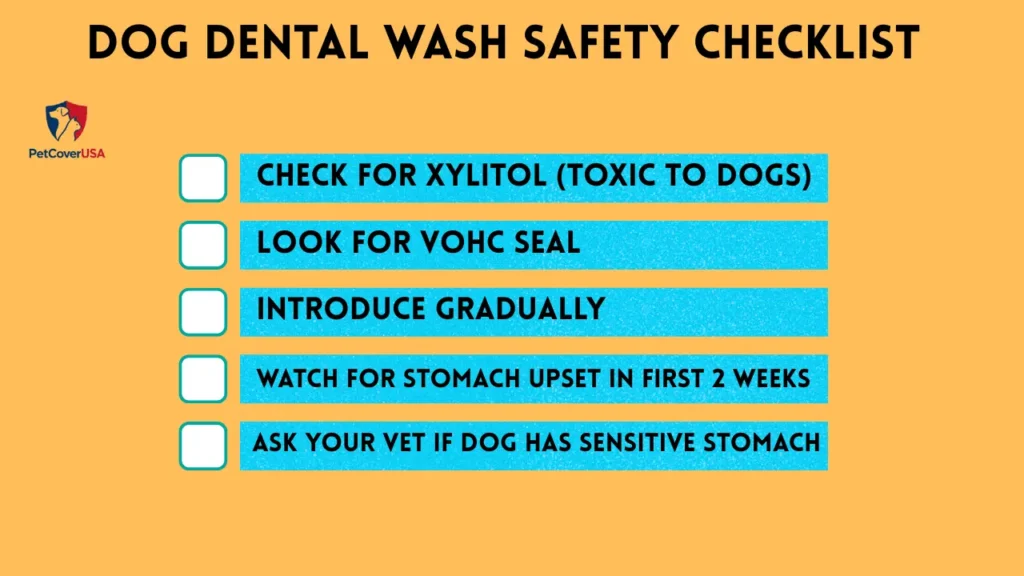
Be particularly observant of Xylitol
This substance is a highly dangerous product for dogs, even in small portions. Although reputable brands rarely contain it, the ingredient might appear in “natural” product lines. Thus, keep checking labels several times before offering any solution to a pet.
How to Safely Introduce New Additives
Once your veterinarian gives you the okay, apply the following three rules to protect your furry friend:
- Start Slow: Introduce just a small amount initially. If your dog has a sensitive stomach, health issues, or currently takes other medications, then be particularly cautious.
- Monitor Your Dog: Watch for any changes in their appetite and stool during the first two weeks.
- Look for the VOHC Seal: Be careful not to fall for marketing gimmicks displayed on the bottle. Always check for the Veterinary Oral Health Council (VOHC) seal on the packaging, which indicates that the product has undergone scientific testing by an independent body and proven its effectiveness in fighting plaque and tartar rather than just disguising the smell.
Expert Tip:
Your veterinarian is your best bet in this regard. For example, you can ask them the following question before you purchase any random item at the store: “Is this particular additive safe for my dog at this time?”
Is a Dental Wash Worth It If Insurance Won’t Cover It?
Most likely, yes, but only if you keep your expectations in check.
When thinking about animal dental washes, you must consider the wash as a beneficial adjunct to any dental regimen rather than a substitute for brushing your dog’s teeth daily or using any form of professional cleaning. Below is a fair assessment of what animal dental washes are able to give as opposed to what they cannot give.
The Real Value: Delaying the Big Bills
The great thing about any animal dental wash is its ability to minimize plaque formation. If you think of animal dental washes as products meant to postpone your visit to the vet and keep your dog’s teeth cleaner for a couple of months, it sounds like a reasonable solution indeed.
As professional cleaning is usually very expensive (from hundreds to thousands of dollars), you will likely find it worth paying for an inexpensive additive.
Where the “Dental Wash” Fails
It is necessary to understand where these products come to a stop. A dental rinse:
Does not cure any already existing periodontal disease: After gum disease has started developing, only a vet can stop its advancement.
Is considered “not documented care”: As mentioned above, insurance companies will not consider these bottles as confirmation of preventive care.
Will not receive reimbursement: no ordinary wellness plan will give back money for retail products.
Final thoughts
Continue using your water additive as long as it was approved by your vet; it is a good way to maintain your dog’s breath and everyday hygiene. Still remember that it is only a helping tool for maintaining your pet’s oral health and not the main one. Always aim for regular professional cleaning to ensure good oral health for your pet and keep their insurance in operation.
FAQs About Dog Dental Wash and Insurance
Does pet insurance cover a dog dental water additive?
No. Pet insurance does not reimburse the cost of dental water additives because they are considered over the counter retail products, similar to dog shampoo or toys. These products are purchased directly by pet owners rather than provided as veterinary treatment, so they are not eligible for reimbursement.
Can I get pet insurance preventive care reimbursement for dental wash products?
Generally, no. Wellness or preventive care plans typically reimburse veterinary services rather than retail products. You usually need veterinary records and invoices for covered preventive services, while dental wash products purchased for home use are not reimbursable.
Do I need receipts for at home dental care documentation for insurance claims?
Receipts alone are usually not enough. Insurers generally require veterinary medical records showing that preventive or dental treatment was recommended or performed. A purchase receipt does not normally qualify as proof of covered preventive care.
Is a VOHC approved dental product a safer bet?
Yes. The Veterinary Oral Health Council (VOHC) seal indicates that a product has been scientifically evaluated and shown to reduce plaque or tartar. Choosing a VOHC approved product is generally a more reliable option than relying on marketing claims alone.
Are dog dental wash side effects common?
Side effects are uncommon but possible. Some dogs may experience stomach upset, vomiting, or diarrhea. Introduce any new dental product gradually, confirm that it does not contain xylitol, and speak with your veterinarian if your dog has allergies, medical conditions, or takes other medications.
Does pre existing gum disease exclude dental coverage?
Yes. Most pet insurance providers exclude pre existing dental conditions. If your veterinarian documented tartar, gingivitis, or other gum disease before your policy started or during the waiting period, future treatment related to that condition is generally not covered.
Sources referenced: Chewy, ASPCA Pet Health Insurance, Fetch Pet Insurance, State Farm, Embrace Pet Insurance, Spot Pet Insurance, MoneyGeek, and product listings and reviews for Pawfy Dog Dental Wash on Chewy and eBay.
Related Pet Insurance Guides
If you’re comparing dental coverage for your dog, our guide to pet insurance that covers dental care for dogs provides a broader look at dental-related benefits.
For a closer look at potential cleaning coverage, see our guide to dog dental cleaning and pet insurance .
If you’re looking for affordable options, our guide to affordable dog dental plans in the USA can help you compare dental coverage considerations.
You can also explore policies that may begin coverage without a waiting period in our guide to pet dental insurance with no waiting period .
For practical ways to support your dog’s oral health, read our dog dental care tips for healthy teeth .
📅 Last Updated:

About the Author
M. Nouman is an independent researcher and writer focused on U.S. pet insurance. He reviews insurer policy documents, coverage terms, waiting periods, reimbursement options, exclusions, and publicly available veterinary and regulatory resources to create clear, research-based guides. His goal is to simplify complex insurance information so pet owners can make informed decisions based on reliable sources rather than marketing claims. Articles are reviewed and updated as policies and industry information change.
Areas of Research: Pet Insurance Policies, Coverage Analysis, Policy Comparisons, Waiting Periods, Reimbursement Models, Policy Exclusions, Claims Education
Research insights and updates on Quora, LinkedIn, and Reddit.