
Dog Dental Cleaning Tips at Home: What Actually Works
If you searched this blog, that means your dog’s bad breath brought you here, and you are not alone. Daily brushing of your dog’s teeth with dog-safe toothpaste generally remains the most effective home method. But most pet parents struggle with daily brushing, and that is completely normal. What matters is knowing reliable backup options, avoiding homemade remedies that might harm enamel, and understanding when professional vet care is necessary.
This guide offers a practical and research-backed routine. Every dog differs in size, temperament, and current oral health, so consulting your vet is always the best step.
- What You Will Learn
- Key Facts and Data Points
- Methods With the Most Evidence Behind Them
- Why Most Owners Never Get Past Week One
- Anesthesia-Free Cleanings: Read This Before You Book One
- Chew Toys That Can Break Teeth
- When to Stop DIY and Call Your Vet
- FAQ’s About Dog Dental Cleaning Tips at Home
- Bottom Line
Quick Answer
To brush the pet’s teeth is still considered the best technique for achieving proper plaque control. While water additives, dental chews, and special diets can complement this process, they cannot replace it, and not even a professional cleaning can address tartar being present below the gumline.
What You Will Learn
- The difference between independent and non-independently tested at-home methods
- The reasons why the majority of pet owners stop brushing their pets’ teeth
- The reasons why veterinary dental organizations dissuade from ‘non-anesthetic’ cleaning
- The types of dental chews that are linked to broken teeth and how to check them before a purchase
- The estimated cost and the signs that it is time to see a veterinarian.
Key Facts and Data Points
| Data point | Source |
|---|---|
| Dental products can only carry the VOHC Seal of Acceptance after showing at least a 20% average reduction in plaque or tartar across two independent clinical trials. | vohc.org/about/ |
| A large survey of Swedish dog owners (over 66,000 respondents) found that only about 4% brushed their dog’s teeth daily, even though roughly 80% rated dental health as important | agris.fao.org (Brunius Enlund thesis) |
| The same survey found about 25% of owners had difficulty even inspecting their dog’s mouth, and about 26% had tried brushing and stopped | agris.fao.org (Brunius Enlund thesis) |
| The American Veterinary Dental College and American Veterinary Medical Association oppose anesthesia-free dental cleanings, citing missed disease below the gumline | westloopvets.com |
| VCA Animal Hospitals classifies tooth fractures into five categories, ranging from minor enamel chips to fractures exposing the tooth root | vcahospitals.com |
| The Ontario Veterinary Medical Association reportedly notes it takes an average of about two months for a dog to adjust to a new brushing routine | CBC News (Sudbury) |
| Consumer cost overviews put professional veterinary teeth cleaning in the rough range of $300–$700, depending on the clinic and whether extractions are needed | Cheapism, via AOL |
Exact figures can vary by country, clinic, and dog. Treat these as general reference points, not guarantees for your specific situation.
Methods With the Most Evidence Behind Them
| Method | Evidence level | Effort | What to watch for |
|---|---|---|---|
| Daily brushing (dog toothpaste) | Strongest — closest to the standard other products are tested against | High, ongoing | Human toothpaste is not safe for dogs and should not be substituted |
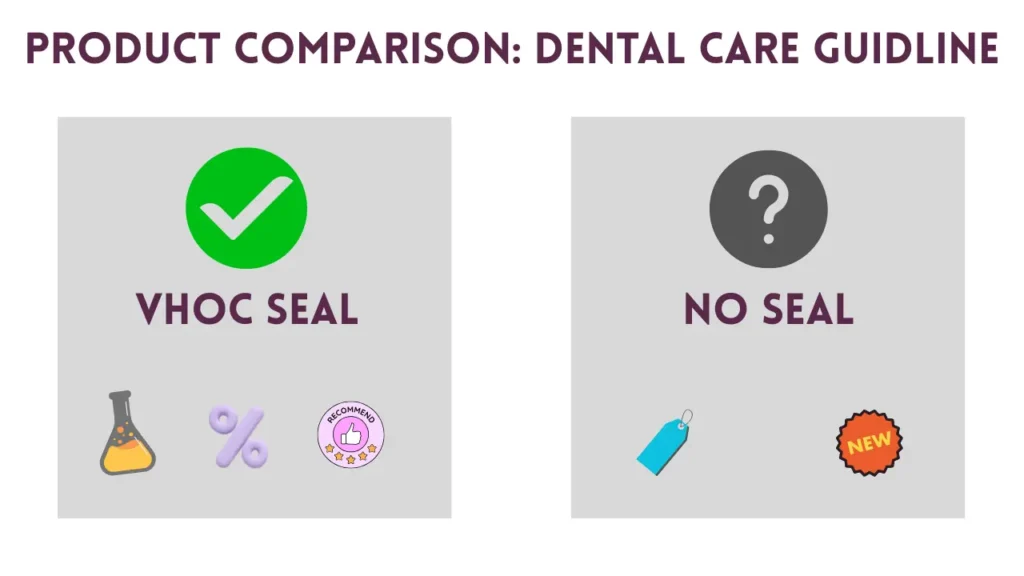
| VOHC-Sealed dental chews/treats | Tested, but products vary | Low | A VOHC seal reflects clinical testing; “dental” on the label alone does not |
| VOHC-Sealed water additives | Tested, but products vary | Very low | Some dogs refuse treated water — vets commonly suggest leaving a second, untreated bowl available |
| Prescription dental diets | Tested by manufacturer, vet-prescribed | Low | Requires a veterinary recommendation; not a general over-the-counter swap |
| Finger/gauze pre-brushing | Not independently tested as a standalone method | Low | Useful as a transition step toward a toothbrush, not a long-term substitute |
Why Most Owners Never Get Past Week One
Most of the dental guides make sound brushing simple once you buy a toothbrush, but the reality is opposite. For Example, a Swedish survey on dog owners revealed that about one-quarter of pet parents struggled just to check inside a dog’s mouth, while another quarter tried to brush their dog’s teeth but ultimately gave up.(Source: Brunius Enlund Thesis, FAO AGRIS)
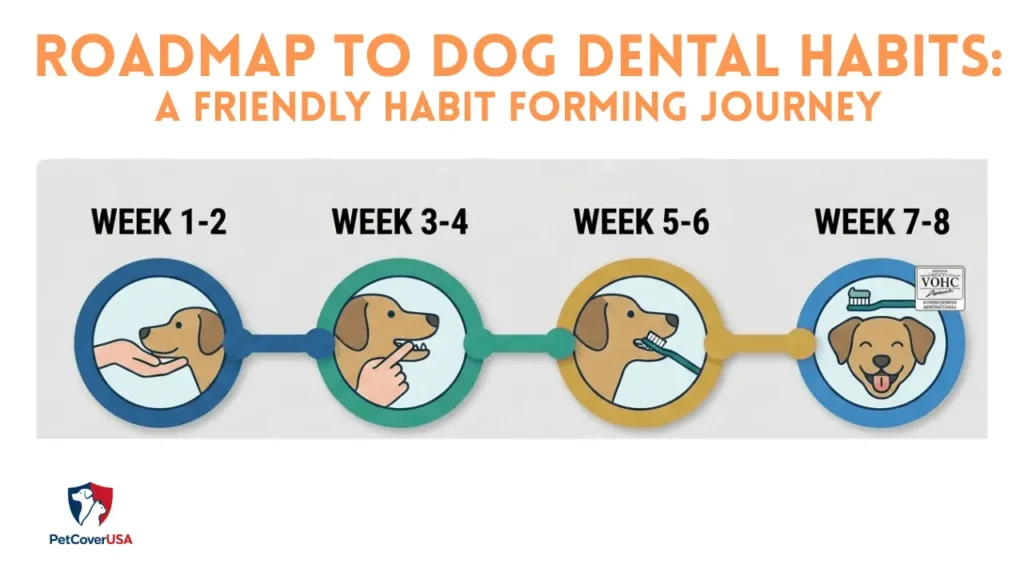
If your dog resists starting, it doesn’t mean that you are doing it wrong; this is normal according to published reports. According to the Ontario Veterinary Medical Association, it may take up to two months for a pet to fully adapt to a brushing routine.
Anesthesia-Free Cleanings: Read This Before You Book One
The term “anesthesia-free” or “non-anesthesia” dental cleaning suggests that this procedure is a less painful and more economical option. According to veterinary practitioners, the process can clean the visible tartar from the surface of the tooth but does not clean below the gumline, where Periodontal Disease actually starts. (Source: westloopvets.com)
Because the teeth look cleaner after the procedure, some sources state that this gives a misleading picture of the dog’s teeth when monitoring dental disease that needs treatment. (Source: veterinarydentistry.net) This may be one of the reasons why the American Veterinary Dental College and American Veterinary Medical Association do not approve of the method. If you are thinking about this procedure, it might be a good idea to review with your veterinarian what this service can or cannot do.
Chew Toys That Can Break Teeth
Various veterinary sources such as VCA Animal Hospitals and Cornell University’s College of Veterinary Medicine reveal that hard chews like antlers, bones, hooves, and hard nylon items can lead to tooth fractures, especially on the large upper cheek teeth. (Sources: vcahospitals.com; vet.cornell.edu)
One popular method to screen for this is to detect if you can make an impression with your thumbnail on the chew. (Source: Cornell University College of Veterinary Medicine) Another veterinary-related source mentions that an informal poll was taken among over 1000 veterinarians, which found many respondents against giving antlers to their pets, although this is not a scientific study. (Source: toegrips.com)
When to Stop DIY and Call Your Vet
Home care follows maintenance but differs from treatment. When utilizing home care, the recommendation from veterinarians is to make an appointment whenever problematic situations arise, such as:
- Sudden onset bad breath, which is worse than usual
- Bleeding or swollen gums affected
- Dog chewing historically only on one side of their mouth
- Tooth having visible cracks or discolorations
- Swelling under one eye and most times below the dog’s eyes
- Dog refusing to eat, such as repeatedly dropping food
FAQ’s About Dog Dental Cleaning Tips at Home
Does brushing my dog’s teeth actually prevent dental disease?
Brushing is the method most consistently linked to reduced plaque buildup, but it works as prevention, not a cure. Existing tartar and any disease below the gumline still requires a professional evaluation.
Are anesthesia-free dental cleanings safe for dogs?
Veterinary organizations including the AVDC and AVMA are reported to discourage them because they can’t address disease below the gumline and may involve restraint-related stress or injury risk. This is a decision worth discussing directly with your vet.
Can antlers or bones clean my dog’s teeth?
Some owners use them for that purpose, but multiple veterinary sources link hard chews like antlers and bones to tooth fractures. The thumbnail test, if you can’t dent it, it may be too hard, is a commonly cited screening step.
How do I know if a dental product actually works?
Look for the VOHC Seal of Acceptance, which requires independent clinical trial data showing at least a 20% average reduction in plaque or tartar. Marketing terms like “dental formula” alone don’t require that testing.
How long does it take to get a dog used to tooth brushing?
Reports vary, but one veterinary association is cited as estimating around two months of gradual, positive sessions. Rushing the process is commonly linked to dogs resisting harder.
Bottom Line
If your dog can handle it, begin with brushing every day. If your dog does not enjoy brushing, then use an oral care product, and do not consider giving your dog any hard chews. Make sure you don’t buy into any advertisement for anesthesia-free cleaning either. If you see any of the signs listed before, the next step is to take your puppy to the vet instead of looking for another home remedy.
According to the American Veterinary Medical Association (AVMA), keeping your pet’s mouth clean is not just about fresh breath; it is about keeping them safe from dental diseases and maintaining the overall health of your pet. Similarly, the American Kennel Club (AKC) emphasises that consistent dog dental cleaning, whether through brush cleaning or professional veterinary care, is important to keep your pet safe from dental disease, gum disease, bad breath, and many other diseases
Related Dog Dental Guides
For simple ways to maintain your dog’s oral health between cleanings, see our top dog dental care tips for healthy teeth .
If you’re wondering whether professional dental cleaning may be covered, read our guide to dog dental cleaning and pet insurance coverage .
You can also compare insurance options through our guide to pet insurance that covers dental care for dogs .
If cost is an important factor, see our guide to affordable dog dental plans in the USA .
For policies that may offer coverage without a waiting period, explore our guide to pet dental insurance with no waiting period .
📅 Last Updated:

About the Author
M. Nouman is an independent researcher and writer focused on U.S. pet insurance. He reviews insurer policy documents, coverage terms, waiting periods, reimbursement options, exclusions, and publicly available veterinary and regulatory resources to create clear, research-based guides. His goal is to simplify complex insurance information so pet owners can make informed decisions based on reliable sources rather than marketing claims. Articles are reviewed and updated as policies and industry information change.
Areas of Research: Pet Insurance Policies, Coverage Analysis, Policy Comparisons, Waiting Periods, Reimbursement Models, Policy Exclusions, Claims Education
Research insights and updates on Quora, LinkedIn, and Reddit.