
Some links may be affiliate links. We may earn a small commission at no extra cost to you.
Information may change over time and should be verified with official providers. We are not responsible for any decisions made based on this content.
What Pet Insurance Covers Pre Existing Conditions (Honest, Research-Based Guide)
In general, pet insurance policies don’t cover conditions that have already been diagnosed prior to the start of a policy or conditions that develop during the policy waiting period. Nonetheless, some insurers may decide to cover some curable pre-existing conditions after a waiting period during which a pet has been well and has not undergone treatments. As indicated by AKC Pet Insurance, some curable and incurable pre-existing conditions may qualify for coverage after a complete year of uninterrupted insurance.
Understanding the pre-existing condition rules can be complicated, especially when the pet already seems to show signs of some condition or has already received medical help. This guide explains how insurers define the term “pre-existing condition,” as well as how they deal with both chronic and curable conditions.
How I Researched This
This guide compares publicly available policy documents, insurer information, consumer resources, and industry data.
I also used the 2023-2024 reports published by NAPHIA (North American Pet Health Insurance Association) to gain insights into the market.
I do not have any affiliation with any of the insurance companies. All recommendations listed below are based solely on reliable data and not commission.
Why This Actually Matters Right Now
Nationwide offers three main types of plans, and honestly, they are not all equal in value.
Nationwide provides various types of pet insurance policies, and variations in the coverages make a difference in coverage and out-of-pocket expenses.
Whole Pet
Whole Pet is Nationwide’s premier accident-and-illness policy that includes coverage for hereditary and congenital medical problems as well as other treatments, to varying degrees as per the terms and conditions of the policy.
Major Medical
Major Medical provides a lesser accident-and-illness insurance plan with different levels of reimbursement, different limits of benefits, and conditions of coverage, so it could be beneficial for pet owners to consider the impact that deductibles and reimbursement levels will have on the amount paid for a particular treatment.
Pet Wellness
Pet Wellness is an optional plan, but rather an additional coverage to other pet insurance policies, and it helps with some routine health care expenses like vaccinations and annual checkups, but only according to the terms of the plan.
Nationwide also provides coverage to a number of bird species, reptiles, rabbits, ferrets, and other exotic pets. Coverage requirements vary, so pet owners need to carefully check all the details.
Source: Nationwide Pet Insurance official plans page
The 2024 Nationwide Non-Renewals
In 2024, Nationwide stated that it will not extend the insurance coverage for about 100,000 pet policies and will stop providing some of its products in particular states. The company said that this step was taken due to rising veterinary costs and other reasons, and reassured that the non-renewal decision is not related to the age or breed of pets or their history of previous claims. The policyholders were informed about this in writing.
This illustrates the importance of the continuity of coverage, especially if the pet’s health record is already there. When changing the insurance provider, the new insurer may ask for the medical history of the animal, and any medical condition diagnosed before may be recognized as a pre-existing condition according to the new policy. Before returning the insurance, it is important to compare policy exclusions, waiting periods, deductibles, reimbursement rates, and maximum annual payout.
Medical Record Reviews and Claims
Pet insurance companies may examine a pet’s veterinary records at various times during the claims process. For instance, some insurance companies might require the submission of medical records during the enrollment process to evaluate the pet’s health baseline, while others might ask for related medical documents and records after the claim has been filed. The results of the review will help the insurer to verify whether or not the pet had the condition before the commencement of coverage.
For example, if the dog’s ligament injury is found to have been preceded by a stiff gait or the inability to walk due to pain, the insurer might classify the condition as pre-existing based on the veterinary records examined. However, the ultimate outcome depends on the insurance policy wording and the way the company analyzes previous medical history and duration of waiting period.
Before beginning the enrollment process with pet insurance providers, it is recommended to ask if they will be checking medical records and what kind of records will be analyzed. Furthermore, owners should have a thorough account of a pet’s medical history and examination results ready in case more information is required.
Curable vs. Incurable Pre-Existing Conditions
This is the real dividing line in the industry.
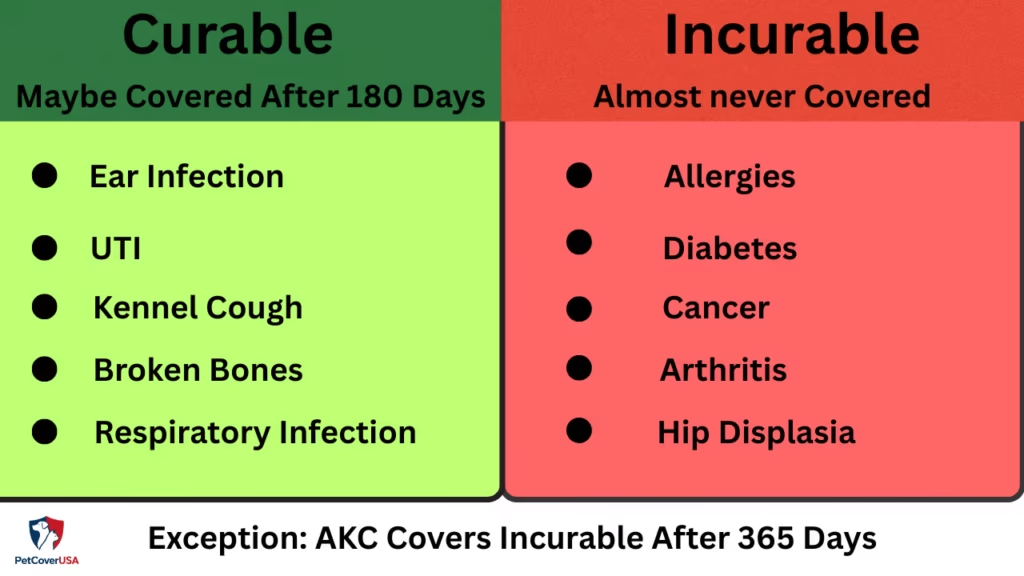
Curable Pre-Existing Conditions
When it comes to pet insurance, insurers sometimes make a distinction between curable and incurable/chronic conditions. However, the definition of these terms varies among insurers, and ultimately it depends on the terms of the policy, as well as the medical records of the pet, the waiting periods enforced, exclusions, and state-specific clauses.
Curable conditions are those conditions from which the pet has fully recovered. The conditions considered curable by pet insurers are sometimes re-evaluated after some time has passed, and the pet has been symptom-free for 180 days without any treatment. The doctor’s documents show that some curable conditions cease to be pre-existing after 180 days without symptoms or treatment, as per ASPCA Pet Health Insurance, while the requirement for Embrace is 12 months. Some conditions related to the knees and ligaments may have different exclusions or rules applied.
Examples that some insurers may classify as curable include:
- Ear infections
- Urinary tract infections
- Upper respiratory infections
- Kennel cough
- Temporary vomiting or diarrhea
- A healed broken bone
Incurable or Chronic Conditions
Chronic or incurable conditions are often long-term, recurrent, or permanent. Many insurance policies will refuse to cover pre-existing conditions, even if they do cover for other unrelated illnesses or injuries. Such conditions include diabetes, arthritis, epilepsy, allergies, cancer, hip dysplasia, chronic kidney disease, and heart ailments.
According to AKC Pet Insurance, some curable as well as incurable pre-existing conditions may become eligible after 365 uncontested days of coverage. Conditions apply. Check current policies of the company before applying.
Sources: ASPCA Pet Health Insurance | Embrace Pet Insurance | AKC Pet Insurance
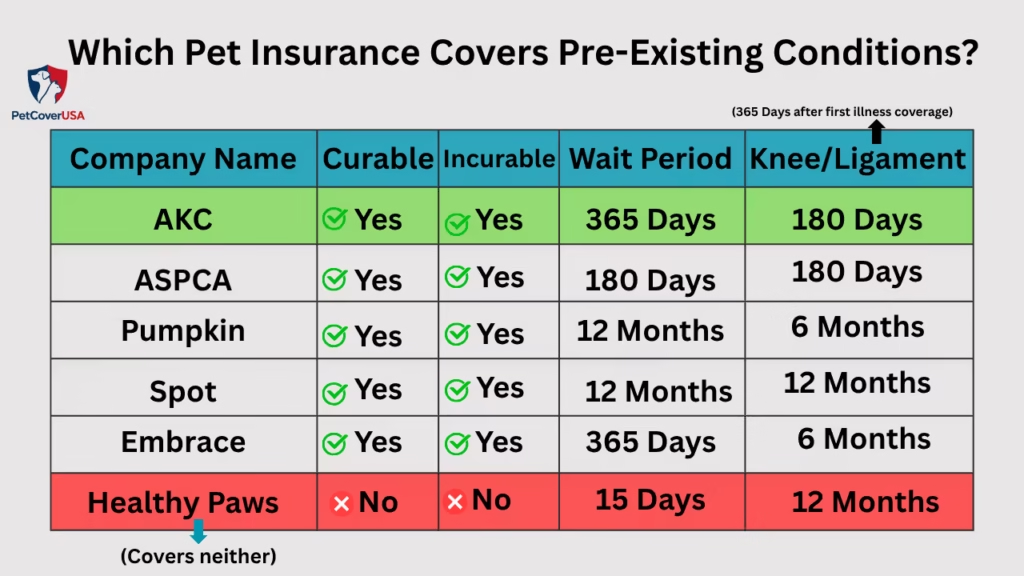
How Selected Insurers Handle Pre-Existing Conditions
Many pet insurance policies exclude conditions that already exist before the purchase of such policies. The companies which provide such plans may change their decision about specific curable conditions after a certain time of conducting treatment and being absent of symptoms. Coverage will depend on the pet insurance policies in question and the records of the pet’s health status at the time of contract signing.
| Insurer | Curable condition approach | Incurable condition approach | Important note |
|---|---|---|---|
| AKC Pet Insurance | AKC states that certain eligible pre-existing conditions may become covered after 365 days of continuous coverage | Certain eligible incurable conditions may be considered after 365 days, subject to exclusions and policy terms | Review the current AKC policy and exclusions before enrolling. akcpetinsurance+1 |
| ASPCA Pet Health Insurance | Certain curable conditions may be reconsidered after 180 days without symptoms or treatment | Generally excluded if pre-existing | Review policy terms and state-specific documents. |
| Pumpkin | A curable condition may be reconsidered after 180 symptom- and treatment-free days | Generally excluded if pre-existing | The curable-condition exception does not apply to pre-existing knee or hind-leg ligament conditions. pumpkin+1 |
| Spot | A curable condition may become eligible after 180 symptom- and treatment-free days | Generally excluded if pre-existing | Pre-existing knee and ligament conditions are not included in the 180-day exception. spotpet+2 |
| Embrace | Embrace states that certain curable conditions may become eligible after 12 symptom- and treatment-free months | Generally excluded if pre-existing | Confirm plan and state-specific conditions. |
| Other insurers | Rules vary by policy | Generally excluded if pre-existing | Read the current policy/sample policy directly before purchasing. |
Practical Policy Details to Review
Basic price comparisons do not always explain how a pet insurance policy may handle medical history, claims, and exclusions. The points below can help pet owners review a policy more carefully before enrolling.
| Topic | What to review | Why it matters |
|---|
| Topic | What to review | Why it matters |
|---|---|---|
| Medical-record review | Ask whether the insurer requests veterinary records during enrollment, after a claim, or both. | An insurer may review records to determine whether a condition or related symptoms existed before coverage began or during a waiting period. |
| Related conditions | Ask how the insurer defines a condition related to a prior illness or injury. | A new issue may be assessed as related to a previous condition, depending on the policy language and medical records. |
| Claim appeals | Check the denial letter and policy documents for the appeal process and deadline. | A written appeal with veterinary records and a clear explanation may be appropriate if the denial appears inconsistent with the policy terms. |
| Orthopedic waiting periods | Ask whether the insurer offers an orthopedic-exam option and which conditions qualify. | Some insurers may shorten certain orthopedic waiting periods after a qualifying examination, subject to eligibility and state availability. |
| Switching insurers | Compare the new policy’s waiting periods, exclusions, and pre-existing-condition definitions before canceling the current policy. | A new policy starts new waiting periods, and prior conditions may be assessed under the new insurer’s rules. |
| Young pets | Review all veterinary and breeder records before enrollment. | A condition or symptom documented before coverage begins or during a waiting period may be treated as pre-existing, even in a young pet. |
Insurance practices vary by company, policy, and state. Review the insurer’s current policy documents, sample policy, and official disclosures before enrolling or filing a claim.
Orthopedic Exam and Waiting-Period Options
Some pet insurance options impose a longer waiting period for certain orthopedic problems in dogs, such as cruciate ligament ruptures or hip dysplasia. Because orthopedic treatment can be costly, it is critical for pet owners to know when coverage for something is in effect.
Some insurers allow pet owners to eliminate or shorten orthopedic waits by obtaining an appropriate veterinary examination after the insurance plan is in force. For instance, Embrace indicates that in some states, an orthopedic examination carried out within 14 days of the effective date of the policy can shorten the waiting period to as little as 14 days if the examination reveals no problems. The company Figo claims that if an appropriate waiver form is submitted within the specific timeframe, the waiting period may be waived.
No longer waiting period is guaranteed because eligibility, examination timing and procedure, conditions covered, protocols to be followed, and states affect the waiting period. If during the examination a vet finds signs of complications or abnormalities, the insurance company may classify them as pre-existing conditions. Read the latest information in the insurance company’s policy document and talk to your insurer before setting up your examination.
Sources: Embrace Pet Insurance | Figo Pet Insurance
What Happens When You Switch Insurers
Changing from one pet insurance provider to another can affect how the new pet insurance policy will treat any previous medical history of the pet being insured. The new insurance provider could look into your veterinary records and decide that the conditions, symptoms, or treatment that occurred before the adoption of the new policy are pre-existing. This would happen to be the case even if that problem was covered in the previous policy.
The new policy could introduce new waiting periods, deductibles, reimbursement options, coverage limits, and exclusions. Make sure you know the definition of pre-existing conditions, waiting periods, coverage limits, and exclusions in the new policy and compare them to your existing policy before you change your insurer.
In its document titled MetLife Pet, there is a carve-out for qualifying individuals who switch from a previous pet insurance policy with a different company to a MetLife Pet insurance policy provided through an employer group. With this transition to a new policy, MetLife may continue to cover certain previously covered health conditions already existing under the prior policy; however, certain restrictions under the new policy may apply.
To ensure that you are not left with any coverage gap, do not terminate your existing policy before carefully reviewing the new policy, confirming when it goes into effect, and knowing how the new policy will treat your pet’s pre-existing conditions.
Source: MetLife Pet Insurance—Switching Providers
If Your Claim Gets Denied- Exact Steps
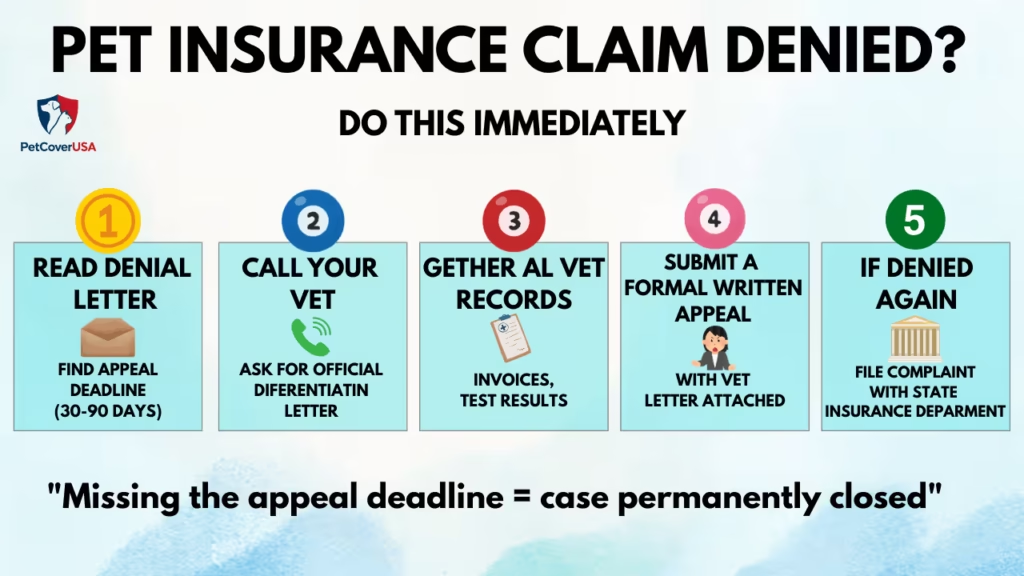
One must understand that a denial of a claim is not necessarily the end of the matter. One must check the claims denial letter carefully to find out the reason for denial, the insurance policy provisions invoked, and the deadline within which the appeal should be submitted. One should note that even if it may be thought that all insurers follow the 30 to 90 days timeline, deadlines vary from company to company, and sometimes an appeal should be submitted in as little as 14 to 30 days.
Step 1
Consult with your veterinarian to get a detailed report on the diagnosis and the medical history of the animal to prove that the current condition can be considered different from any previous one. The veterinarian must not be asked to make unsupported statements.
Step 2
Collect the full medical history record, including all invoices, test results, imaging reports, notes, and any veterinary records that were there prior to obtaining the pet health insurance policy.
Step 3
File a formal written request before the deadline. You should include your policy number, your claim number, date of denial and explanations on why you think you are correct. You should substantiate your claim with your veterinarian’s letter along with other relevant documents.
Step 4
Should the insurance company again deny your appeal, find out if a review at the level of a supervisor is available. If you go through this option and still disagree with the decision, you can contact your state insurance department. State regulators do have the power to investigate allegations.
Keep copies of every document and record the date, time, and name of anyone you speak with.
My Research-Based Recommendations
After going through all of the above, here is my honest assessment by situation:
If your pet is young and healthy
If your pet is still young and healthy, it is best to sign up for insurance as early as possible. This is due to the fact that if you wait, your pet may develop some illness or injury, and it will later be considered pre-existing in nature. According to NAPHIA, the average accident-and-illness insurance premium in the United States amounts to $749.29 per year for pets in 2024, which is approximately $62.44 monthly. However, the actual sum you will have to pay may vary significantly depending on many factors such as your pet’s breed, age, location, deductible, and coverage limits.
If your pet has a curable pre-existing condition
If your pet has some curable pre-existing condition, it is worth comparing such companies as Spot, ASPCA, Hartville, and Pumpkin, but read policies carefully. Some policies allow reconsidering a curable pre-existing condition if a pet shows no symptoms, and must not get treatment for 180 days. Therefore, it is a good idea to ask an insurer if this policy rule is applicable to your case and have veterinary reports during the required period.
If your pet has an incurable pre-existing condition
One viable option is AKC Pet Insurance, as it covers curable and incurable pre-existing conditions after one continuous year of coverage. However, it has some exclusions as some medical conditions including diabetes and Cushing’s disease may have some stipulations. Therefore, it is wise to verify the policy terms before signing up.
If you are considering switching insurers
If you are switching your insurance provider, you shouldn’t rush into the process. The new provider may classify any conditions from your pet’s medical records as pre-existing conditions and apply waiting periods again. Therefore, talk to your current insurer about possible changes to the deductible amount, reimbursement percentage, and annual limit, which would allow you to lower the premiums without losing your coverage history at the same time.
FAQ’s About What Pet Insurance Covers Pre-Existing Conditions
Generally, no. Most insurers exclude conditions that showed signs, symptoms, or received treatment before coverage began or during the applicable waiting period. AKC Pet Insurance may provide a pathway for some pre-existing conditions after 365 days of continuous coverage, subject to policy terms and state availability. Therefore, do not assume or promise day-one coverage for a known condition.
Possibly, if the insurer classifies it as a curable condition and the required symptom-free and treatment-free period has passed. Some insurers may use a 180-day period, while Embrace and Fetch generally require 12 months. The insurer makes the final coverage decision under the policy terms, not the veterinarian alone.
Yes. A puppy’s medical history may include a symptom or abnormality documented by a breeder, shelter, or veterinarian before coverage begins. Enrolling early may reduce the chance of future conditions being classified as pre-existing, but it cannot guarantee coverage because waiting periods and medical-record reviews still apply.
Post-claim underwriting is a review of medical records after you submit a claim, often to determine whether the claimed condition began before coverage or during a waiting period. Some insurers may request records during enrollment, while others may perform a more detailed review when a claim is filed. This can lead to exclusions or claim denials if the records show earlier signs or symptoms.
Yes. You can usually submit an appeal with supporting medical records and a detailed letter from your veterinarian explaining the current condition and relevant history. File the appeal before the deadline stated in your denial letter. Deadlines vary by insurer and policy, so they should not be described universally as 30 to 90 days.
Yes, it can. A new insurer may review your pet’s previous medical records and classify earlier signs, symptoms, diagnoses, or treatment as pre-existing, even if the former insurer covered the condition. Applicable waiting periods may also begin again. MetLife may offer an exception for certain employer group benefit policies when coverage is transferred without a gap, but eligibility and conditions apply.
Related Pet Insurance Guides
If you’re researching how exclusions can affect your policy, our guide to comprehensive pet insurance coverage explains other important coverage considerations to review before enrolling.
If you’re also comparing policies based on when coverage begins, see our guide to pet insurance with no waiting period .
Cost is another factor to consider when comparing plans. Our guide to affordable pet insurance plans for dogs and cats covers important pricing and coverage considerations.
For a provider-specific comparison, you can read our Lemonade pet insurance review and evaluate its policy details alongside other options.
You can also compare another major provider in our Embrace pet insurance review .
📅 Last Updated:

About the Author
M. Nouman is an independent researcher and writer focused on U.S. pet insurance. He reviews insurer policy documents, coverage terms, waiting periods, reimbursement options, exclusions, and publicly available veterinary and regulatory resources to create clear, research-based guides. His goal is to simplify complex insurance information so pet owners can make informed decisions based on reliable sources rather than marketing claims. Articles are reviewed and updated as policies and industry information change.
Areas of Research: Pet Insurance Policies, Coverage Analysis, Policy Comparisons, Waiting Periods, Reimbursement Models, Policy Exclusions, Claims Education