
Some links may be affiliate links. We may earn a small commission at no extra cost to you.
Information may change over time and should be verified with official providers. We are not responsible for any decisions made based on this content.
Affordable Pet Insurance Plans in 2026: What To Know
Affordable pet insurance plans aren’t necessarily the one that has the cheapest premium. A low-cost insurance plan might leave more out-of-pocket expenses if it comes with caps on reimbursements, deductibles for some conditions, or premiums that adjust at the renewal time. Therefore, before purchasing the plan, make sure you compare its actual terms and not only its lowest price.
- The Real Cost Picture
- Affordable Pet Insurance Plans
- The Deductible: Annual vs. Per-Incident
- The Pre-Existing Condition: What to Know
- Premium Increases: What to Expect
- Deep Research Table: What Top Plans Actually Look Like Where It Matters
- If You Have a Rescue Pet: The Shelter Records
- How to Save on Pet Insurance
- Frequently Asked Questions (FAQ’s)
- Final Verdict: What “Affordable” Means
The Real Cost Picture: Veterinary Expenses
Veterinary bills depend on the location of the pet owner, the pet type, the disease of the pet, the type of treatment, and the urgency status. Routine examination may be affordable, while surgeries, treatment of cancer, hospitalization, and getting help from specialists can cost thousands of dollars.
The information from the sector suggests that pet-services service prices have grown over the years, but the actual growth rate depends on how the figures are calculated. Different kinds of pet insurance partially covering unexpected expenditures exist today, but the policies have limitations in terms of deductibles, limits on reimbursement, exemptions from coverage, and waiting periods.
According to the NAPHIA, pet insurance covers only a small percentage of the dogs and cats living in the USA. Thus, a lot of owners remain responsible for their pets’ veterinary bills and don’t rely on insurance coverage. When choosing the insurance policy, it is necessary to check the amount of the premium, deductibles, percentage of reimbursement, annual limit, exclusions, and renewal policy.
Affordable Pet Insurance: Compare Cost and Coverage
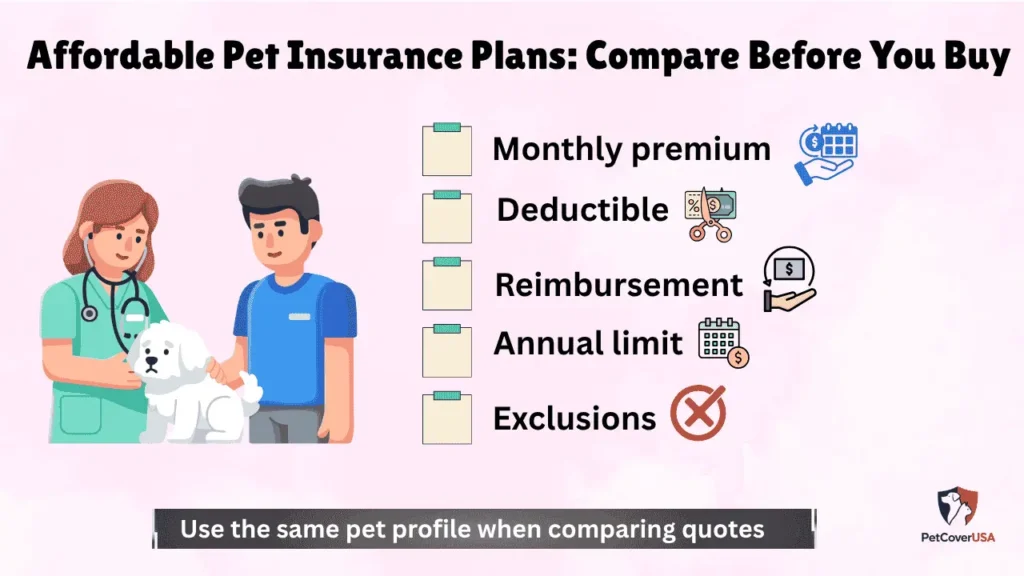
The least expensive monthly premium doesn’t necessarily represent the cheapest plan for the treatment of your pet. Always compare pet insurance options considering the same pet profile, deductible, reimbursement rate, and annual limit.
| Provider | Quote Required | Compare Carefully |
|---|---|---|
| Pets Best | Personalized quote | Deductible structure, annual limit, and age rules |
| Lemonade | Personalized quote | Waiting periods, optional benefits, and renewal pricing |
| Embrace | Personalized quote | Annual limit, wellness options, and upgrade terms |
| Healthy Paws | Personalized quote | Orthopedic rules and unlimited-coverage terms |
| Trupanion | Personalized quote | Per-condition deductible and direct-payment availability |
The cost of pet insurance premiums is influenced by a number of factors, including location, type of breed, animal’s age, species of the pet, deductible, reimbursements, annual limit, and other options chosen. Always use the same parameters to get a quote and compare the premium cost with expected out-of-pocket costs.
The least expensive monthly premium does not mean that the plan is the cheapest option. It may have different deductibles, exclusions, maximum amounts of reimbursement, and waiting periods. Review your policy document carefully before making the payments.
A Comparison Between All Quotes That You Make
When looking for a plan, it’s best to note down the five main things in any quote that you receive, including the monthly payment, deductible, percentage of reimbursements, maximum limit, and major exclusions. Then, a comparison can be done easily.
One very useful tip is to save different screens or copies of all quotes with the date on them. Later, if you change the amount for the deductible, the percentage on the reimbursement, or the maximum limit, you will save another updated quote. Hence, it will be easier to understand what changed instead of trying to recall everything from memory.
My recommendation: Don’t compare the plan with a $ 500 deductible with the one with a $1,000 deductible and then say that such and such insurer is cheaper.
The Deductible: Annual vs. Per-Incident
The overall deductible system impacts the total out-of-pocket payment amount. The two amounts, total and deductible, need to be considered as well, as sometimes they are deductible per condition, per incident, or annually.
Annual deductible
Overall, you will have to pay the deductible during one policy year only. Once the deductible is covered, the insurance company will start reimbursement based on the percentage mentioned in the policy.
Per-condition deductible:
You will need to cover a separate deductible for each condition. For instance, allergies will require one deductible; an ear infection – another; a leg injury will require the third one. This might lead to a higher cost when the pet has several possible issues.
Per-condition lifetime deductible
Some policies charge the deductible once during the time of the policy for a specific condition. It might be useful in case of chronic conditions. The insurance policy will keep the same conditions and regulations, though.
In simple words, if there are three unrelated conditions with $250 each, one would have to pay the deductible of $750. Check what the policy means by deductible before enrollment, since it might use some specific terms.
The Pre-Existing Condition: What to Know
Pet insurance usually does not cover conditions, symptoms, or medical problems that arose before coverage started or before the waiting period for coverage was complete. The specifics of the definition depend on the insurance company, so look carefully at the wording of the policy.
The following tips can help in minimizing the chances of confusion:
- Buy insurance before the occurrence of major symptoms or the appearance of medical records, if possible.
- Ask whether the insurer checks for symptoms, treatment, diagnosis, or all three.
- If the insurer has the option of reviewing the medical history or the existence of pre-existing conditions, make a request in writing.
- Ask if any resolved conditions, like Giardiasis, can be qualifying conditions after the waiting time has passed.
- Keep the records of all treatments received at the vet as well as all replies from the insurance company.
As an illustration, Embrace mentions that some curable conditions become eligible for reimbursement after 12 months of treatment-free existence, while chronic conditions remain excludable if pre-existing.
A Useful Step Prior to Enrollment
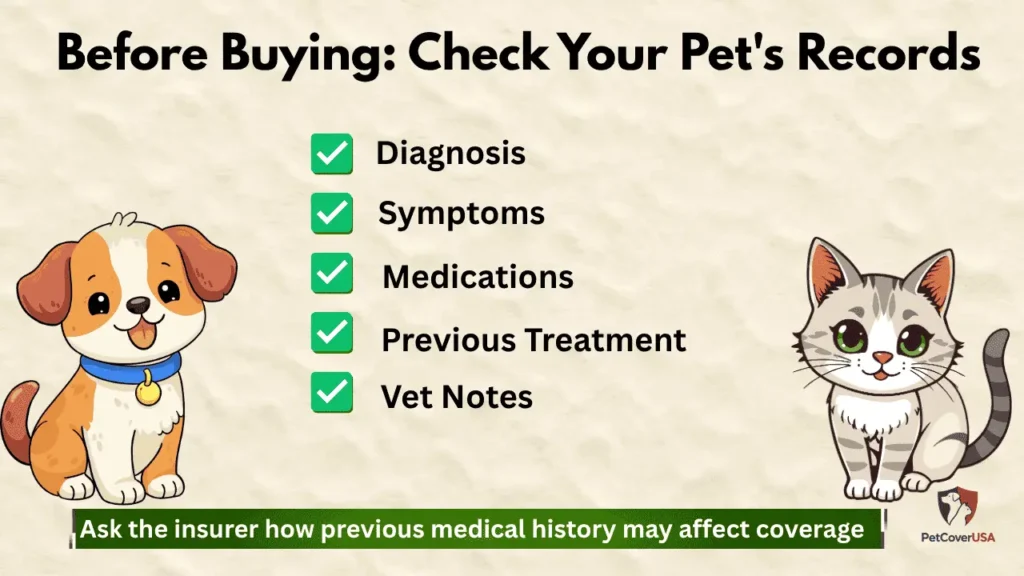
Prior to purchasing a policy, take some time to look through health records about your pet if it had a recent visit with the vet. You want to check for any past diagnoses of illnesses, their symptoms, treatments, and advice for tests.
You can also treat any misunderstanding regarding an illness the pet is suffering from and ask the insurance company how that illness would be treated according to its policy.
Please, do not expect that this will guarantee your future claim will be honored. This is only meant to help you understand the insurance before purchasing it.
Premium Increases: What to Expect
When it comes to renewing pet insurance plans, premiums are not set in stone. Some of the reasons for possible changes in premiums include the age and breed of the pet, the location of the owner, the overall trend in vet costs, and the company’s payment policy. Individual policies have different increases in premiums.
According to NAPHIA, the average dog insurance premium in the United States grew from around $49 in 2019 to $62.44 in 2024. This is not a predictive figure, but just an average for the industry as a whole. Source: naphia.org
Things to Remember When Comparing Long-Term Costs
- Find out how the company determines renewal rates and whether the pet owner’s own claims impact premium changes.
- Make sure to compare the limits and exclusions, as well as the actual cost of the insurance when comparing premiums.
- Request quotes for your pet when it turns one year old.
- Always check renewal documentation every year.
- Do not think that insuring a young pet will keep future costs down.
A New Perspective on Price
Apart from wondering, “What is my cost this month?”, consider asking whether the premium continues to fit your budget even after a price adjustment at renewal.
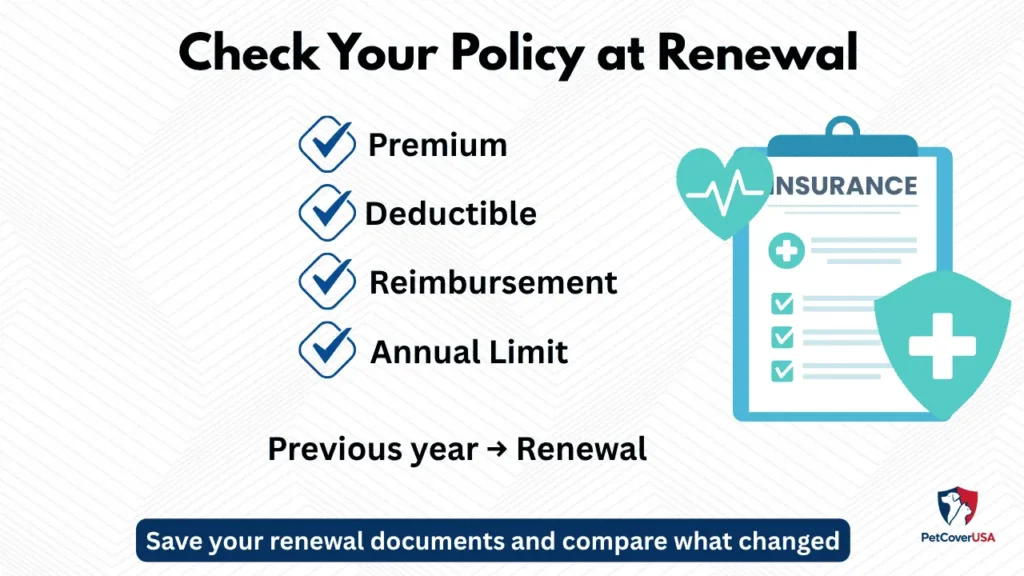
It’s a good practice to save the renewal letters and compare them with the ones from last year. Check for any changes in the premium, deductible, amount compensated, annual limit, or any other selected options.
There is no need to be able to make accurate predictions about the costs in years from now. All you need to know is what changed upon policy renewal and whether the cover fits your budget now.
Deep Research Table: What Top Plans Actually Look Like Where It Matters
| Factor | Pets Best | Lemonade | Trupanion |
|---|---|---|---|
| Deductible | Annual deductible | Annual deductible | Per-condition lifetime deductible |
| Vet payment | Optional Vet Direct Pay after approval | Reimbursement model | Direct payment may be available at participating clinics |
| Claim timing | Varies; depends on required records | Some eligible claims may be processed instantly; others take longer | Varies by claim and payment setup |
| Enrollment age | No stated upper age limit; verify current terms | Maximum age varies by policy/breed | Verify current age rules |
| Rate changes | May change at renewal | May change at renewal | Pricing structure differs; review renewal terms |
| Exam fees | Depends on the selected plan | Depends on the selected plan | Confirm current policy terms |
| Medical history review | May be required | May be required | May be required |
Policy terms, availability, claim timing, and payment options can change by state and plan. Compare the actual policy documents rather than relying on review-table rankings.
Generally, rescue pets will be subjected to a similar review of policies as normal pets, therefore making the records available from the shelters useful in determining pre-existing conditions. You should inquire about how the insurance company works with the records that they currently have regarding your adopted pet.
If You Have a Rescue Pet: The Shelter Records
Adoption of a cat or dog will result in your pet’s shelter’s veterinary records being reviewed by an insurance company when trying to figure out if a later claim relates to a pre-existing condition.
Make inquiries with the shelter or rescue prior to adoption so you can get sufficient information and records to start the insurance process.
Steps to Take
- Compare the coverage options prior to making your first trip to the vet after adopting your pet.
- Request verified records of vaccinations, treatments, and medicines.
- Ask the insurance company how pre-existing conditions are determined before and during waiting periods.
- Request written verification if a condition that has been previously cleared can still be classified.
- Find out the waiting period necessary to receive treatment, as there are different waiting periods in each insurance company and its policies being offered.
Fetch has been one of the first companies doing this, offering veterinary coverage from day one for 7 specific pre-existing conditions in newly adopted pets: upper respiratory infection, ear mites, kennel cough, feline herpes, conjunctivitis, ringworm, and puppy pyoderma. Be sure to confirm all eligibility with the company before buying the product offered. Fetchpet
How to Save on Pet Insurance
Most guides stop at “compare quotes.” Here’s what actually moves the needle in my research:
Step 1: Sign up at an early age
Pets that are younger tend to cost less upfront than older pets, and registering as soon as possible decreases the chances of facing any exclusions related to pre-existing conditions.
Step 2: Learn about payment options
Inquire about the possibility of discounts with annual payment options or no monthly bill pay fees.
Step 3: Inquire about any discounts available for multiple pets
In case you have more than one pet, find out whether any discounts are offered for multiple pets insured at once, and whether these discounts apply to all components of coverage.
Step 4: Think carefully about the deductible you will select
Opting for a higher deductible results in lower premiums at the same time.
Step 5: Inquire about any benefits from your employer
Ask if your employer has any programs for pets or discounts for pet insurance.
Step 6: Submit all claims on time
Submit all invoices, diagnoses, and medical records if needed, as failure to do so usually leads to slower processing of claims.
Frequently Asked Questions (FAQ’s)
There is no single cheapest plan for every pet. Pawlicy Advisor reports average accident-and-illness premiums of about $62.44 per month for dogs and $32.21 for cats, but actual prices vary by breed, age, location, deductible, reimbursement rate, annual limit, and provider. Compare the total coverage and policy terms rather than choosing only by monthly premium.
A documented symptom may affect coverage if the insurer’s policy treats it as evidence of a pre-existing condition. The effect depends on the policy definition, timing, medical records, and relationship between the earlier symptom and the later claim. Ask the insurer how it evaluates symptoms, diagnoses, waiting periods, and related conditions before enrolling.
Pet insurance may still be worth considering for a rescue pet, but the policy’s treatment of prior medical records and pre-existing conditions is important. Fetch states that it covers seven specified common pre-existing conditions from day one for newly adopted pets from participating shelters or rescue organizations, subject to its eligibility terms. Other insurers may apply different rules, so confirm the current policy before enrolling.
Senior-pet premiums are usually higher than premiums for younger pets, but there is no universal price. The final quote depends on age, breed, location, deductible, reimbursement rate, annual limit, and policy options. Request a personalized quote from several providers and check whether the insurer has an upper enrollment age or renewal limit.
A usual-and-customary or benefit-schedule approach may limit reimbursement to an amount the insurer considers reasonable for a procedure or service, rather than simply applying your percentage to the full veterinary invoice. Other plans reimburse a percentage of eligible expenses based on the actual bill. Ask the insurer which method applies, how the deductible is calculated, and whether annual or per-condition limits also apply.
No. Some pet-insurance brands share a parent company, administrator, or underwriting relationship, while others operate under different ownership structures. Ownership does not mean that the brands have identical policies, prices, exclusions, or claims rules. Check each provider’s current policy documents and company disclosures when comparing plans.
My 5-Minute Check Before Choosing a Plan
Prior to spending money on an insurance policy, I would typically take a look at the following things mentioned in the proposal and policy paperwork.
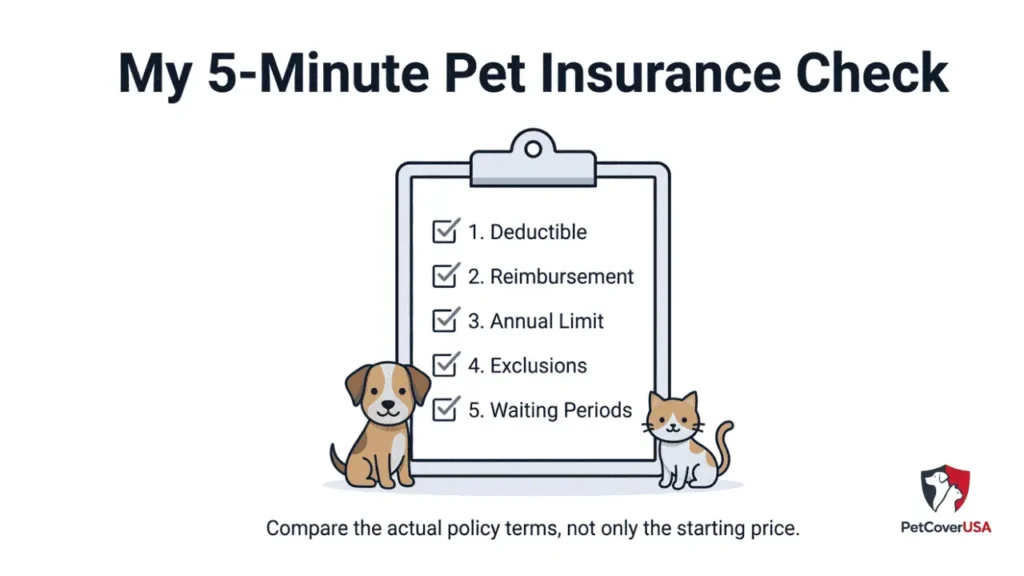
1. Deductible: Is it yearly, per condition, or some other arrangement?
2. Reimbursement: What is the percentage appearing, and how is the reimbursement calculated?
3. Annual limit: Is there a yearly cap?
4. Exclusions: Are there any exclusions that are relevant to me because of my pet’s history or the breed?
5. Waiting periods: At what point does each relevant coverage type start?
Once I checked all this information out, I would then file the proposal and policy paperwork in a safe place. In the event there is something unclear, I would ask the insurance company rather than taking this risk by assuming how things function.
This brief check will not guarantee my desired result in the claim, but it makes it possible to compare the figures based on a valid policy outline rather than just a stated payout.
Final Verdict: What “Affordable” Means
An affordable pet insurance policy is not like other insurance policies, but something that will allow you to keep paying for it while your pet is growing older, and it will be one that you are familiar with regarding the deductible, reimbursement policies, ceiling limits, and exclusions prior to filing a claim. No policy can assure that each claim will be accepted for payment.
Pets Best, Fetch, and Trupanion may fulfill different needs; however, the best one would depend on the pet’s age and breed, health history, location, and coverage requirements. Compare no less than 3 personalized quotes and ask the following questions:
- Is the deductible applied annually, per incident, or per condition?
- What is the reimbursement rate, and how are the reimbursement calculations made?
- How will the rates increase at renewal?
In addition, you should also compare waiting times, annual limits, exclusions, enrollment conditions, and the way the claims are paid. These questions will help you compare the long-term value of the insurance in a better way than just comparing the starting rate.
Related Pet Insurance Guides
Before choosing a policy based on price alone, compare what different plans actually cover with our guide to pet insurance coverage and benefits .
If you’re comparing providers as well as prices, our Lemonade pet insurance review looks at another major option in the market.
Another provider worth researching is Embrace. See our Embrace pet insurance review for more details about its plans and potential benefits.
If you’re shopping for coverage for an older pet, our guide to pet insurance for senior dogs over 10 years old covers considerations that can be especially important for older dogs.
You can also learn about exclusions that may affect the value of a policy in our guide to pre-existing conditions and pet insurance .
📅 Last Updated:

About the Author
M. Nouman is an independent researcher and writer focused on U.S. pet insurance. He reviews insurer policy documents, coverage terms, waiting periods, reimbursement options, exclusions, and publicly available veterinary and regulatory resources to create clear, research-based guides. His goal is to simplify complex insurance information so pet owners can make informed decisions based on reliable sources rather than marketing claims. Articles are reviewed and updated as policies and industry information change.
Areas of Research: Pet Insurance Policies, Coverage Analysis, Policy Comparisons, Waiting Periods, Reimbursement Models, Policy Exclusions, Claims Education