
Lemonade Pet Insurance Cost For Puppies: The Honest, No-Fluff Guide (2026)
Lemonade pet insurance cost for puppies starts at around $24-$35/ month for a young mixed-breed dog. But its actual cost depends on some factors like your puppy’s breed, your state, and when you enroll. The price you see on day one is not the price you’ll pay after two years. This guide covers the details that most of the blogs don’t tell you.
How I Researched This Guide
Before digging deeper, I would like to tell you how this guide was put together, because on a financial topic like pet insurance, you deserve to know where the information is coming from.
I reviewed Lemonade’s actual policy documents and state insurance filings, compared pricing data across 10+ breeds and 5 states over several weeks. Analyzed real user claim experiences from pet owner communities, and cross-referenced findings against data from NAPHIA, NerdWallet, Bankrate, Insurify, and Lemonade’s own published resources.
I assumed nothing in this guide. Every number has a source, listed right below the claim it supports.
Why Most Lemonade Puppy Insurance Articles Are Incomplete
While doing research on this topic, I noticed that most articles just tell you the starting price and move on. They don’t tell you about the claim maths that reduces your payout quietly. They don’t explain the 6- month trap that can leave you paying $6000 out of pocket. And they never warn you that your puppy’s first vet visit before enrollment could permanently exclude entire body systems from coverage.
That is what this guide fixes
What Factors Affect Lemonade Pet Insurance Cost for Puppies?
Real numbers, not a vague “$10 to $100” range.
Base accident and illness policy, no add-ons:
| Puppy Breed | Age | Location | Coverage | Monthly Cost |
|---|---|---|---|---|
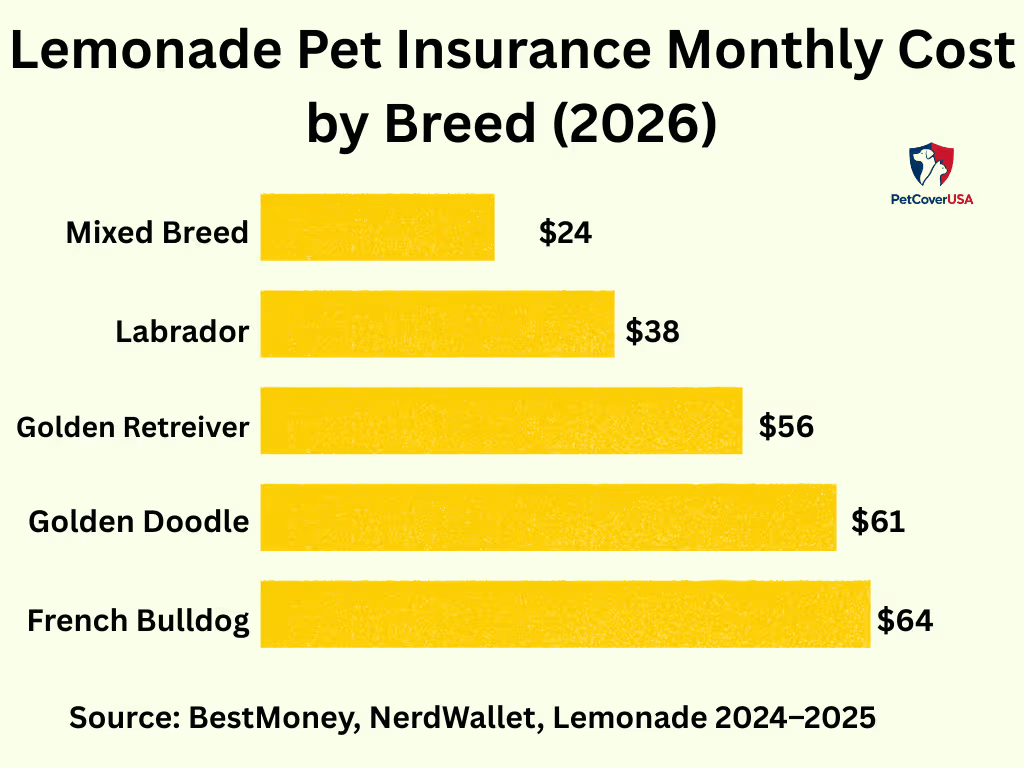
| Mixed breed (medium) | 2 months | Raleigh, NC | 90% reimb, $100K limit, $100 ded | $24.33 |
| Mixed breed (medium) | 8 weeks | Katy, TX | 80% reimb, $5K limit, $250 ded | ~$18–22 |
| Golden Retriever | Puppy | National avg | 90% reimb, $50K limit, $250 ded | ~$56 |
| Goldendoodle | 4 years | Chicago, IL | 80% reimb, max limit, $250 ded | $61 |
| All breeds average | All ages | U.S. average | Standard A&I policy | $41–$51 |
Sources: BestMoney.com sample quotes; Lemonade internal pricing data, October 2024
NerdWallet sample rate data Katy TX
The cheapest legitimate Lemonade puppy policy I found was $24.33/month, a 2-month-old mixed breed in North Carolina with high coverage settings. The most a puppy owner should expect to pay for a large or flat-faced breed with solid coverage is around $55–$65/month.
The 5 Cost Factors Nobody Explains Clearly
Breed Is the Biggest Variable
Most blogs say “breed affects price”. And that’s it. Here is what it means, actually.
The cost of insurance for large breeds like Golden Retrievers, Labs, and Bernese Mountain dogs is 40-80% more than medium mixed breeds from the very first day. Lemonade prices in the statistical likelihood of expensive claims like hip dysplasia, orthopedic issues, and cancer, which are significantly higher in large breeds.
Flat-faced breeds like French Bulldogs, Pugs, and English Bulldogs cost even more. Brachycephalic Obstructive Airway Syndrome surgeries can cost $3,000–$8,000. Expect to pay 50–100% more than a mixed-breed puppy for a Frenchie.
The average monthly premium for a French Bulldog across all U.S. insurers is $71/month, which is the highest of any breed.
Source: NAPHIA State of the Industry 2025 Highlights, reported
Your State Determines More Than You Think
During my research, I found a 30-40% price difference between states on identical coverage for the same puppy breeds. California is consistently the most expensive, and that is before accounting for the 14% state-approved rate hike that hit 57,471 California Lemonade policyholders in November 2024, pushing the average annual California premium from $710 to $827/year, which is roughly $69/month.
On the other hand, you’ll get the same policy for noticeably less money if you are living in Texas, North Carolina, or the Midwest.
Source: California Department of Insurance rate approval, reported by Insurify
Your Coverage Settings, Deductible, Co-Insurance, and Annual Limit
Lemonade gives you three adjustable settings:
- Deductible: $100, $250, $500, or $750 per year
- Reimbursement rate: 70%, 80%, or 90%
- Annual limit: $5,000 to $100,000
A puppy owner who wants strong protection should aim for a $100-$250 deductible, 80-90% reimbursment, and at least $20,000 in annual limit. Going lower will save you $5-%15/month but leaves you exposed on the expensive claims that actually matter.
Add-Ons Cost Extra, Even Basics That Competitors Include Free
Here is something that confuses people, that; Lemonade’s base policy does not cover your vet exam fee.
When your puppy visits the vet for a limping leg, and the vet charges $80 for the examination, plus $300 for the X-ray and medication, Lemonade only reimburses the $300. The exam fee requires the “Vet Visit Fee” add-on, which costs extra. At most other insurers, this is included by default.
This is one of the reasons Lemonade’s base prices look so low. Once you add vet visit fees, physical therapy Coverage, and dental illness, the total cost climbs to be comparable or even higher than competitors who bundle these in.
Age, Your Puppy Is as Cheap to Insure as It Will Ever Be
Right now, your puppy’s premium is at its base. According to Lemonade’s own renewal documentation, premiums increase annually, based on your pet’s age, regional veterinary cost inflation approved by state regulators, and industry -wide trend changes.
One thing that is genuinely policyholder-friendly: filing claims never causes your rate to go up. That is different from some competitors.
Source: Lemonade Pet Renewals documentation
The Puppy and Kitten Preventative Package: Is It Actually Worth It?
Lemonade offers a special package for pets under 2 years old. Here is what it covers at 80% reimbursement:
- 2 wellness exams
- Up to 6 vaccines or boosters
- Fecal and parasite testing
- Heartworm or FeLV/FIV testing
- Flea, tick, or heartworm medication
- Spaying or neutering, this is the biggest value item
- Microchipping
In my research, the math usually works out in favor of adding it, but only in year one.
Only a spay procedure typically costs $200-$500. Add microchipping at around $45, first-year vaccines at $75–$200, and two wellness exams at $100–$200 total, and you are looking at $420–$945 in services that the package helps reimburse.
Here is a thing that Lemonade says itself and no blogs repeat: once your puppy has been spayed or neutered and had their core vaccines, you should switch to the base Preventative Care Package at your first renewal. Staying on the Puppy package in year two means paying for benefits you have already used.
Source: Lemonade Pet Renewals guide
One more thing that nobody mentions: preventative package benefits activate the day after purchase with no waiting period. If your puppy has a vet appointment next week for their first round of shots, you can get reimbursed for it immediately.
The Hidden Claim Math That Quietly Reduces Your Payout
This is the detail that genuinely bothers me about Lemonade, and I have only seen one major publication mention it clearly.
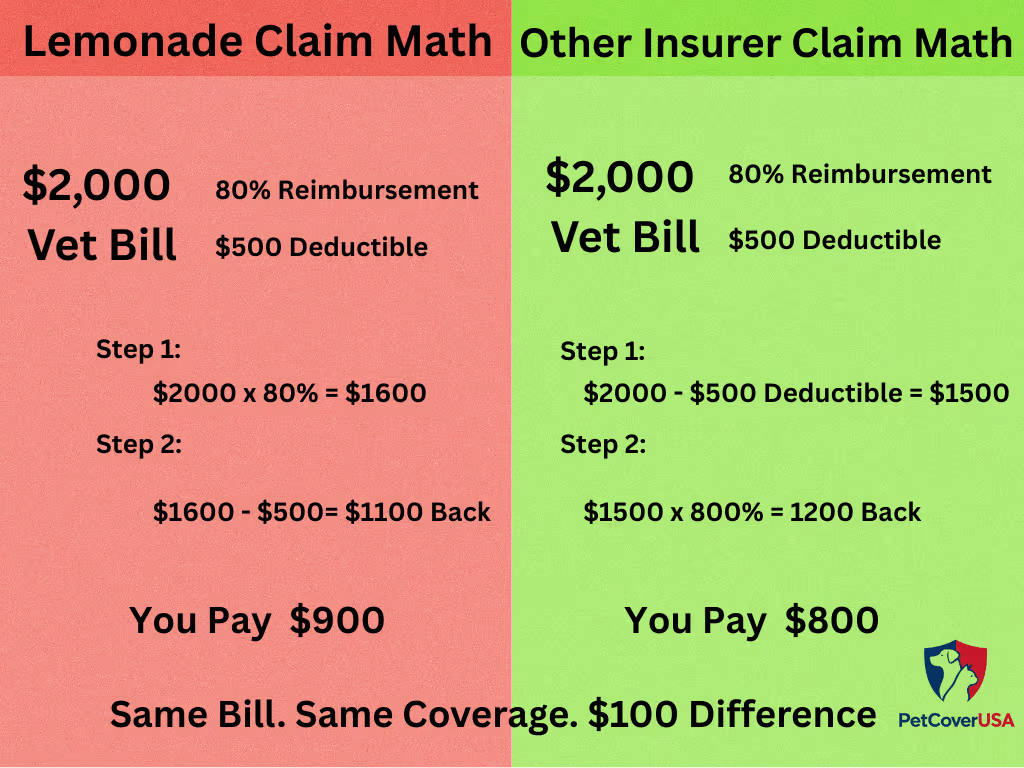
Lemonade calculates your payout by applying the reimbursement percentage first, then subtracting your deductible. Most other insurers subtract the deductible first, then apply the percentage. This sounds like an accounting detail. It is not.
Real-world impact on a $2,000 vet bill — 80% coverage, $500 deductible:
| Method | Calculation | You Get Back | You Pay |
|---|---|---|---|
| Lemonade — percentage first | $2,000 × 80% = $1,600 − $500 = $1,100 | $1,100 | $900 |
| Most competitors — deductible first | $2,000 − $500 = $1,500 × 80% = $1,200 | $1,200 | $800 |
You get $100 less back on a $2000 claim. On a $6000 TPLO surgery, that gap grows to $300 less. Lemonade’s lower premiums often still make it the better overall value, but you deserve to know this before a payout surprises you.
Source: NerdWallet Lemonade Pet Insurance Review 2026
There’s another detail most people miss. When you submit small claims before meeting your deductible, only part of the bill may count toward reducing it.
According to Lemonade’s own documentation, a $60 eligible bill with 80% reimbursement only lowers your deductible by $48, not the full $60. That’s why small puppy claims often feel like they barely make a difference.
Source: Lemonade Pet Claim Denials guide
The Waiting Period That Costs Puppy Owners the Most
The 6-month waiting period for cruciate ligament injuries is something that nobody talks about.
This is the biggest financial trap I found in my research. Here is why.
TPLO surgery, the most common treatment for a torn CCL, which is similar to a human ACL injury, can cost anywhere from $3,500 to $10,000 per leg as of 2025.
For large breeds and active dogs, CCL injuries are surprisingly common.
Source: Lemonade TPLO Surgery Cost Guide
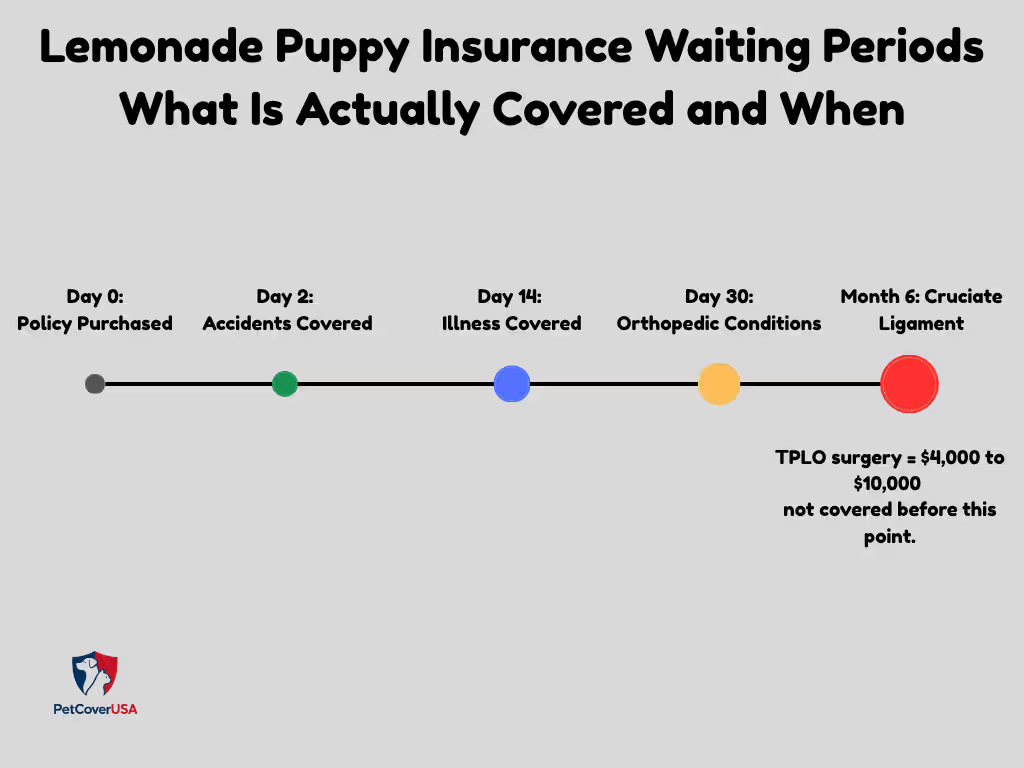
If your puppy tears a ligament after 4 months of enrollment, you get nothing back. The 6- month cruciate waiting period has not elapsed. You pay the full $4000-$8000 out of pocket.
For Context: Lemonade’s accident waiting period is 2 days. Illness is 14 days. General orthopedic conditions are 30 days. But cruciate ligaments specifically require 6 months. This single detail can have one of the biggest real-world financial impacts on pet owners, yet most review sites mention it briefly in a comparison table without explaining what it could actually cost you.
If you have a large-breed puppy and you are comparing insurers, check the cruciate waiting period before signing anything.
The Pre-Existing Condition Trap: The Most Important Section in This Guide
Every vet visit your puppy has before enrollment becomes a potential coverage exclusion.
When you sign up, Lemonade requests your pet’s complete medical records, which are called SOAP notes. Their underwriting team reviews these records to identify pre-existing conditions. According to Lemonade’s policy, a pre- existing condition includes any illness, health issues, or associated signs or symptoms your pet showed before your waiting period ended.
Here are real edge cases that create problems:
- Your vet noted “mild joint stiffness” at the 8-week checkup → future orthopedic claims may be reviewed skeptically
- Your puppy had one documented loose stool episode at 10 weeks → GI claims could be flagged as potentially pre-existing
- Your puppy limped once after rough play at 3 months → this could affect ligament-related claim decisions
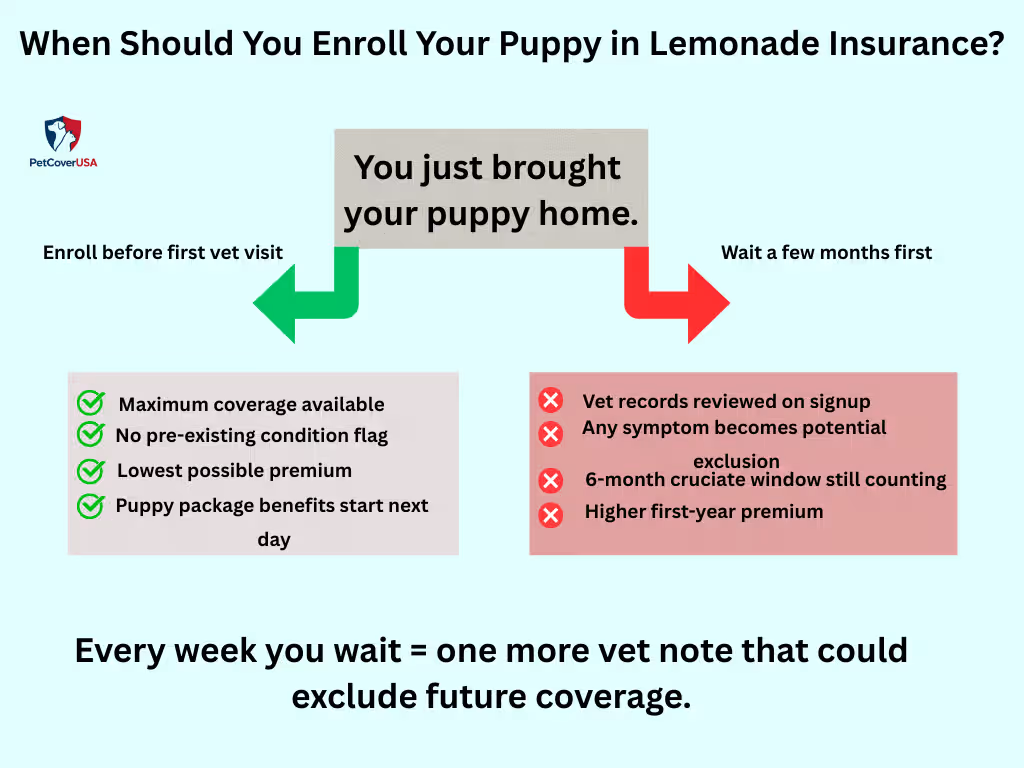
My strong recommendation from this research: enroll your puppy as close to 8 weeks old as possible, before they have any vet visits. The premium difference between enrolling at 8 weeks and 6 months is roughly $10-$15/month. The coverage difference can be worth thousands of dollars in claims that would be otherwise denied.
As Lemonade itself states:
“It generally pays to get your dog or cat signed up when they’re a puppy or kitten, before they’ve had much of a chance to develop any health complications.”
Lemonade Pet Insurance
Source: Lemonade Pet Insurance FAQ
One important note for people who have already waited: Lemonade can cover cured pre-existing conditions in most states if your pet has been completely symptom-free and treatment-free for 12 months. This does not apply to chronic conditions like diabetes or allergies, but it does apply to things like a resolved ear infection or a past GI issue.
Deep Research Comparison: Lemonade vs. Healthy Paws vs. Pets Best for Puppies
I chose these three specifically because they represent three distinct approaches to puppy coverage in the current U.S. market.
| Feature | Lemonade | Healthy Paws | Pets Best |
|---|---|---|---|
| Starting puppy price | ~$24/mo | ~$30/mo | ~$22/mo |
| Deductible options | $100–$750/yr | $100–$500/yr | $50–$1,000/yr |
| Reimbursement rates | 70%, 80%, 90% | 70%, 80%, 90% | 70%, 80%, 90% |
| Annual limit | $5K–$100K | Unlimited | Unlimited |
| Vet exam fee in base plan | No — add-on required | Yes — included | Yes — included |
| Cruciate waiting period | 6 months | 12 months | 14 days |
| Puppy wellness package | Yes | No | Yes |
| Claim math order | % applied first | Deductible first | Deductible first |
| Rate increase from claims | Never | Never | Never |
| Direct vet payment | No | No | No |
| Enrollment age minimum | 8 weeks | 8 weeks | 7 weeks |
| States available | 42 + DC | 50 | 50 |
| App-based claims | Yes — AI powered | No dedicated app | Yes |
| Average monthly dog premium | $41–$51 | ~$38–$55 | ~$35–$50 |
The most important queue for large-breed dog owners is the crucible waiting period. Best Pet at 14 days is dramatically better than lemonade for breeds like Labradors, Golden Retrievers, and German Shepherds, where CCL injuries are a statistical possibility. However, Pets Best charges extra for the unlimited annual coverage that Healthy Paws includes by default.
Sources: NerdWallet Best Pet Insurance Companies 2026
What Happens to Your Cost as Your Puppy Ages?
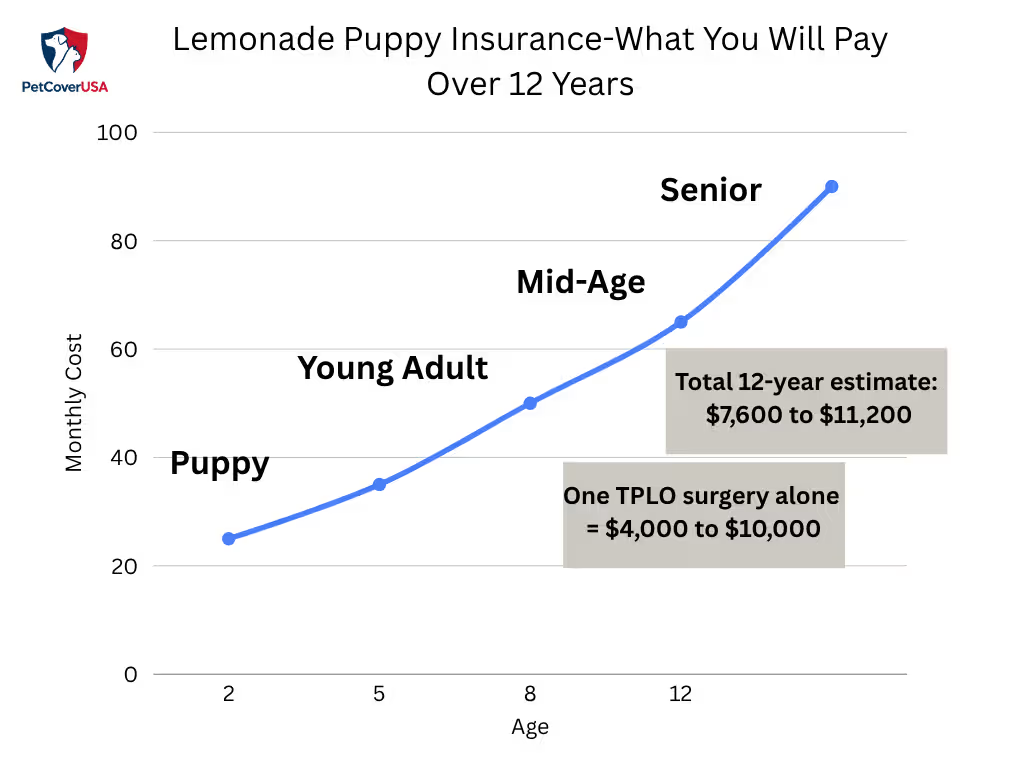
Here’s a realistic long-term cost estimate for a medium-sized dog insured from a puppy with Lemonade, 80% reimbursement, $250 deductible, $20K annual limit:
| Life Stage | Age | Estimated Monthly | Annual Total |
|---|---|---|---|
| Puppy — small or medium breed | 0–2 years | $25–$35 | $300–$420 |
| Young adult | 2–5 years | $35–$50 | $420–$600 |
| Mid-age | 5–8 years | $50–$65 | $600–$780 |
| Senior | 8–12 years | $65–$90 | $780–$1,080 |
| 12-year estimated total | — | — | $7,600–$11,200 |
Is that a lot of money over a dog’s life? Here is the counter-argument: one cancer diagnosis in a Golden Retriever costs $5,000–$20,000. One TPLO surgery runs $4,000–$10,000. One overnight emergency hospitalization with IV fluids averages $1,200–$4,000. The highest single claim Trupanion paid out in all of 2024 was $76,974.
Source: Pet insurance cost data reported by State Farm
The math is not about whether your dog will have an emergency. It is about what happens to your finances when they do.
What Real Puppy Owners Say And What They Wish They Had Known
After reviewing owner community discussions about Lemonade puppy insurance across different platforms, consistent things came up that common review blogs never cover:
What people are happy about:
- Claim reimbursement speed: Many report same-day or next-day deposits for straightforward claims
- The app experience is genuinely better than most competitors in the market
- The Puppy package saves real money in year one for owners who use the spay and neuter benefit
What surprises people negatively:
- The renewal rate jump, a policy that costs $31/month, becomes $47/month at year two, is a common complaint
- Receiving less reimbursement than expected on larger bills because of the claim math order explained above
- Pre-existing condition disputes when vet notes from before enrollment mention even passing symptoms
The most consistent advice from actual Lemonade puppy owners: Enroll your puppy the week you bring them home, and add the vet visit fee add-on from day one; you will use it immediately for those first-month checkups.
How to Get Maximum Value From a Lemonade Puppy Policy
Based on everything in this research, here is what I would do:
Enroll at 8 weeks before the first vet visit if at all possible.
The pre-existing condition review is your biggest risk. Every appointment before enrollment is a potential future claim denial.
Choose the $250 deductible over the $100 deductible.
You will save $8–$12/month and still have meaningful coverage on larger claims. The $100 deductible only makes sense for breeds prone to frequent small-dollar illness visits.
Get 80% reimbursement minimum.
Dropping to 70% to save $5/month is a false economy. On a $5,000 surgery, 70% pays you $850 less than 90%.
Add the vet visit fee add-on immediately
It costs $4–$9/month, and you will almost certainly use it during your puppy’s first year.
Use the Puppy Preventative Package in year one only.
Get the value from spay or neuter and first-year vaccines, then downgrade at renewal.
Stack every discount available.
Pay annually for 5% off plus $24 in waived transaction fees. Bundle with a Lemonade renters or homeowners policy for 10% off. Insure a second pet for an additional 5–10% off both policies.
Set a renewal calendar reminder.
You have 14 days after renewal to increase your coverage level. Miss that window, and you are locked out for another year.
Frequently Asked Questions
What is the cheapest Lemonade puppy insurance policy?
Does Lemonade pet insurance cost increase every year for puppies?
Is the Lemonade Puppy Preventative Package worth the extra cost?
What is Lemonade’s waiting period for puppy accident coverage?
Can I use any vet with Lemonade pet insurance?
How fast does Lemonade pay pet insurance claims?
Source: bankrate.com/insurance/pet-insurance/lemonade
What if Lemonade is not available in my state?
Does Lemonade cover hereditary conditions like hip dysplasia in puppies?
The Bottom Line
Lemonade is genuinely one of the most affordable options for puppies, for puppy owners, particularly those with small to medium mixed breeds in moderate-cost states. It delivers solid value. The app is excellent. The claim process is fast. The puppy package pays off in year one.
But going in with your eyes open matters.
The 6-month cruciate waiting period is the biggest financial risk in the policy. The claim calculation method quietly reduces payouts compared to competitors. The base policy without add-ons is thinner than the starting price suggests. And if you are insuring a large breed or a flat-faced breed, your actual monthly cost will be higher than average.
The single most important thing you can do to save your puppy and your pocket is that if you brought your puppy home today, do not wait. Every week you delay is a week your puppy can develop a condition that permanently limits their coverage. Get a quote before their next vet appointment
- Lemonade Pet Insurance Review 2025: Is It Worth It? – Explore detailed plans, real user experiences, and pricing to see if Lemonade fits your puppy’s needs.
- Real Embrace Pet Insurance 2026 Review – Honest insights on hidden costs, coverage limits, and whether Embrace is worth the investment for your pet.
- Affordable Pet Insurance Plans for Dogs & Cats 2025 – Find budget-friendly options that still provide strong coverage without breaking the bank.
- Compare Best Pet Insurance for Older Dogs 2025 – Side-by-side look at senior dog plans, including limits, waiting periods, and costs.
- Best Pet Insurance That Covers Everything – A roundup of comprehensive plans protecting your pet from accidents, illnesses, and advanced care.
📅 Last Updated:
✅ Verified by: John Smith, Pet Insurance Specialist

About the Author
M. Nouman is a pet insurance researcher with over seven years of experience analyzing U.S. pet insurance policies, coverage terms, exclusions, and real claim practices. His work focuses on simplifying complex insurance language into clear, practical guidance so pet owners can make informed decisions based on research rather than promotional claims.
Expertise: Pet Insurance Reviews, Coverage Analysis, Claims Process, Policy Comparison
Research insights available on Quora and professional profile on LinkedIn .