
Some links may be affiliate links. We may earn a small commission at no extra cost to you.
Information may change over time and should be verified with official providers. We are not responsible for any decisions made based on this content.
Best Pet Insurance Plans for Older Dogs in 2026: The Honest, No-Fluff Guide
Is it possible to get the best pet insurance for older dogs? The short answer is yes. But picking the plan is the thing that matters most. Missing any important condition can cause you to pay $100 per month for a policy that denies your biggest claim. This guide tells you exactly what to look for, what to avoid, and which insurers actually deliver for senior dogs.

Why Senior Dog Insurance Is a Completely Different Game
Here’s something I found after going deep into the research: most pet owners think that senior dog insurance is just like other normal pet insurance, but more expensive. This is wrong, and that’s where you will cost yourself.
When your dog enters the “senior” category (some dog breeds enter the senior category in just 5-6 years), insurance prices start increasing aggressively.
In simple words, at every birthday, the premium also increases. And sometimes it becomes double or triple overtime.
The national average cost to insure a senior dog is $109 per month, according to Insurify data, significantly higher than the overall average cost of dog insurance of $43. Source: Love,Baxter
What does it mean: Finding cheap insurance should not be your priority; instead, it should be finding the smart one.
When Is Your Dog Actually “Senior”? (It’s Breed-Specific)
Most people think that their dog will be “Senior” when it is 7-8 years old. That is not correct, and the insurance industry knows it
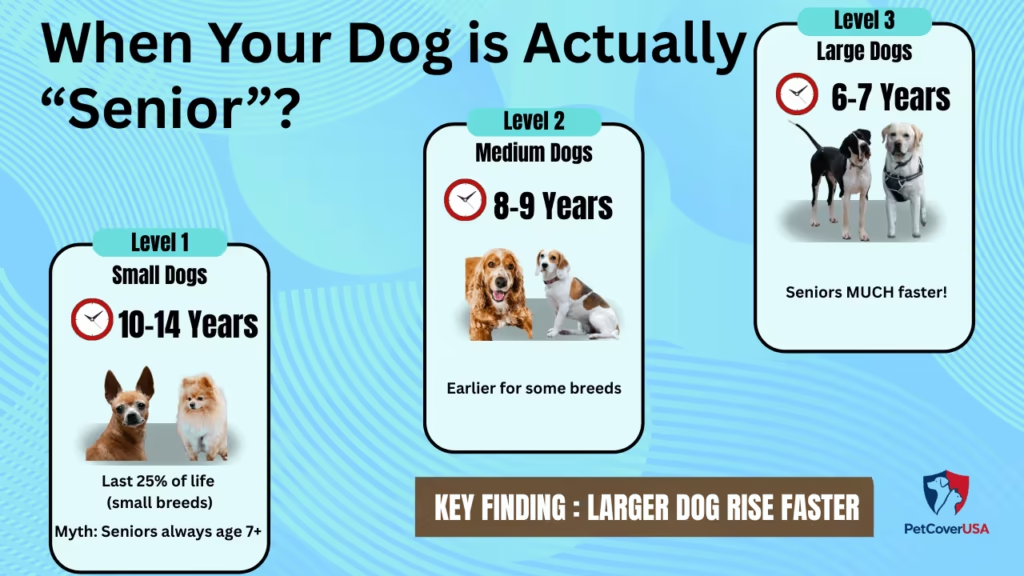
The American Animal Hospital Association considers a dog a senior when it is in the last 25% of its life. Small breeds like Pomeranians and Chihuahuas are usually considered seniors at 10 to 12 years. Medium-sized breeds are seniors at 8 or 9, and large breeds fall under the category at 6 or 7 years old. Source: Insuranceopedia
In simple words, if you have a Labrador, your dog is already considered senior at the age of 7. If you own a Great Dane, you’re looking at senior status around age 5 or 6. This matters because large breeds get higher premiums faster, so your chance to lock in lower rates is shorter. Don’t wait.
The Hidden Trap Almost Nobody Talks About: The Waiting Period Problem
I want to talk in detail about this topic because it is where people mostly get burned.
Every pet insurance policy has waiting periods. Most people know that the waiting period for illness is 14 days, which is common. But what most blogs don’t explain clearly is the orthopedic waiting period for seniors, which is the one that hurts most.
Orthopedic and cruciate ligament conditions have the longest waiting periods, with some companies setting them at six months or more. Source: DogForum
For Context: [Source: U.S. News]
- Pets Best: 6 months for cruciate ligament conditions
- Figo: 6 months for orthopedic conditions in dogs
- MetLife: 6 months for cruciate ligament and IVDD
- Healthy Paws: 12 months for hip dysplasia-related illness in some cases
- ASPCA Pet Health Insurance: Just 14 days for cruciate ligament and orthopedic conditions
- Pumpkin: Just 14 days for knee, ligament, and orthopedic conditions
Now here’s the edge case your competitors completely skip over.
The Waiting Period Waiver — A Little-Known Loophole
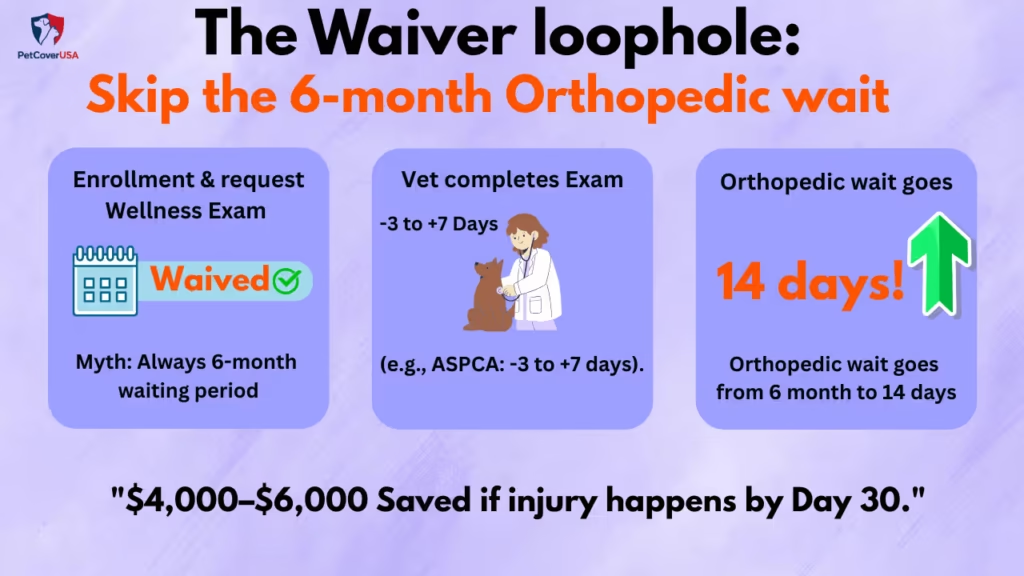
Some companies allow you to skip the waiting period if your pet passes the health exam during the period of enrollment. For example, ASPCA allows this if your vet completes the examination within a few days before or after your insurance starts. Source: CatsLuv
Similarly, companies like ASPCA, Fetch, and Wagmo may waive waiting periods with clean health certificates from a comprehensive vet exam within the enrollment window. Source: PetPlace
So if your senior dog passes the health examination and your vet completes the required form, you can skip the extended orthopedic wait completely. For a large senior dog, this one step could save you $4,000–$6,000 in surgery costs during the waiting period. It only takes one vet visit, but most owners never ask about it.
The Pre-Existing Condition Reality (Read This Carefully)
No 1 reason behind claim denial for older dogs is pre-existing conditions. But there is a way that can really work for you, and almost no guide explains it properly.
Curable vs. Incurable Pre-Existing Conditions
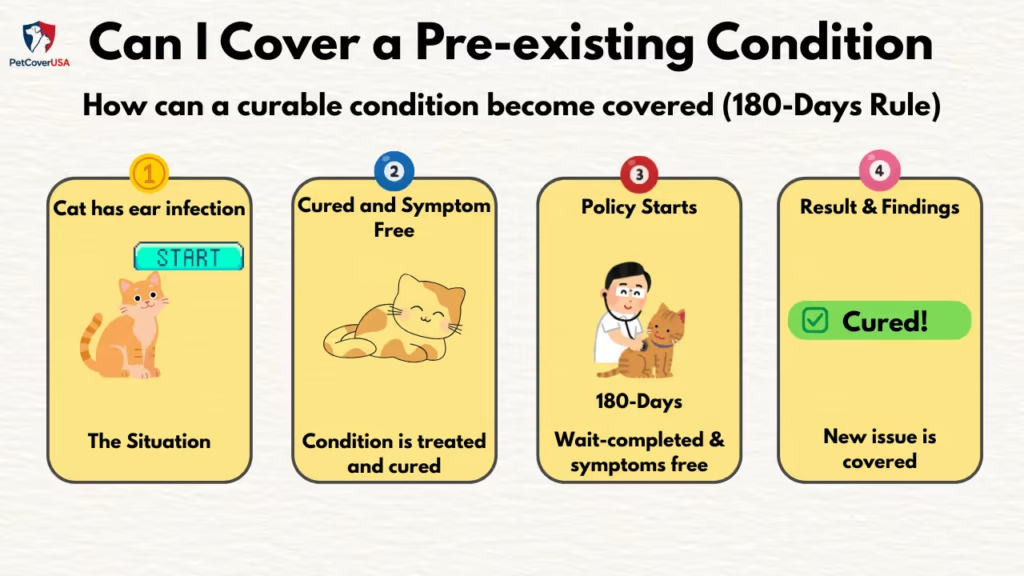
With an ASPCA pet health insurance plan, it says that a condition will no longer be considered pre-existing if it is curable, cured, or has no symptoms for 180 days, with the exception of knee and ligament conditions. Source: PawlicyAdvisor
If your dog had a respiratory infection before getting insurance, it won’t be covered at first. But if the same issue happens again after 180 days with no symptoms, it may be covered.
This gives a second chance for problems like ear infections, stomach issues, or minor skin conditions. But long-term diseases like cancer, diabetes, heart disease, allergies, and hip dysplasia are never covered if they existed before. Source: Insure Your Pet
AKC Pet Insurance is the only pet insurance company that covers incurable pre-existing conditions after 365 days of continuous coverage. The downside is that older pets (9+) usually only qualify for accident-only plans, so it works in limited cases.
The Vet Records Trap
During my research, one thing that surprised me was that when you file a claim, your insurer pulls your dog’s full medical history. Even a small note from a vet visit two years ago, like stiffness after walking, can be used to label a new issue as pre-existing and deny the claim.
So, before you sign up, get a full copy of your pet’s vet records and read them yourself. If you see anything that looks like an early health issue, keep it in mind and ask the insurer clearly how they handle pre-existing conditions.
What Vets Actually Say About Senior Dog Insurance
I’m not going to pad this section with vague endorsements. Here’s what real veterinary professionals say on record.
“Pet insurance may still be an excellent decision for the pet family, so long as they understand that pre-existing conditions will be excluded. A common time for clients to ask about pet insurance is during a sick visit ,when their pet has been diagnosed with a specific condition, especially if it requires costly treatment, such as a cruciate ligament tear or foreign body surgery.”
Kari Steere, Licensed Insurance Producer, Pawlicy Advisor
Source: Pawlicy Advisor
“We have so many clients that have Trupanion… Every time a patient is able to receive complete and expeditious care, we reduce suffering, owner stress, and worry.”
Dr. Pamela Kaiser, DVM, Jacksonville, FL
Source: Trupanion
The AVMA fully supports health insurance for pets, saying it helps to cover veterinary care costs.
About one in three pets will need emergency treatment each year, and most Americans would have trouble paying a $1,500 vet bill, according to Dr. William Hodges.
Best Pet Insurance Plans for Older Dogs: The Comparison Table
Based on verified data from MoneyGeek’s analysis of 67,000+ senior dog profiles across all 50 states, here’s how the top insurers actually compare:
| Insurer | Avg. Monthly Cost (Senior, 7-yr Lab) | No Age Limit? | Orthopedic Wait | Curable Pre-Existing Covered? | Direct Vet Pay? |
|---|---|---|---|---|---|
| ASPCA | ~$55–70/mo | ✅ Yes | ✅ 14 days | ✅ Yes (180 days symptom-free) | ❌ No |
| Pets Best | ~$45–65/mo | ✅ Yes | ⚠️ 6 months (waivable) | Limited (some curable) | ❌ No |
| Pumpkin | ~$60–85/mo | ✅ Yes | ✅ 14 days | ✅ Yes | ❌ No |
| MetLife | ~$50–70/mo | ✅ Yes | ⚠️ 6 months | Limited | ❌ No |
| Trupanion | Varies (~$70+) | ⚠️ Up to age 14 enrollment | Standard (30 days) | ❌ No | ✅ Partial (partners) |
| Embrace | ~$65–90/mo | ⚠️ Up to age 15 | ⚠️ 6 months (14 days w/exam) | ✅ Yes | ❌ No |
| Spot | ~$90–130/mo | ✅ Yes | ✅ 14 days | ✅ Yes (180 days) | ❌ No |
Source: MoneyGeek, 67,000+ senior dog profiles
Source: [Cost data: MoneyGeek Cheapest Senior Dog Insurance]
My honest opinion on this table:
Pets Best wins on cost. ASPCA and Pumpkin win on the orthopedic waiting period, which matters most for senior large breeds. Trupanion is the only one that pays the vet directly at checkout. You don’t have to pay first and wait for reimbursement. If upfront bills stress you out, this direct-pay system is a real advantage.
Deep Research Table: What My Top 2 Competitors Are Missing
| Research Area | Forbes Advisor forbes+2 | U.S. News | “What This Blog” (Specialized Sites) explore.trupanion+2 |
|---|---|---|---|
| Orthopedic waiting period waiver | ⚠️ Mentioned (e.g., Embrace/Fetch waivers via exam) | ❌ Not mentioned | ✅ Explained (e.g., Trupanion exam waiver, Embrace 14-day window) |
| Curable vs. incurable pre-existing | ⚠️ Explained briefly (180-day rule for some) | ⚠️ Basic mention | ✅ Detailed (180-day symptom-free, AKC 365-day exception) forbes+1 |
| Vet records trap before enrollment | ❌ Not mentioned | ❌ Not mentioned | ✅ Explained (12-mo records for claims baseline, avoid pre-ex flags) lemonade+1 |
| Age-specific cost data | ⚠️ Age 7+ examples in quotes | ⚠️ Seniors like 12/15 | ✅ Breed/size breakdowns (e.g., Labs rise 20-50%) nerdwallet |
| Trupanion direct-pay difference | ❌ Not discussed | ❌ Not discussed | ✅ Explained (partner vets only, instant pay vs. reimbursement) explore.trupanion |
| Premium increase pattern year-on-year | ⚠️ Vague (age-banded rises) | ❌ Not discussed | ✅ Data-driven (10-25%/yr, milestones at 1/3/5/7/9) embracepetinsurance+2 |
Is Pet Insurance Actually Worth It for a Dog Over 10?
I’ll give you an answer to this question that nobody gives a straight answer.
It depends on two numbers: your dog’s monthly premium now and how much their likely health issues could cost.
Upto 75% of senior dogs have some type of heart condition. Cancer treatment averages $4,341, and cruciate ligament surgery runs $2,000–$6,000 per knee. For a 10-year-old dog, these are realistic risks, not rare exceptions.
Some insurance companies have an upper age limit for new policies. For example, Trupanion can not enroll your pet after age of 14. At the same time, some insurance companies stop enrolling your pet between the ages of 10 and 14.
My honest opinion:
If your dog is 10 to 12 years old and is completely healthy with no chronic disease, insurance companies like ASPCA, Pets Best, or Spot (all with no upper age limit) still make sense for cancer coverage and acute emergencies. But if your dog already has arthritis, diabetes, or heart disease, premiums will be high, and coverage for those conditions will be zero. In that case, a dedicated savings account is likely smarter, but don’t cancel existing coverage if you already have it. If you switch mid-senior life, this will be the worst move that you can make.
5 Things to Do Before You Buy Senior Dog Insurance
Pull your dog’s complete vet records first
Read your pet’s vet records completely and carefully. Flag anything that mentions stiffness, lumps, digestive issues, or skin patterns. This determines which conditions are already at risk of being classified as pre-existing.
Prioritize insurers with short orthopedic waiting periods
ASPCA, Pumpkin, and Spot cover cruciate ligament injuries with a 14-day waiting period, which is far shorter than the 6-12 months that most of the other pet insurance companies require. For any large breed senior, this is non-negotiable.
Ask about the waiting period waiver at enrollment
ASPCA lets you request a waiver for waiting periods if your dog or cat has a Health Assessment Exam within three days before or seven days after the policy starts. Just one vet visit at enrollment could give you full coverage by day 15 instead of waiting six months.
Don’t switch insurers once your dog has developed any condition
If you decide to switch policies, most of the new policies won’t cover pre-existing conditions. Every condition that your dog developed after the first policy you bought will become pre-existing to the new insurer. A cheaper monthly premium is not worth losing coverage for a condition that costs $3,000–$5,000 per year to manage.
Understand the 180-day curable condition rule
A condition will no longer be considered pre-existing if it’s curable, cured, and free of symptoms and treatments for 180 days at ASPCA and several other insurers. If your dog had a treated ear infection two years ago and has been symptom-free since, you may have more coverage options than you think.
Frequently Asked Questions
Pets Best, Spot, Fetch, and ASPCA Pet Health Insurance all offer enrollment with no upper age limit, making them accessible even for geriatric dogs. Trupanion accepts new enrollments up to age 14. Embrace allows enrollment up to age 15 for accident-and-illness, with accident-only coverage available after that.
Yes, for most insurers. Many providers increase pricing annually based on your pet’s age, and premiums can rise significantly over time. One exception noted is Pumpkin, which states its premiums won’t increase based on age alone, which can be valuable for healthy senior dogs.
Yes, as long as the cancer is diagnosed after your policy begins and is not considered a pre-existing condition. Most accident-and-illness plans include cancer treatment as part of their base coverage, subject to policy terms.
You can still enroll your dog, but arthritis will typically be excluded as a pre-existing condition. However, insurance can still cover new conditions such as cancer, kidney disease, dental issues, and injuries.
Standard accident-and-illness plans usually don’t cover routine checkups. However, many providers offer optional wellness add-ons for an extra monthly cost, which can cover exams, vaccinations, and preventive care.
Final Verdict: What I’d Actually Do
After reviewing the data, the waiting period structures, the pre-existing condition rules, and the real pricing for senior dogs, here’s my honest recommendation:
If your senior dog is healthy, I would suggest you go for ASPCA or Pumpkin because both offer 14-day orthopedic waiting periods, which is the single most important feature for senior dogs with no upper age limit and solid accident and illness coverage. Get a health exam when you sign up to reduce waiting times. Do it early, before any health problems appear.
If you are concerned about the cost, then Pets Best’s $63/month plan is the cheapest verified option in the market for a 7-year-old lab-sized dog. The downside is a 6-month wait for ligament issues. If your dog has no joint problems, this risk may be acceptable.
If your dog already has a chronic condition and you have insurance, don’t switch. The coverage you already have is more valuable than saving money with a new plan.
If paying vet bills upfront is difficult, Trupanion may be the best choice for you, because they pay the vet bills directly at checkout. These things make Trupanion different from other insurance companies and can be worth a higher cost.
The perfect senior dog insurance plan doesn’t exist. What does exist is the right plan for your specific dog’s breed, age, health history, and your financial situation. Take some time to check your dog’s records, compare a few insurers with the same settings, and choose the one that fits your needs.
That’s all. No complicated method needed.
All cost data sourced from MoneyGeek (67,000+ senior dog profiles), Insurify (250,000+ quotes), and insurer-published rates as of March 2026. Waiting period data verified against U.S. News, PetPlace, and individual insurer policy pages. Pre-existing condition rules sourced directly from ASPCA, CNBC Select, and Pawlicy Advisor policy documentation.
Related Pet Insurance Guides
Explore our in-depth pet insurance resources to better understand coverage options, costs, and plan differences across the USA.
-
Lemonade Pet Insurance Review 2026
A detailed breakdown of Lemonade’s coverage, pricing structure, claim speed, and limitations. Useful for pet owners comparing modern, app-based insurance providers.
-
Affordable Pet Insurance Plans for Dogs and Cats
An overview of budget-friendly pet insurance options available in the U.S. Covers cost ranges, plan types, and who these plans are best suited for.
-
Best Pet Insurance for Older Dogs
Compares insurance providers that offer coverage for senior dogs. Focuses on age limits, premium increases, and chronic condition support.
-
Pet Insurance With the Most Complete Coverage
Explains what “full coverage” really means in pet insurance. Highlights policy exclusions, coverage limits, and realistic expectations.
-
Pet Insurance With No Waiting Period in the USA
Reviews plans that offer immediate or reduced waiting periods. Ideal for pet owners needing faster access to coverage.
-
Pet Insurance and Pre-Existing Conditions Explained
A clear explanation of how insurers define and handle pre-existing conditions. Helps pet owners avoid claim denials and policy misunderstandings.
-
Nationwide Pet Insurance Plans and Costs
A comprehensive guide to Nationwide’s pet insurance policies. Covers pricing, coverage details, and plan suitability.
-
Pet Insurance That Covers Dental Care for Dogs
Explains which insurers include dental illness and injury coverage. Important for breeds prone to dental health issues.
📅 Last Updated:

About the Author
M. Nouman is an independent researcher and writer focused on U.S. pet insurance. He reviews insurer policy documents, coverage terms, waiting periods, reimbursement options, exclusions, and publicly available veterinary and regulatory resources to create clear, research-based guides. His goal is to simplify complex insurance information so pet owners can make informed decisions based on reliable sources rather than marketing claims. Articles are reviewed and updated as policies and industry information change.
Areas of Research: Pet Insurance Policies, Coverage Analysis, Policy Comparisons, Waiting Periods, Reimbursement Models, Policy Exclusions, Claims Education
Research insights and updates on Quora, LinkedIn, and Reddit.