
Vet Recommended Cat Training Treats: A Practical Guide for Safe and Effective Cat Training
Training cats typically begins with simple rewards. Treated with many different kinds of treats, you will often start to see how, very quickly, you will see that treats will promote other kinds of behaviors much faster than punishments or commands. One of the most commonly asked questions at veterinarians’ offices or in cat behavior forums is what treats do vets recommend for use in training cats.
When answering the question, it is important to recognize that the answer to the question may not be brand-specific. Vets will look at the nutritional quality of the treat, controllable portions of the treat, and how the treat has been shown to positively train the cat, rather than the companies’ claims of how good their product will be to train cats. Therefore, with some careful consideration of the types of treats chosen, you can expect your training for your cat to be much more successful while still providing a healthy cat.
This guide will cover the steps in choosing vet-recommended treats for training, how to use those treats, and how to avoid common mistakes made by cat owners. The purpose of this guide is to provide you with the tools and knowledge needed to train your cat successfully while maintaining their complete nutritional health.
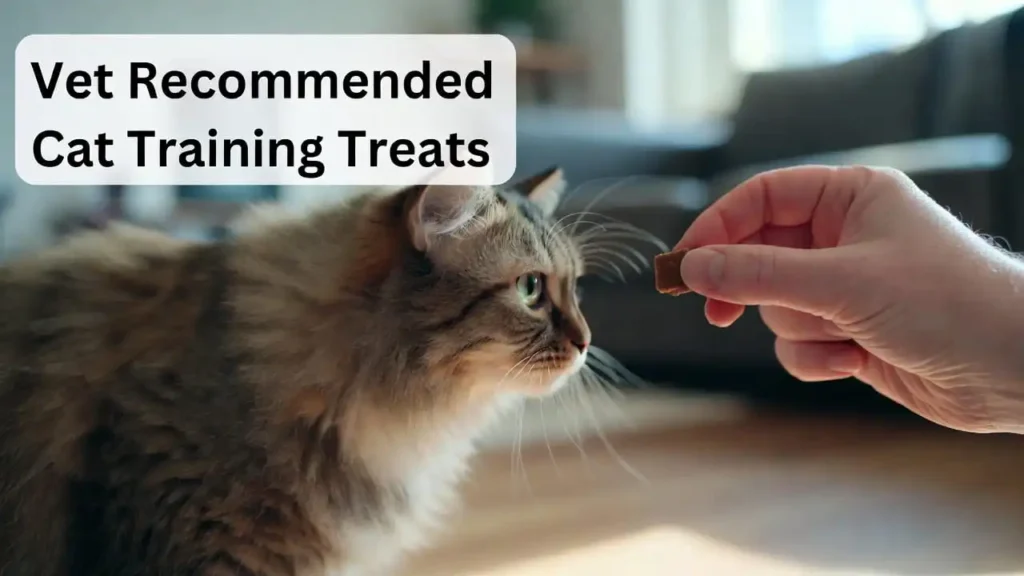
Why Treats Work in Cat Training
Positive reinforcement is the most effective way to train a cat. By providing a reward immediately after a behavior, you are more likely to see that behavior again.
In cat training, food is a signal to the cat that what it did was correct.
Veterinary behavior specialists often stress this concept.
A certified animal behaviorist who works with programs that train cats states:
“Providing a food reward is one of the most effective ways to reinforce behavior in your cat because it’s immediate, distinct, and understandable by the animal.”
Dr. Mikel Delgado
This is also true for using clicker training, litter box training, or socializing your pet.
Not all treats are appropriate, however. Some have too many fillers or are artificial; other treats may have too many calories; all of these can negatively affect the health of your cat as a result of mixing training with other rewards.
What Veterinarians Look for in Training Treats
The four main things that vets use to assess cat treats include:
High Protein Content
How do I start my new food once I get it??
Cats (as carnivores) require a diet consisting primarily of animal protein so that they can function properly, gain energy, and have proper levels of muscle.
As a result, veterinarians recommend that the primary ingredient in a training treat be real meat or fish; for example:
- Chicken
- Turkey
- Salmon
- Tuna
- Duck
The higher protein content in a training treat may also help to keep your cat motivated. Cats respond stronger when they are rewarded with meat (vs. some food source that is not meat).
Small Portions
Usually, training takes several attempts. Therefore, if you have a large (calorie-laden) treat to reward your cat for doing something right, your cat will ingest too many calories.
Therefore, vets recommend small and/or breakable treats to reward cats for doing something right without overfeeding them, the treat should contain 2 calories or less.
Few Ingredients
Some cats develop sensitivities to the extra ingredients in treats (such as artificial flavoring, preservatives, or grains). This can cause digestive problems for sensitive cats.
As a result, most vets recommend using very short ingredient lists.
A sample short list may include:
- 1 meat protein source
- 1 natural flavour
- 1 binding agent
Soft Texture
Soft treats can release more aroma quickly and can be consumed more quickly (time) when training. Therefore, to keep the training process from being interrupted by treat consumption, the treat should have a soft texture. If the training treat is crunchy, then this may require more time and slow down the process of the learning experience.
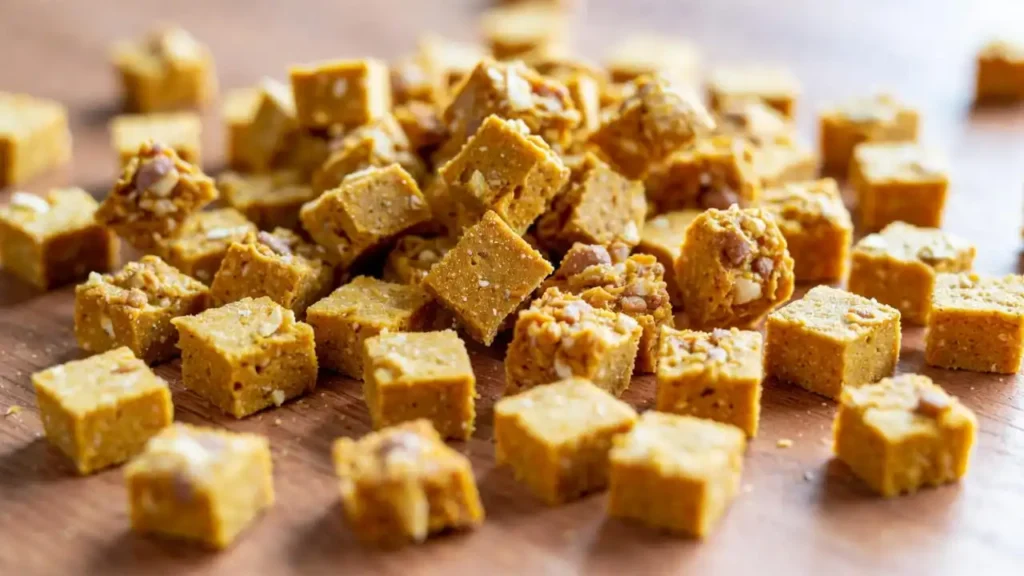
Examples of Treats Often Recommended by Veterinarians
Many veterinarians do not push one particular brand of treat, but certain types and brands are suggested by professionals due to their high quality.
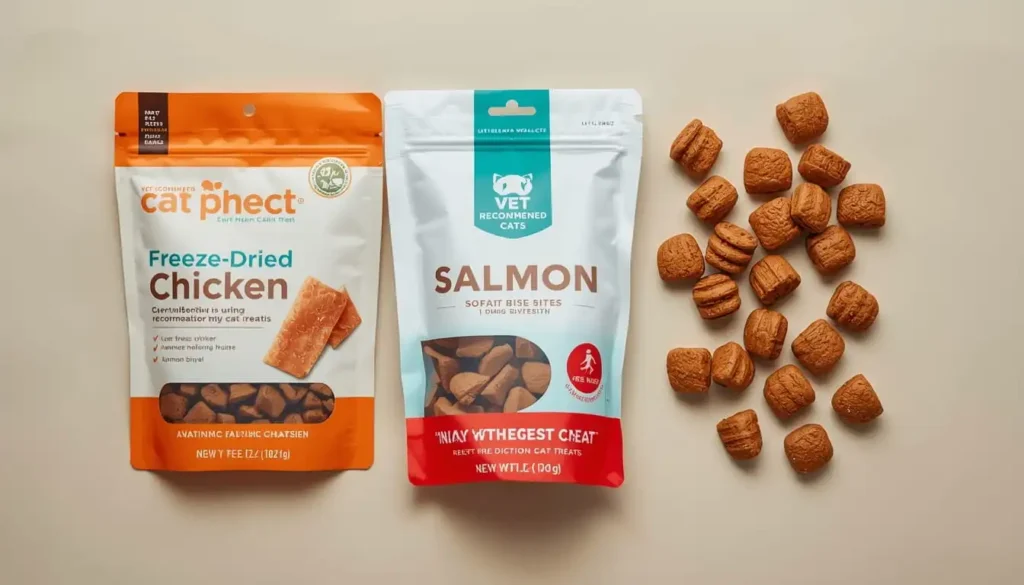
Freeze Dried Meat Treats
One type of treat that is often recommended is freeze-dried meat. This type of treat has some of the most protein available, low processing, and is very likely to be well accepted by a pet.
Common examples of freeze-dried treats include:
- Chicken breasts
- Salmon fish
- Turkey
These treats are lightweight, and they have an extreme amount of aroma. They can also be broken into much smaller pieces.
Soft Training Treats
Some brands create a type of treat designed for training, and they are usually:
- Small
- Soft
- High in protein
Because of their easy-chew texture, this will not interrupt your pet’s training session with long pauses.
Single Ingredient Treats
Treats with one single ingredient are often the best-suited varieties for cats with sensitive tummies.
Examples include:
- Dried Chicken
- Dried Liver
- Dried Fish
This will help to minimize the risk of putting added ingredients in the pet’s diet.
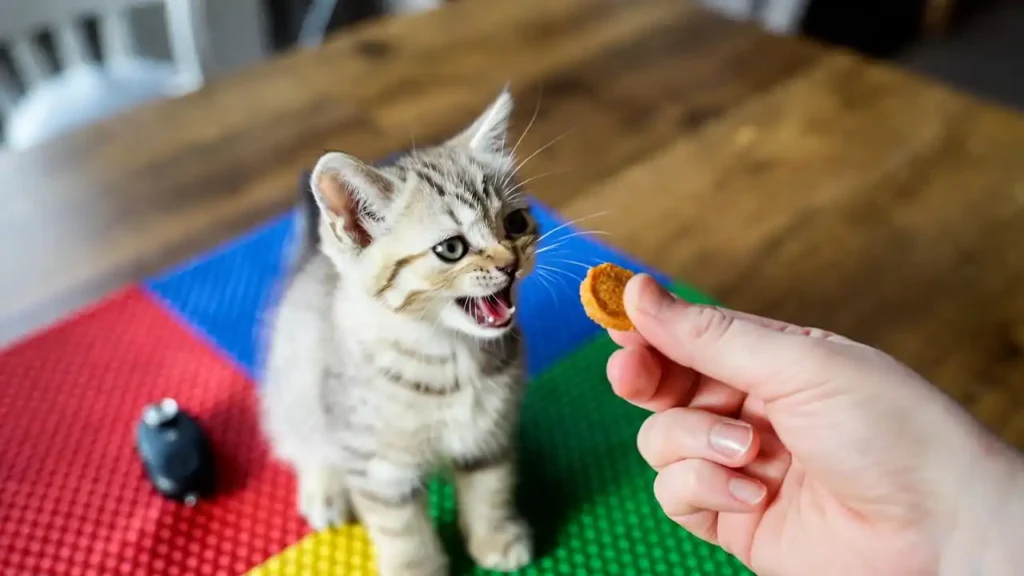
Real Veterinary Perspective on Treat Use
Moderation is very stressed by veterinarians.
A Vet quoted by the media and feline health organizations to say:
“Treats are not balanced in the pet’s daily food consumption. They are to be a small percentage of the total amount of calories for the pet every day.”
Dr. Tony Buffington
Most veterinary nutrition guidelines say that treats should contribute to less than ten percent of the pet’s total calorie count.
Once this level has been exceeded, you will start to notice that the animal will gain weight very quickly.
How to Use Cat Training Treats Correctly
The right treat is only part of training; timing and consistency also have huge importance.
Reward Immediately
The reward should be given to the cat no later than two seconds after the cat performs the behavior correctly; this way, the cat will connect the behavior with the treat.
If the cat does not get the treat until longer than two seconds after performing the correct behavior, the cat may not connect the behavior with the treat.
Use Short Training Sessions
Cats usually learn best in sessions of three to five minutes.
Long sessions can frustrate or bore the cat.
Cats typically learn better from multiple short sessions rather than one long session.
Gradually Reduce Treat Frequency
When the cat is consistently doing the desired behavior, you can replace the treat with verbal praise or petting.
This step minimizes the cat’s dependence on receiving food for correct behavior.
Common Training Goals That Use Treats
The Following Are Examples of Common Training Goals Associated With Treat-Based Training.
Litter Box Training
Many times, a cat will learn to use its litter box if you use positive reinforcement to train him to do so.
When a cat uses the litter box properly, for example, a small treat should be given.
Teaching Basic Commands
Cats can easily learn to do things like:
- Sit
- Come when called
- Follow a target stick
- Entering a carrier
These are examples of behaviors that can be taught through treat-based reinforcement.
Reducing Fear During Veterinary Visits
Some veterinarians encourage owners to use treats to teach their cats how to use their carriers prior to going to the veterinarian’s office.
Since your cat has already associated its carrier with receiving positive reinforcement, your cat will be less stressed during transport to the veterinarian’s office.
Treat Alternatives Recommended by Some Veterinarians
Some cats may not respond well to commercially-produced treats. Many times, vets will suggest alternative food sources for cats, such as:
- Pieces of cooked chicken that are cut into small bite-sized portions
- Very small portions of canned cat food
- Very small portions of tuna
These types of food may encourage cats, who would normally be picky eaters, to want to try the food you are offering. However, you should still only be offering your cat a small number of these types of foods.
Mistakes Cat Owners Often Make
Even if cat owners have good intentions, they sometimes make mistakes when feeding their cats treats.
- Overfeeding your cat:
Overfeeding your cat may cause him/her to become overweight. An overweight cat can develop diabetes, arthritis, or heart disease due to their excess weight. - Using low-quality treats:
Some inexpensive cat treats are made with a high filler content (corn and wheat). These fillers do not provide any real nutritional value to carnivorous animals. - Inconsistent timing of treats:
If you give your cat a treat at random times after your cat has displayed good behavior, your cat will not understand what good behavior he/she has displayed to get that reward. You should always be consistent when rewarding your cat.
A Personal Observation from Cat Owners
Many cat owners find that switching their cats from dry cat food treat to high-protein cat treats has greatly improved their cat’s training experiences.
A common experience from many people who train cats is that cats will ignore standard cat dry treats; however, they will readily respond to freeze-dried chicken as a reward. The stronger the chicken smells and tastes, the more a cat will want to eat it.
This experience matches the recommendation of the average veterinarian: Use meat to reward your cat.
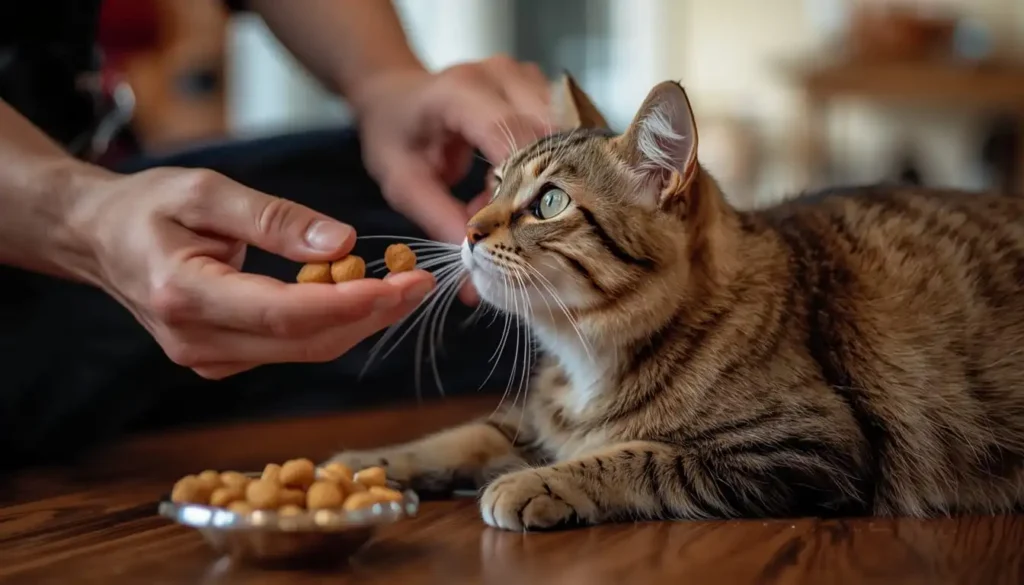
Choosing the Right Treat for Your Cat
To assist you with your treat evaluation process, you can refer to this checklist:
Look for:
- Real Meat as the first ingredient
- Limited number of other ingredients
- Low Caloric Content
- Soft or easily breakable
- Free of artificial coloring
Avoid:
- Excess sugar
- Heavy grain fillers
- Artificial dye
Using these factors ensures both your cat’s safety and its success while learning.
Are Expensive Treats Always Better?
Price does not equal quality.
While some premium treats are made with quality ingredients, others rely on the name alone.
Vets typically recommend looking at ingredient quality and caloric amount rather than the name of the brand.
For instance, a simple freeze-dried chicken treat may have a higher value than a heavily processed treat.
When to Ask a Veterinarian for Advice
There are specific instances when you will need to seek out professionals for help.
Please consult your vet if your cat has:
- Food allergies
- Digestive troubles
- Is overweight
- Has diabetes
- Has kidney disease
In these situations, special diet restrictions may be needed, and the treats you use for training should match your cat’s medical restrictions.
Why Cat Training Improves Overall Welfare
Even though many people think of cat training as optional, professionals who understand behavior often conclude that training cats is very beneficial.
Using positive cat training will:
- Decrease stress
- Increase clear communication
- Prevent destructive behaviour
- Increase your bond with your cat
Using food as a reward is only one way to create a better communication method during this process.
FAQ’s
What are vet recommended cat training treats?
Vet recommended cat training treats are usually high protein, low calorie treats made with real meat ingredients. Veterinarians often suggest treats with simple ingredient lists and minimal additives so they can be used frequently during training without affecting the cat’s overall diet.
How many training treats should a cat receive in one day?
Most veterinarians recommend that treats should make up no more than ten percent of a cat’s daily calorie intake. During training sessions, very small pieces of treats are typically used so the cat can receive multiple rewards without overeating.
Are freeze dried treats good for cat training?
Freeze dried meat treats are often recommended because they contain high levels of animal protein and very few ingredients. Their strong smell also helps keep cats interested during short training sessions.
Can kittens use training treats?
Kittens can safely use training treats if the treats are small, soft, and nutritionally appropriate for young cats. Many trainers prefer soft treats that can be broken into tiny pieces so kittens do not consume too many calories.
How should cat training treats be used effectively?
Training treats are usually given immediately after the desired behavior so the cat associates the reward with the action. Short training sessions lasting only a few minutes tend to produce the best results.
Are homemade treats safe for cat training?
Simple homemade treats such as small pieces of plain cooked chicken or turkey are often used during training. These options can be effective because they are high in protein and free from artificial additives.
Why do veterinarians recommend small treat portions during training?
Cats may receive multiple rewards during one training session. Small portions help prevent excess calorie intake and reduce the risk of weight gain while still motivating the cat.
Can treats help solve behavior problems in cats?
Treat based positive reinforcement is commonly used to encourage good behaviors such as using the litter box, entering a carrier, or responding to simple commands. Consistent rewards help cats understand which behaviors are expected.
Final Thoughts
A few key factors define the best vet-recommended cat training treats: high animal protein content, low caloric values, and simple ingredient declarations.
One significant feature of using treats in training is that they are part of a much larger training procedure. The effectiveness of your training method depends largely on the timing of the use of treats as well as the consistency and moderation of their use.
When treats are used appropriately, you may turn an unpleasant training experience to one that is a rewarding experience for both you and your cat.
When you understand how to use cat treats in your training program, you will maximize both your cat’s development of acceptable behavior and your cat’s long-term health.
Trusted External Resources
Related Guides You May Find Helpful
If you are learning more about cat care, pet health costs, or pet insurance planning, these detailed guides may also help you understand the financial and practical aspects of responsible pet ownership.
- First Time Cat Owner Guide: Common Mistakes New Cat Owners Should Avoid
- Accurate Vet Visit Cost Calculator USA 2026: Estimate Veterinary Expenses
- Best Pet Insurance Calculator US 2026: Estimate Coverage Cost for Your Pet
Exploring these resources can help pet owners better understand routine veterinary costs, financial planning for pet healthcare, and common mistakes that new cat owners should avoid. Internal guides like these also help connect related topics such as pet insurance decisions, veterinary expenses, and responsible pet care.
📅 Last Updated:
✅ Verified by: John Smith, Pet Insurance Specialist

About the Author
M. Nouman is a pet insurance researcher with over seven years of experience analyzing U.S. pet insurance policies, coverage terms, exclusions, and real claim practices. His work focuses on simplifying complex insurance language into clear, practical guidance so pet owners can make informed decisions based on research rather than promotional claims.
Expertise: Pet Insurance Reviews, Coverage Analysis, Claims Process, Policy Comparison
Research insights available on Quora and professional profile on LinkedIn .