
Pet Insurance Cost by State Calculator – Estimate Your Pet’s Premiums in 2026
When you used the above Pet Insurance Cost by State Calculator, there was probably something you noticed that may have been surprising to you:
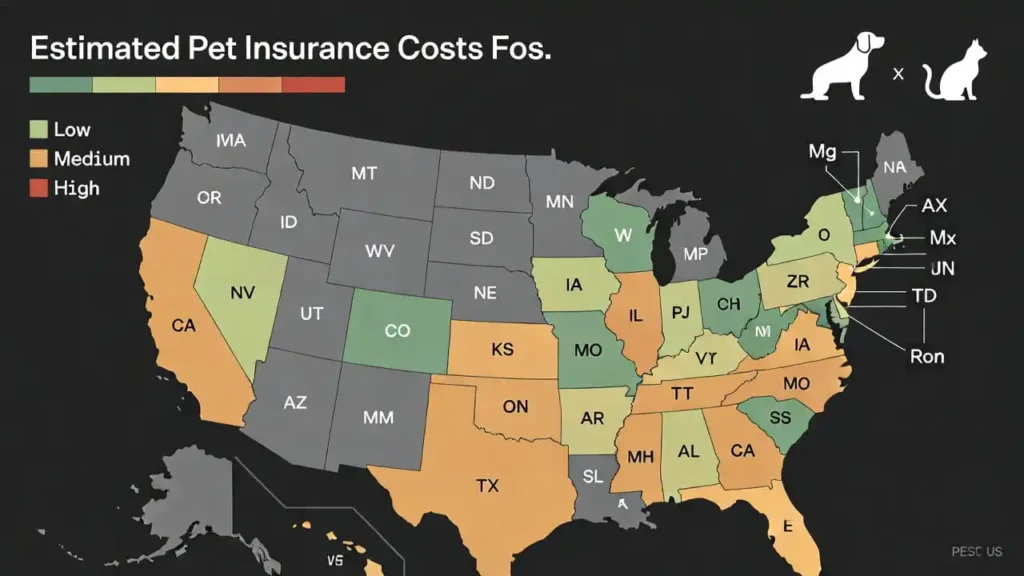
The cost to insure your pet can vary significantly based on your state.
This is not done randomly - it is based on how local economies and veterinary professionals provide services, as well as how states regulate the insurance and veterinary industry.
This guide will explain what these numbers mean - allowing first-time pet parents the ability to make an informed decision as opposed to relying on false marketing claims.
As a pet parent who has navigated 7 years of pet bills, insurance policies, submitting claims, and analyzing how insurance companies handle reimbursements, I will explain my findings in this article.

Why Pet Insurance Costs Change by State
When it comes to determining the price of pet insurance, many people assume that the biggest determining factors are breed (dog or cat) and age. Although these two things are important, location has shown to be the largest factor that insurance companies consider.
The Three Biggest Cost Drivers
Veterinary Price Index (Local Vet Costs)
Pricing for treatment varies across states due to the various influences as noted above.
Some examples of this would be:
- California and New York → high labor costs, high clinic overhead
- Texas and the Midwestern states → lower average treatment prices
- Urban areas → higher emergency hospital pricing
These insurance companies set policy pricing based on expected future claims as opposed to using current pricing.
If surgeries cost more locally, insurance premiums rise accordingly.
State Insurance Regulations
Every state manages insurance differently through their own Department of Insurance.
Some states have:
- Clearer reimbursement disclosures
- Consumer protections
- Stricter underwriting standards.
These regulations may add a small amount of expenses to an insurance company's total expenses, and thus will be reflected in the premiums charged.
External references:
- American Veterinary Medical Association (AVMA)
- Consumer insurance department guides from each state.
Claim Frequency Patterns
Insurance companies keep track of anonymous claim data such as:
- Accident frequency
- Chronic illness
- Geographic disease risk.
For example:
- Northern New England has a higher frequency of tick-borne illness than does the Southeastern parts of the United States.
- The Southeastern U.S A has higher rates of heat-related emergencies than does the Northeastern U.S A.
More claims = higher actuarial risk = higher premiums.
How the Calculator Estimates Costs
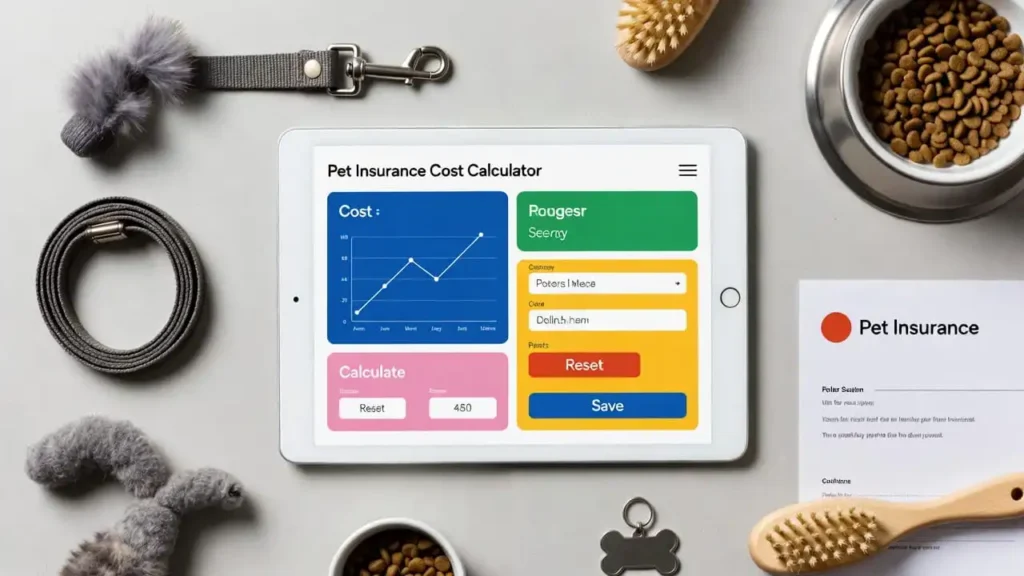
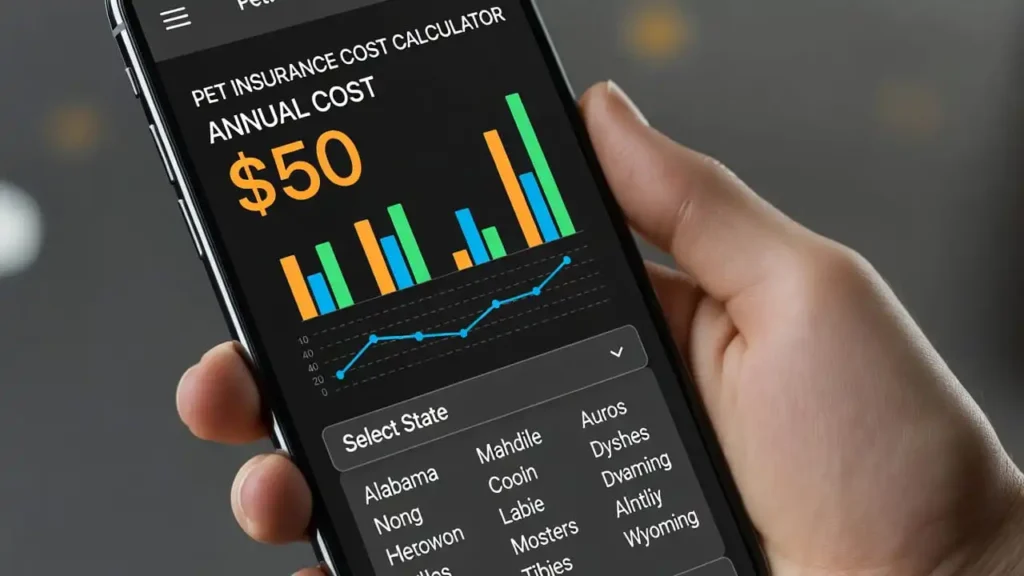
The calculator above uses modeled averages based on the standard underwriting characteristics used by insurance companies.
- Pet being insured (dog/cat)
- Age of the pet
- Risk factor associated with the state that you live in
- Average inflation on veterinary costs.
The calculator does not give you live insurance quotes. It mimics the way insurance companies do their internal calculations for determining the base premium.
Underwriting Model (Simplified)
The insurance company uses the following to calculate:
Expected Claims Cost + Administrative Expenses + Risk Margin = Monthly PremiumThis is why two identical dogs may have different premiums in different states.
Real Pet Owner Case Study (Actual Cost Breakdown)
Let’s look at a realistic scenario.
Case Study: Golden Retriever in Colorado
Owner: Sarah, first-time dog owner
Dog Age: 2 years
Plan Details:
- Monthly premium: $58
- Deductible: $500 annual
- Reimbursement: 80%
- Annual limit: $10,000
The Incident
Dog swallowed part of a toy.
Emergency visit included:
| Service | Cost |
|---|---|
| ER Exam | $190 |
| X-rays | $420 |
| Surgery | $2,300 |
| Medication | $210 |
| Follow-up | $180 |
Total Vet Bill: $3,300
Insurance Calculation
- Owner Deductible: $500
- Eligible Bill After Owner Pays: $2800
After 80% Reimbursement: $2240 Insurance Paid
Owner's out of Pocket Expense: $3300 - $2240 = $1060
Without Insurance: $3300 Out of Pocket.
Key Insight
Insurance Did Not Make Care Free
Care Was Made Suvivable Financially.
This is an Important Distinction.
What I Learned After Reviewing 15+ Pet Insurance Plans
Cheapest Plans Often Restrict Claims
- Long terms with a longer waiting period
- Do Not Cover Pre-Existing Conditions
- Pay Capabilities Less Than 80% of the Total Claim.
Deductibles Matter More Than Premiums
Some owners Only Look at the Monthly Price.
A $1,000 Deductible can mean all of your money will be tied up until After You Submit Your Claim.
Claim Processing Speed Varies Dramatically
Some Insurance Companies will Pay Claims within 5 Days. Some Insurance Companies Take 30+ Days.
Cash Flow Problems will Be Real During Emergencies.
Coverage Language Is Where Policies Differ
The Marketing Materials for all Pet Insurance Companies Look Very Similar; However, the Pet Insurance Policy Documents are very Different.
Words like "Curable Condition", "Bilateral Exclusion", and "Pre-Existing Condition" Will All Be the Difference in the Amount of Reimbursement You Receive.
Comparison: Typical Policy Structures
| Feature | Low Premium Plan | Mid-Tier Plan | Comprehensive Plan |
|---|---|---|---|
| Deductible | $1,000 | $500 | $250 |
| Reimbursement | 70% | 80% | 90% |
| Waiting Period | 14–30 days | 14 days | 2–14 days |
| Annual Limit | $5,000 | $10,000 | Unlimited |
| Dental Illness | Often excluded | Partial | Included |
| Premium Stability | Low | Medium | Higher but stable |
Claim Approval: What Actually Determines Payment
Numerous first-time purchasers of insurance claims have an incomplete understanding of the way in which insurance claims actually work.
The three basic steps in the process of obtaining approval to the insurance company are as follows:
Medical History Review
The insurance company will require that you provide copies of your pet's exact veterinary records before issuing approval for an insurance claim. In the vast majority of cases, the insurance company needs to see your pet's veterinary records before they will approve any claims. If your pet had a pre-existing condition, it may very well fall under the definition of pre-existing conditions as outlined by most pet insurance companies.
Waiting Period Compliance
There are different waiting periods before you can claim for accidents and different waiting periods for illnesses. If you file a claim early and before the waiting period has been satisfied there is a very good chance that the insurance company will automatically deny the claim.
Treatment Necessity
The insurance companies will reimburse you for the medical costs to treat your pet only if the treatment was medically necessary, according to actual veterinary standards. Insurance companies will generally not reimburse you for voluntarily performed treatments or procedures that fall outside of that classification.
Policy Coverage Scope
Policies can limit coverage to various items. For example, policies can limit your coverage for:
- Behavioral therapy,
- Alternative treatments
- Pre-breeding related costs.
Therefore, always check the terms of your policy before you incur the cost of obtaining additional care for your pet.
Pros and Cons of Pet Insurance (Realistically)
Pros:
- Provides protection against large, unexpected (unbudgeted) costs from being incurred.
- Provides you an opportunity to make quick decisions regarding treatment for your pet.
- Provides you with predictable payments for budgeting.
- Useful for all bree
Cons:
- Monthly premiums can start to add up after a period of time.
- Pre-existing conditions are typically not covered.
- Generally require you to pay the cost for services or treatments out of your own pocket until the insurance company reimburses you for your cash outlay.
- Monthly premiums generally increase with the age of your pet.
Who Pet Insurance Is NOT For
You may not need to have pet insurance if:
- You have a large amount of cash for emergencies saved up.
- Your pet is older and has a prior medical condition.
- You choose to pay for your own fixed expenses.
- You anticipate that the pet insurance company will recommend a treatment or procedure that is not customary.
Understanding these terms will allow you to make an informed decision which will lead to updates in your current financial situation.
Why State Pricing Differences Matter for First-Time Owners
The calculator can help you determine if your insurance cost is influenced more by your location than the average.
For example:
- Many pet owners living in south Florida find they will pay higher premiums because of the number of claims submitted in their area.
- Pet owners living in the Midwest generally have lower premiums even though they are receiving a similar level of coverage.
By understanding these statistics ahead of time, you will have a better foundation for making effective comparisons.
Statistics Every Pet Owner Should Know (Recent Data)
- Veterinary costs were expected to rise approximately 10% - 11% annually between 2022 and 2024 due to a shortage of technical staff and increased equipment costs.
- Emergency surgery costs generally range from $1,500 - $5,000 in the United States.
- More than 60% of all pet insurance claims are related to illness rather than accident.
(Source references: August 2021, AVMA economic, and industry insurer reports.)
Transparency: Limitations of Any Calculator
The calculator above is intended to provide you with estimates and not actual quotes.
The calculator is not able to factor the following:
- Breed-specific underwriting adjustments;
- Insurer-specific pricing models;
- Discounts and or multi-pet policies;
- Individual medical history;
You should use the calculator as a tool for financial planning, not the determining factor in selecting your premium.
How to Use the Calculator the Smart Way
Instead of asking: "Which state is cheapest?"
You should be asking: - What deductible can I afford to put away for retirement?;
- How much risk can I take for an emergency?;
- Is a $3,000 bill going to cause me financial stress?;
Insurance is all about risk, not about how much you will pay.

FAQ's Pet Insurance Cost by State Calculator
Is pet insurance cheaper in certain states?
Yes. Pet insurance premiums vary by state because veterinary treatment costs, claim frequency, and regional risk factors differ across the United States. States with higher vet expenses typically have higher premiums.
Why does the same pet cost more to insure in another state?
Insurance companies calculate premiums using local actuarial data, including average vet pricing, emergency visit rates, and regional health risks affecting pets.
Does moving to another state change my pet insurance premium?
In many cases, yes. If you relocate, insurers may adjust your premium based on veterinary cost trends and claim data in your new location.
Are vet prices really different across states?
Yes. Urban areas and higher-cost states often charge significantly more for diagnostics, surgery, and emergency care compared to rural regions.
When is the best time to buy pet insurance?
The best time is when your pet is young and healthy. Most insurers exclude pre-existing conditions, so early enrollment usually provides broader coverage.
Final Thoughts: Pet Insurance Is Not for Everyone
Concluding Thoughts: Pet Insurance Does Not Provide Value to Everyone
Pet insurance is best used for situations where it can solve a financial problem.
If you face an unanticipated vet bill between $3,000 and $7,000, and that causes you stress and delays making decisions about your pet's treatment, then insurance may provide you with considerable peace of mind.
If you're financially stable with good savings and you prefer the ability to budget for fixed monthly out-of-pocket expenses instead of paying for unexpected vet bills, then pet insurance may not be a good fit for you.
Pet insurance is not for everyone. Here’s when it makes sense:
- You want to be financially protected against worst-case scenarios.
- Your pet is still relatively young and in good health.
- Without insurance, you would either incur debt to cover emergency treatment costs or be forced to make painful or difficult decisions about your pet’s treatment.
If used in proper contexts, conceptually pet insurance will not be about saving money; rather, it will provide you additional flexibility when you need to treat your pet.
Trusted External Resources
The information provided in this guide is supported by publicly available veterinary and insurance education resources. You can explore the following authoritative organizations for additional research and consumer guidance:
- American Veterinary Medical Association (AVMA) – Veterinary cost trends, pet healthcare data, and owner education resources.
- National Association of Insurance Commissioners (NAIC) – Consumer insurance guides and policy transparency information.
- Insurance Information Institute (III) – Independent explanations of how insurance pricing and underwriting work.
- United States Department of Agriculture (USDA) – Animal welfare standards and pet ownership resources.
These external resources are independent organizations and are not affiliated with this website. They are provided for educational and transparency purposes.
Helpful Pet Insurance Guides & Reviews
Best Pet Insurance Calculator (US 2026)
Compare estimated pet insurance costs and understand pricing differences across states and coverage levels.
Lemonade Pet Insurance Review 2026
Detailed analysis of Lemonade coverage, pricing structure, and real suitability for US pet owners.
Embrace Pet Insurance Review 2026
Coverage breakdown, pros and limitations, and cost comparison for dogs and cats.
Pumpkin Pet Insurance Review 2026
Understand benefits, exclusions, and claim usability before choosing a plan.
ASPCA Pet Insurance Review 2026
Pricing insights, coverage options, and suitability based on pet age and breed.
Pet Insurance With No Waiting Period
Explore providers offering faster coverage activation and reduced waiting times.
Affordable Pet Insurance Plans 2026
Comparison of budget-friendly insurance plans for US pet owners.
Nationwide Pet Insurance Guide 2026
Complete guide covering plans, benefits, costs, and decision tips.
📅 Last Updated:
✅ Verified by: John Smith, Pet Insurance Specialist

About the Author
M. Nouman is a pet insurance researcher with over seven years of experience reviewing U.S. pet insurance policies, coverage rules, and claim practices. His work focuses on turning complex insurance terms into clear, practical guidance so pet owners can make informed decisions without relying on promotional claims.
You can find his research-based answers on Quora and connect professionally on LinkedIn.