
Some links may be affiliate links. We may earn a small commission at no extra cost to you.
Information may change over time and should be verified with official providers. We are not responsible for any decisions made based on this content.
Does Pet Insurance Cover Dog Dental Cleaning? What I Found After Reading Policy Details
An overview of the insurance explained in the answer above is that routine veterinary teeth cleanings are usually excluded from standard pet insurance, but some dental care may be covered when medically necessary. Some plans, however, may include dental coverage in case of medical need, especially in cases of periodontal illness or tooth extraction due to disease. The problem is that coverage is largely determined by the terms established by the respective pet insurance plan, your dog’s dental history, and other requirements.
If you want to learn how beneficial dental coverage actually is, you can read this guide explaining what insurance companies refer to as “dental coverage”, the caveats regarding coverage, and what I discovered when I analyzed several policies offered by different insurance companies and veterinary experts.
Table of Contents
- Why I Wrote This
- What I Found
- What Dental Coverage Means
- The Hidden Timing Rules
- Why Routine Cleaning Is Usually Excluded
- The Anesthesia Issue Most People Miss
- What I Learned From Policy Language
- How Major Plans Compare
- Real Cost Context
- What Pet Owners Should Check First
- When Dental Insurance Makes Sense
- My Bottom Line
- FAQs About Dog Dental Cleaning
Why I Wrote This
This article was written based on the analysis of the policies of various providers, FAQ pages, and veterinary recommendations, with the goal of clarifying things concerning dental coverage, since there are many confusing points regarding dental coverage.
This differentiation is significant. A dog can incur costs for teeth cleaning, anesthetic fees, costs for blood tests and X-rays, among other costs, but not all insurance companies treat them in the same way. If you only check the marketing outline, it may be easy for you to get the wrong impression about what you are paying for.
What I Found
What I found most surprising was not only whether it was possible at all to cover dental care, but how exactly it is done. Some insurers distinguish between dental care for a healthy pet and dental treatment for a sick pet. Some companies require that proving the owner had regular check-ups is a prerequisite for receiving the payment for the procedures.
I also discovered that some of the key conditions of the insurance policies are not evident from the main page of the website or from the quote page. Most of the key information is hidden in the policy documents.
What Dental Coverage Means
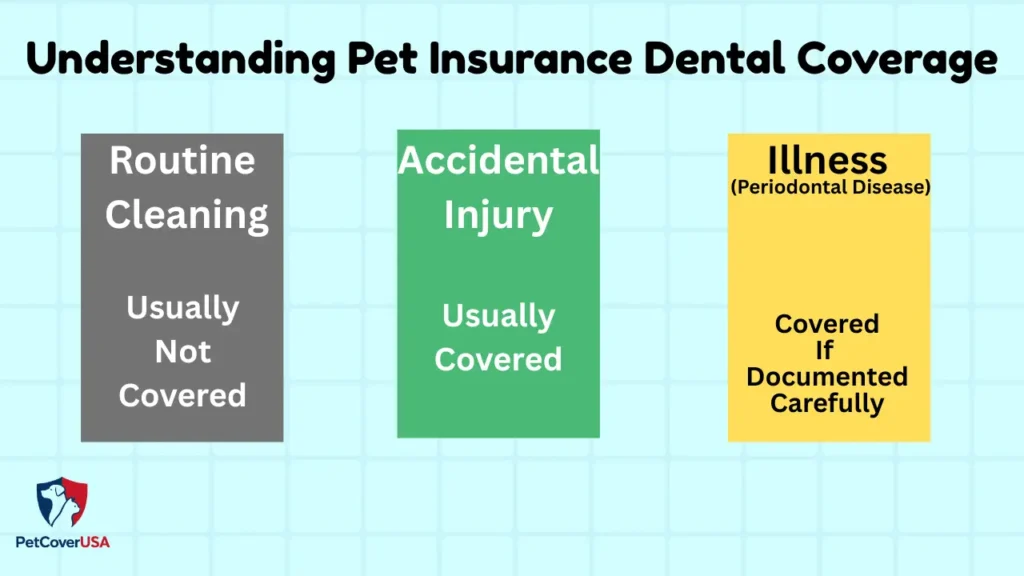
Typically, pet health insurance offers three types of oral care:
- Regular dental cleaning
This is preventative treatment rendered when the pet has no known health problem. Many plans don’t include coverage unless they are designed with wellness or periodic care in mind. - Dental accidents
In this case, the pet has suffered an injury resulting in things such as fractured or missing teeth. These types of medical emergencies are covered under accident protection or accident-and-disease programs. - Dental illnesses
These include issues such as periodontal disease, gingivitis, and tooth abscesses. Some insurance packages include coverage for various diseases as long as the pet wasn’t suffering from symptoms before joining the program.
The last part is important because dental illness coverage has to do with the plan being in the insurance package, as well as considering the situation, as it is new or has had earlier complications or problems.
The Hidden Timing Rules
One of the more significant points I noticed is that dental coverage often depends on timing. Some insurers require that an annual dental check-up be completed. Others require that a cleaning be done within a certain time period after your veterinarian has recommended it. Some others may want proof that you took your pet for regular preventive care before an issue arose.
For instance, Trupanion indicates that dental illness and injury will only be covered if your pet has had an annual dental exam and has also been receiving recommended treatment for dental problems. Their policy also indicates that dental prophylaxis must be performed within the time period set by the veterinarian, or within 90 days if no time limits are given. This shows that timing is a significant factor in determining eligibility for future claims.
Source: Trupanion dental FAQ, Maine policy filing
Pets Best has a different kind of rule in terms of dental coverage. Their dental coverage stipulates that dogs aged 3 years and above may qualify for periodontal disease coverage only after the last cleaning or dental examination under anesthesia has been conducted within the last 13 months before the claim. Such a requirement could easily be overlooked if only the monthly premium amounts are compared.
Source:
Why Routine Cleaning Is Usually Excluded
When it comes to routine cleanings, many pet owners look for coverage but find that it is lacking. Most insurance policies are created to cover unexpected medical treatment, but do not generally cover routine care.
As a result of this coverage gap, many pet insurance companies have developed routine cleaning policies that can be purchased separately through a wellness rider. This rider will cover the costs of any routine preventive procedure, but it is not the same as undergoing treatment through an insurance policy.
The Anesthesia Issue Most People Miss
Going to a veterinary clinic is never simply a dental cleaning. A proper dental exam for dogs often involves the veterinarian safely anesthetizing the pet, taking X-rays, fully examining the mouth, and sometimes doing bloodwork prior to the exam. This only goes to show how much more they perform than they anticipate they will pay because they think of it merely as a cleaning.
The American Veterinary Medical Association has issued warnings about the fact that cleaning done without anesthesia is not the same as a full dental exam performed by a veterinarian because it does not allow for a comprehensive evaluation of the situation below the gum line. This is important since for many pet owners, using the cheaper cleaning may seem to be fulfilling their requirements for dental care by their insurer, but I would not be sure about that without consulting the policy.
Source: AVMA article
For example, if a vet recommends that you perform a dental cleaning of your dog and you opt for the non-anesthetic cleaning instead, nobody can guarantee that the insurance company will view it as sufficient for your claim. This is certainly one of the most ignored nuances of the situation.
What I Learned From Policy Language
There is a clear lesson in these policies – dental insurance is not only about the incident, but it is also about the records.
If your pet has dental issues, the insurance company may ask for certain requirements:
- proof of previous examination.
- dental X-ray or itemized billing.
- confirmation that the dental issue existed before signing the contract.
- proof of timely preventive measures done.
That is the reason why your claim may be denied, although you thought you purchased “dental insurance”. Although the policy covered dental problems, the claim was denied because there was a lack of proof, or timely measures were not taken.
How Major Plans Compare
After reviewing various policies, I found the following pattern:
Trupanion
Trupanion has good coverage in terms of medically necessary dental illness, but it does expect you to keep regular dental visits and to follow the dental recommendations of the veterinarian. The interesting thing about Trupanion policies is that the language is a lot more specific than what people usually think.
Source: Trupanion dental FAQ
Pets Best
Since Pets Best provides coverage for dental illness under its accident-and-illness plan policies, it is important to ensure you have regular dental care records, especially if your pet is three years old or older.
Source: Pets Best dental coverage, Pawlicy Advisor review
ASPCA
ASPCA usually requires you to have a preventive care option so that you are able to get routine cleanings done. In most of the plans, there may be an option where illness-related dental health issues fall under broader coverage.
Source: ASPCA plan information
What is important to know here is that it is not the plan that matters but how the insurer approaches illness, preventive care, record-keeping, and timing.
Real Cost Context
The expenses can be enormous when it comes to dental procedures, with anesthesia, X-rays, blood tests, and other types of dental work bringing the average cost to high levels. The cost-related statistics regarding veterinary services usually indicate that a dental cleaning for dogs occurs at a rate of hundreds of USD, but that does not take into account other charges that may bring the price further up.
Source: CareCredit pet dental cost guide
This is the main reason for paying special attention to the details of the insurance policy. A plan with a low monthly fee can lead to much higher expenses when the first problems appear, rather than a more complete program that may be reasonably priced, but much cheaper in the final outcome.
What Pet Owners Should Check First
I would verify five aspects before purchasing a dental insurance policy.
- Knowing if dental cleaning is not covered or if it is available only under a wellness rider.
- Knowing if the policy covers dental-related diseases in case of accidents and illnesses.
- Knowing if annual dental check-ups are required by the insurer.
- Knowing whether the policy has age-based time limits for canines above a certain age.
- Knowing more about whether anesthesia, X-rays, or blood tests will form part of the dental claim or be billed separately from the rest of the claim.
Those five details matter more than the monthly premium alone.
When Dental Insurance Makes Sense
Having dental insurance might be beneficial if you own a young dog, wish to be insured against future diseases, or if your dog’s breed suffers from many dental issues. Furthermore, if you are someone who keeps records and schedules veterinary appointments in an organized manner, it might be a good idea.
If your dog has been diagnosed with a dental disease, the value of any new insurance decreases as you will likely be subjected to pre-existing disease clauses. Instead, preventive care programs or an alternative savings plan could be a better way to go.
My Bottom Line
Having gone through the policy wording and veterinary advice, I conclude that pet insurance will assist in dog dental treatment but only when one knows what kind of coverage is available. The regular teeth cleaning process is not typically covered by traditional insurance, while treatments linked to mouth illnesses may be covered under the conditions and documentation policies of the insurer.
In this context, the right question is not “Is dental mentioned in our insurance policy?” but “Which dental claims are insured and which are excluded, and what documentation is needed?”
FAQs About Dog Dental Cleaning
Does pet insurance cover dog teeth cleaning?
Usually not under standard pet insurance coverage. Routine dog teeth cleaning is typically considered preventive care rather than treatment for an illness. Some insurers offer wellness or preventive care add-ons that reimburse part of the cleaning cost, but standard accident and illness plans generally do not cover routine cleanings.
Does pet insurance cover dental disease?
Sometimes. Many accident and illness policies cover dental disease if it develops after the policy starts and is not considered a pre-existing condition. Coverage varies by insurer, so it is important to review the policy’s exclusions, waiting periods, and dental requirements before purchasing.
Does anesthesia free cleaning count?
Generally, no. The American Veterinary Medical Association (AVMA) states that anesthesia free dental cleaning is not a substitute for a complete veterinary dental examination and professional cleaning performed under anesthesia. Because of this, insurers may not recognize it as meeting preventive dental care requirements.
Why do some dental insurance claims get denied?
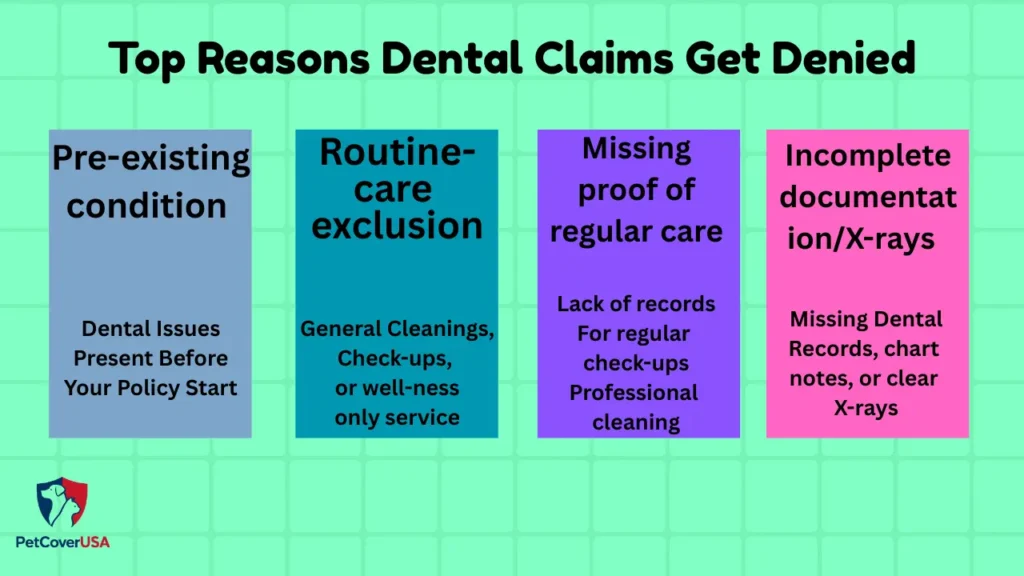
Common reasons include pre-existing dental conditions, failure to meet preventive care requirements, incomplete veterinary records, missed annual dental examinations, or claims for routine services that are specifically excluded under the policy. Reading the policy carefully before filing a claim can help reduce the risk of denial.
Is pet dental insurance worth it?
It depends on your dog’s age, breed, dental history, and overall risk of developing dental disease. Pet owners who keep up with regular veterinary visits and maintain complete medical records may benefit more from dental coverage than those who only seek treatment after problems appear.
Explore Related Dog Dental Insurance Articles
- Dog Dental Wash Insurance Plans & Costs 2026 – Compare various insurance plans covering routine dental washes and understand pricing.
- Best Affordable Dog Dental Plans in USA 2026 – Find budget-friendly dental insurance options for your dog with detailed coverage analysis.
- Best Pet Insurance That Covers Dental for Dogs – Top-rated plans that include both preventive and illness-related dental treatments.
- Dog Dental Cleaning Covered by Pet Insurance 2026 – Learn which insurance providers reimburse professional dental cleanings.
- Embrace Pet Insurance for Older Dogs Dental Cover – Coverage options and wellness rewards specifically for senior dogs’ dental health.
- Pet Dental Insurance with No Waiting Period 2026 – Instant coverage for dental treatments without long waiting periods.
Related Pet Insurance Guides
If you’re researching dental coverage for your dog, our guide to pet insurance that covers dental care for dogs provides a broader look at dental-related benefits.
Cost can also play a major role when comparing dental coverage. See our guide to affordable dog dental plans in the USA for more information.
If you’re specifically interested in coverage without a waiting period, read our guide to pet dental insurance with no waiting period .
For practical prevention and routine care, see our dog dental care tips for healthy teeth .
For a broader understanding of pet insurance beyond dental care, explore our guide to comprehensive pet insurance coverage .

About the Author
M. Nouman is an independent researcher and writer focused on U.S. pet insurance. He reviews insurer policy documents, coverage terms, waiting periods, reimbursement options, exclusions, and publicly available veterinary and regulatory resources to create clear, research-based guides. His goal is to simplify complex insurance information so pet owners can make informed decisions based on reliable sources rather than marketing claims. Articles are reviewed and updated as policies and industry information change.
Areas of Research: Pet Insurance Policies, Coverage Analysis, Policy Comparisons, Waiting Periods, Reimbursement Models, Policy Exclusions, Claims Education
Research insights and updates on Quora, LinkedIn, and Reddit.