Some links may be affiliate links. We may earn a small commission at no extra cost to you.
Information may change over time and should be verified with official providers. We are not responsible for any decisions made based on this content.
Best Pet Insurance That Covers Dental for Dogs (2026): What Most Reviews Quietly Skip
Who This Blog Is For
This guide is useful if you want to understand how dental coverage works before choosing a policy for your dog, or on the last vet visit, your vet casually mentioned “early tartar”, or you got a surprising bill from your vet for dental cleaning, then this article is written just for you.
In addition, if you want to choose an insurance for your pet, and actually want to understand the dental coverage part before enrollment, so you don’t get shocked at the time of claim denial, you should read this blog.
Who Should Probably Skip This
This article is for readers who want a detailed, research-based look at dental coverage rather than a quick ranking. If you want to read an affiliated blog saying “this company is the best, just buy it”, then this blog is not for you. I am here to discuss messy details that most pet owners ignore, and as a result, lose their money.
What You’ll Learn in This Blog
- Dental coverage is not as easy and simple as it seems on pet insurance companies’ homepages. Why are they more complex and difficult in reality?
- Heavy expenses of anaesthesia before dental cleaning, which nobody talks about. Will the insurance company cover it, or will it refuse to pay?
- A hidden technicality in insurance rules called the “prescribed cleaning loophole” can save you thousands if you know how to use it.
- A deep side-by-side comparison of top insurance plans, so you can know which one really works and which one is fluff in dental cleaning.
- A real-world graph of expenses in the next five years, showing how much you’ll pay with and without insurance out of your pocket.
- Insurance Companies set a difficult annual exam requirement. Missing an annual exam requirement may affect eligibility for certain dental claims. Know which companies set this trap.
- Which plan actually fits according to your dog’s age and breed
Quick Answer
Today, if you are searching for the best pet insurance that covers dental for dogs, then a few providers may offer stronger dental-related coverage than others, but the best option depends on your dog’s age, budget, and the type of dental care you want covered: Trupanion (unlimited coverage for root canal, x-ray, and anesthesia) and ASPCA (better safety on a low budget). One important thing is that, even if you buy the most expensive plan, you may still be denied if you don’t know these 3 secret hidden technicalities. Those technicalities are what this blog is about.
How I Actually Researched This (And What Surprised Me)
I want to be clear and honest about where I collected this information. In the last few weeks, I didn’t just read affiliated blogs; instead, I studied complex Policy Documents word by word.
In addition, I studied guidelines deeply from the American Veterinary Dental College (AVDC) and the American Animal Hospital Association (AAHA), and I studied real pet parents’ stories and pain points of dental claim rejection on social media platforms.
I was not surprised which company was on top. I was surprised to know why pet parents’ dental claims were rejected. Honestly, saying, mostly there are no faults of companies; instead, there are some hidden requirements and technicalities that nobody tells you when you buy insurance.
What “Dental Coverage” Actually Means (Because It’s Not One Thing)
Most comparison websites just write “this plan covers dental” and move on. But the reality is that in pet insurance, there are three layers of dental coverage.
Layer 1: Dental Illness Coverage
When insurance companies say “Including Dental”, then they mean just this part. Periodontal Disease (gum disease), gingivitis, and tooth abscesses are included in this part. But there is a bigger trap: these conditions are just covered when they appear after enrollment.
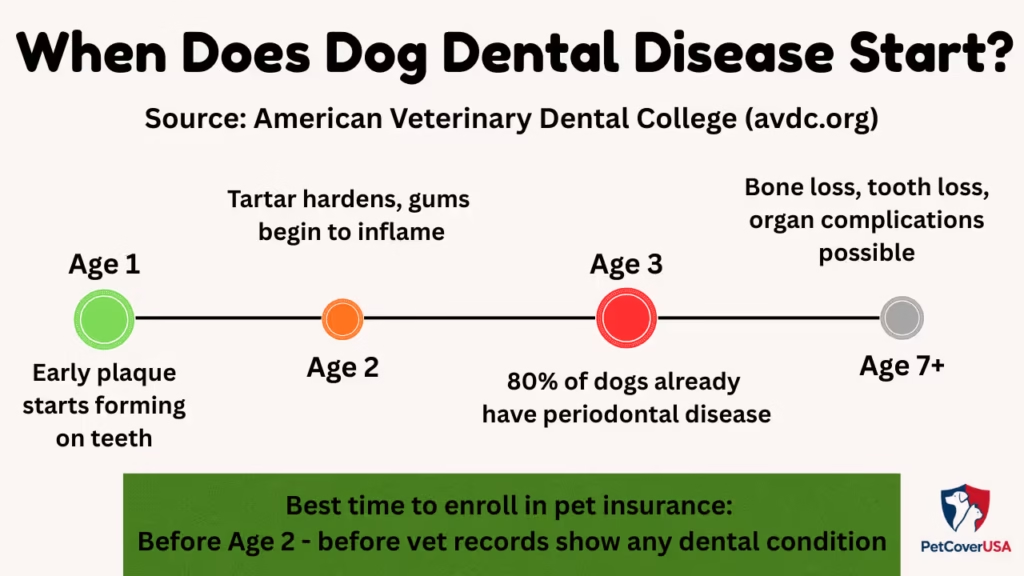
According to AVDC (American Veterinary Dental College) official data, 80% dogs show signs of periodontal disease at the age of 3 years. Now, just imagine if you enroll your dog after the age of 3 years, and the vet mentions a minor gum problem in the record, your layer is blocked permanently.
Layer 2: Dental Procedures (Where the Real Money Is)
This layer covers the things that the illness leads to, like extractions, root canals, and jaw fracture repairs.
Mostly standard plans cover dental extraction, but refuse to cover root canal. Here starts real human worries. Vet says to you, “Tooth can be saved by root canal,” but when you look at policy documents, it clearly says that we’ll just cover dental extraction. In this dilemma, just to save your money, you get your dog’s tooth extraction. This story is not new; most of the pet parents suffer from this pain because insurance is making a choice, not vets.
Layer 3: Routine Dental Cleaning
In the U.S., routine cleaning is usually not covered in standard policies. Therefore, you have to buy “Wellness Add-ons” separately. These wellness plans just cover $100 to $150 in the whole year, because there is a separate expense of X-ray and anaesthesia.
When an insurance company claims that they “Cover Dental”, don’t believe them blindly. Always remember that dental treatment is divided into three layers: Layer 1 is covered when your dog is enrolled before illness; Layer 2 is where insurance companies just cover dental extraction and refuse the root canal; and Layer 3 is not included in any standard policy.
The Anesthesia Cost Nobody Warns You About Before a Dog Dental Cleaning
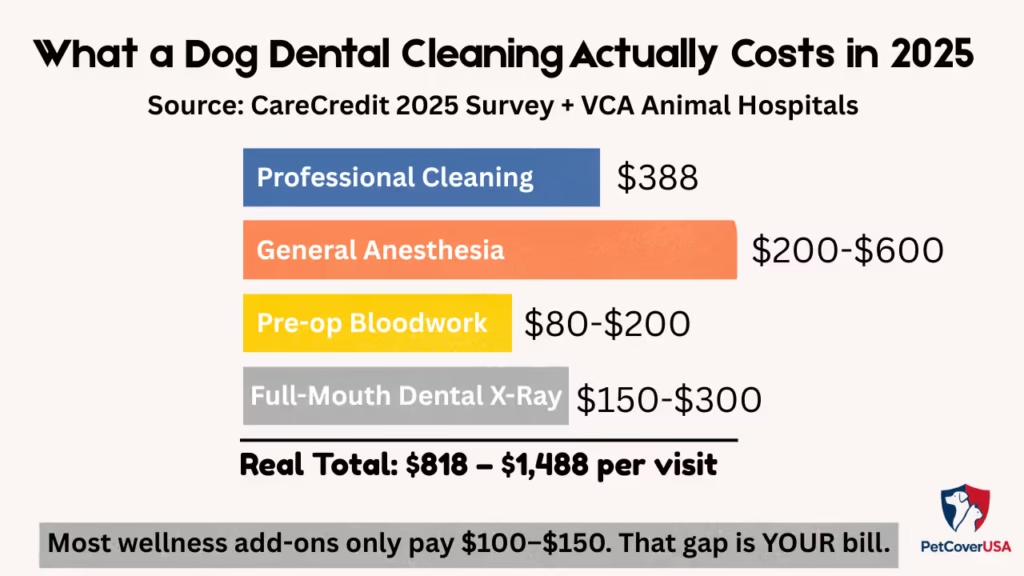
In pet dental insurance discussions, this is the most common shock that we see. A common pet owner visits a vet clinic, thinking it will cost $400 on dental cleaning, but they get shocked when they receive a vet bill costing more than $1,100. This is not a mistake or fraud; in fact, this is the cost of anaesthesia.
Dogs usually need anesthesia for dental procedures. They need anaesthesia for small or big treatment. In pet insurance, it is important that vets don’t include anesthesia in the code of dental treatment; it is written in a different line. Because of this, insurers may review the claim differently.
According to VCA Animal Hospital, the cost of anesthesia in dental treatment can range from $90 to $1,200 or more. All this depends on your dog’s size, age, and procedure complexity.
Source: VCA Animal Hospitals -Anesthesia in Dogs
Anesthesia also requires extra medical steps that rapidly add up. This includes pre-anesthesia bloodwork, which costs $80-$200, and is necessary to check the liver and kidneys of dogs over 7 years.
During the operation, IV fluids (costing $50-$100) are used to maintain normal blood pressure, and a full mouth dental X-ray(costing $150-$300) is taken to diagnose gum diseases. Now, calculate your simple “$400 cleaning” actually costs between $800 to $1400.
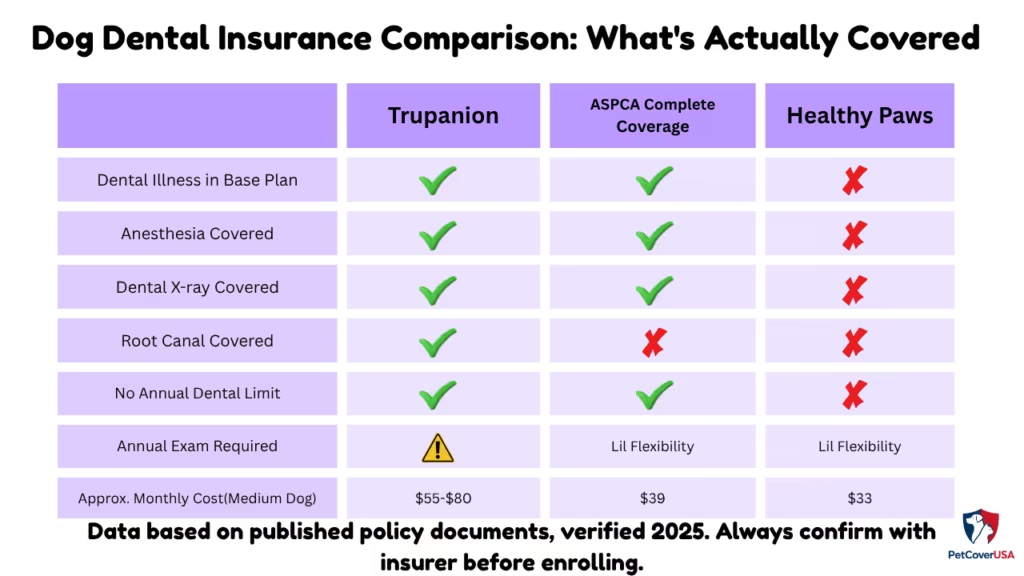
Here, one critical thing is important to understand: X-ray coverage is handled differently from standard cleaning coverage. While Trupanion and ASPCA cover diagnostic radiographs under their dental illness features, companies like Healthy Paws explicitly refuse to pay for X-ray procedures linked to dental disease.
I have read many pet owners’ stories and pain points, who are worried standing at clinic counters because their claim is suddenly rejected. There is one way to avoid this pain.
Call your insurance company before going to the vet, and ask them directly, “If my dog needs general anesthesia for covered dental treatment, do you cover the anesthesia line item itself?” and secondly ask them, “Do you pay for the mandatory pre-op bloodwork and dental X-rays?”
If they say yes or no, instantly note the call date, time, and the name of the representative. Spending five minutes on the phone before an appointment can save you from the sudden shock of thousands of dollars at the clinic counter.
When Dental Cleaning May Be Covered, That Can Save You Hundreds
Now, I am going to tell you a shocking thing I found during my research, which almost no pet insurance review mentions, and it’s genuinely actionable.
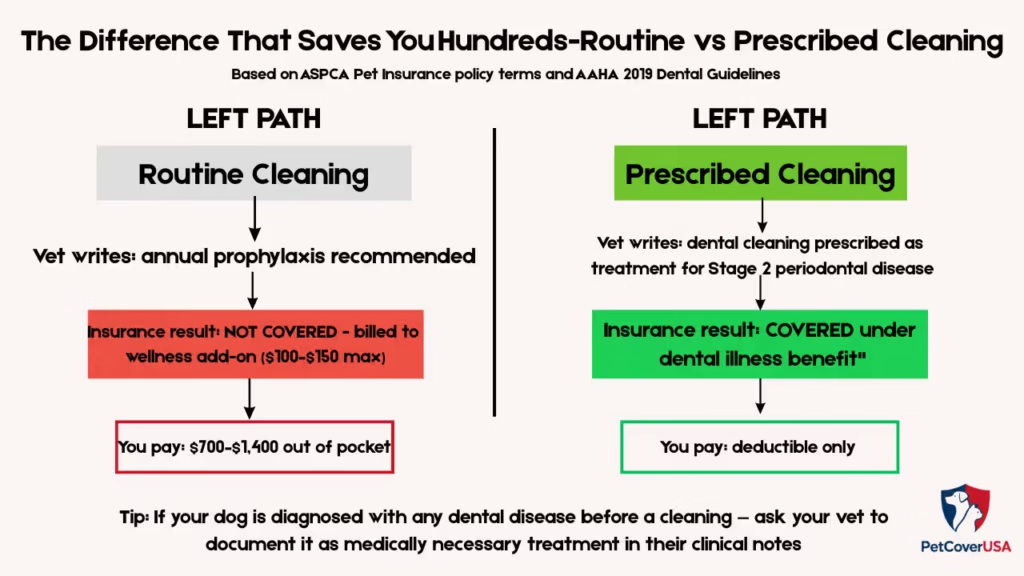
No standard insurance policy covers routine dental cleaning. But ASPCA, Trupanion, and Spot will cover dental cleaning if your vet mentions it as dental treatment, instead of common dental cleaning.
This is not a gray area or a loophole. It is written clearly in the official policy documents of ASPCA that if dental cleaning is necessary to cure any dental illness, then the company will cover it.
Source: ASPCA Pet Insurance policy terms
The American Animal Hospital Association (AAHA) backs this up clinically. Their official guidelines state that a professional dental cleaning is a core medical treatment for active periodontal disease, not just a casual preventive suggestion.
Source: AAHA 2019 Dental Care Guidelines for Dogs and Cats
Now, we’ll understand it in simple words that what you should do. If your vet diagnoses your pet with stage 2 Periodontal Disease, do not just let them file it as a standard checkup. You have to request your vet to write it clearly on the medical records and bill that this cleaning is part of the dog’s treatment, not an annual routine checkup.
This is because the wording on your invoice changes everything. The difference between your Vet writing “annual routine cleaning recommended” and “dental cleaning prescribed as treatment for Stage 2 Periodontal Disease” is massive. This single sentence can mean a difference between paying $800 out of pocket or having the insurance company cover it completely under your illness benefits.
Deep Research Table: How the Top Plans Actually Compare on Dog Dental Coverage
When I was doing research on this, I couldn’t find any comparison like this in any other blog on the internet, that is not just if it covers dental cleaning, but also the things that decides your claim will be accepted or not.
| Feature | Trupanion | ASPCA Complete Coverage | Healthy Paws |
|---|---|---|---|
| Dental illness in base plan | ✅ Yes | ✅ Yes | ✅ Yes |
| Routine cleaning (base plan) | ❌ No | ❌ No | ❌ No |
| Prescribed cleaning covered (dental disease) | ✅ Yes | ✅ Yes | ✅ Yes |
| Anesthesia covered (dental) | ✅ Yes | ✅ Yes | ⚠️ Accidents only |
| Dental X-rays covered | ✅ Yes | ✅ Yes | ✅ Yes |
| Root canal / endodontic treatment | ✅ Yes | ✅ Yes | ✅ Yes |
| Caps & crowns | ✅ Yes | ✅ Yes | ✅ Yes |
| Annual dental sub-limit | No limit | No stated sub-limit | No stated sub-limit |
| Annual exam required for coverage | ⚠️ Yes | ❌ No | ❌ No |
| Dental illness waiting period | 30 days | 14 days | 15 days |
| Pre-existing dental conditions | ❌ Not covered | ❌ Not covered | ❌ Not covered |
| Root canal vs extraction choice | Both covered | Both covered | Extraction only |
| Approx. monthly cost (med. dog) | $55–$80 | ~$39 | ~$33 |
Data sourced from published policy documents and coverage pages, verified as of early 2025. Pricing varies by breed, age, and location.
Sources: Trupanion, ASPCA Pet Insurance, Healthy Paws
Trupanion is one provider that offers broader dental coverage and no annual payout limit, but policy terms still matter. If your dog requires a highly complex oral or dental surgery, then this unlimited policy can save you thousands. But you can’t take their annual check-up condition lightly. This ongoing requirement is a hurdle that catches thousands of pet parents off guard, and their claim is suddenly denied.
On the other hand, ASPCA may be a good option for pet owners looking for a more budget-friendly plan with dental-related benefits. for the average dog owner. It offers better dental illness coverage, including anesthesia and x-ray, and never track calender for mandatory dental exam requirements. The most important thing is that all these things are available at a much lower monthly premium.
In my opinion, if you are highly disciplined with the vet calendar deadlines, then Trupanion can save you from big expenses. But if you are busy in life and want a budget-friendly plan, ASPCA may save you money and give you peace.
Annual Exam Requirements (How One Missed Vet Visit Voids Your Coverage)
This is the biggest trap in pet dental insurance that almost no standard review talks about, but this mistake is the cause of most claim rejections.
If you buy Trupanion insurance, then there is a specific ongoing requirement that your dog should have a dental exam every 12 months to keep coverage active. If you miss an annual checkup, even for just two or three months, the company can reject the dental claim for next year. It doesn’t matter if the illness started after the policy started; missing the checkup timeline may affect your coverage.
After analyzing real pet parents’ experiences, I got to know how this accident occurs. A responsible dog owner buys a Trupanion Policy and goes to the vet for checkups regularly. Suddenly, he becomes busy in life, and there is a 14 to 16-month gap between other check-ups.
After some time, the dog develops a dental problem, and the owner goes for a claim, but the company rejects it. According to policy, the insurance company is right because its requirement wasn’t fulfilled, and the dog owner becomes worried because he didn’t know that a little mistake can cost him this much.
If you want to get unlimited benefits from Trupanion, then set a reminder as “Annual vet Dental exam” on your phone from the first day of enrollment. You have to be punctual in annual checkups if you want to get your claim approved.
But if you think that you are not flexible with your schedule, then you should go for ASPCA, Spot, or Pumpkin instead of Trupanion. These companies have less strict annual check-up requirements for dental coverage. This is the reason why most pet parents choose ASPCA over Trupanion, even if ASPCA offers a lower payout limit.
Real-World Cost Projection: What You’ll Actually Spend Over 5 Years
Let’s analyze the actual 5-year expense of a 4-year-old mid-sized dog. Then you’ll know when insurance gives you a benefit and when it causes you a loss.
Dog dental cleaning cost without insurance (realistic 5-year spend):
According to CareCredit’s survey in 2025, a common dental cleaning fee looks like $388, but as I mentioned earlier, it includes anesthesia, a blood test before the operation, full mouth X-ray, so a one-time dental cleaning can cost between $700 to $1,200.
Source: NerdWallet / CareCredit 2025 Survey
| Expense | Conservative Estimate | Realistic Estimate |
|---|---|---|
| Annual cleaning × 5 years (with anesthesia + X-rays) | $1,940 | $4,500–$6,000 |
| One moderate extraction event | $800 | $1,500 |
| One complex procedure (multi-extraction or root canal) | $500 | $2,500 |
| 5-year total out of pocket | ~$3,240 | ~$8,500–$10,000 |
With Trupanion (estimated $60–$80/month for this dog profile, 90% reimbursement):
| Expense | Amount |
|---|---|
| 5-year premiums | $3,600–$4,800 |
| Out-of-pocket dental after reimbursement | ~$450–$1,000 |
| Net 5-year cost | ~$4,050–$5,800 |
Here, you can clearly see when math becomes more compelling. If your dog is fine and no dental disease appears, insurance looks a little expensive.
But, if unfortunately, your dog suffers from Stage 3 Periodontal Disease (gum disease), then just one surgery can cost $2,500 to $5,000.
In this difficult situation, a good dental insurance can pay for 5 years premium in just one visit, and you don’t have to pay this amount out of your pocket.
Which Plan Actually Fits Your Dog’s Situation
Not every dog needs the same insurance plan. Your dog’s breed, age, and your monthly budget decide which plan you should go for. Here’s what I’d actually recommend based on specific situations:
Your dog is under 2
Buy policy today. Before your vet writes a dental problem or a little plaque in the medical record during a checkup, enroll your dog for insurance. As soon as you start your policy, you lower the chances of rejection of a claim as a “pre-existing condition”. Trupanion and ASPCA are both the best options for this age.
Your dog is a small or toy breed
If you have a small or toy breed dog like a Chihuahua, Yorkie, Shih Tzu, Dachshund, or Pomeranian, choose a plan with unlimited payouts. Small dogs have small mouths, so their teeth are structurally crowded, and they have Periodontal Disease genetically, which usually starts at the age of 2 years. In online pet communities, people often ask, ” Is dental insurance suitable for small breed dogs?” The answer is “Yes”, the unlimited plan by Trupanion is best here, because in the future, these dogs require dental extraction, which is a costly procedure.
Your dog is over 7
Choose a plan with no strict conditions. The older the dog, the more insurance companies make excuses for pre-existing conditions. ASPCA Complete Coverage is best for senior dogs. The biggest reason is that ASPCA does not impose a strict condition of an annual dental check-up for a claim. When your dog is getting old, or you do not have a fixed schedule, this plan can give you comfort.
You’re on a tighter budget
I would recommend that you focus just on core coverage. If you can’t pay a high premium, then go for Spot or Pumpkin instead of Trupanion. These companies cover dental problems for just $17 to $35 per month. Indeed, they don’t cover expensive root canal, but it covers dental extraction or gum disease, and in reality, almost 80% dogs just need this surgery.
FAQ’s About Best Pet Insurance That Covers Dental for Dogs
Can my dog’s tartar buildup be classified as a pre-existing dental condition by an insurer?
Yes, and this happens more often than most people expect. If your vet has ever casually noted “tartar present”, “mild gingivitis”, or “dental calculus” in your dog’s records, even during a routine visit where dental was not the main focus, an insurer may classify future dental illness claims as pre-existing. This is why early enrollment matters and why vet records should always be reviewed before buying a policy.
Does pet insurance cover dog dental cleaning when anesthesia for dog dental cleaning is required?
Routine dental cleanings are usually not covered, even when anesthesia is required. However, if the procedure is prescribed as treatment for a diagnosed dental illness, it may be included under illness coverage and anesthesia costs may also be reimbursed. Always confirm with your insurer beforehand because billing for anesthesia is often separate from the main procedure.
Is a root canal or extraction the better choice for my dog, and which does insurance cover?
Extractions are generally cheaper ($300 to $1,000 per tooth) compared to root canals ($1,500 to $3,000+). Most insurance plans only cover extractions, while limited providers include root canals. Trupanion is one of the few that covers both, allowing treatment decisions based on medical need rather than insurance limits.
What happens to my dog’s dental history if I switch pet insurance plans?
When you switch insurers, your pet’s full medical history is reviewed again. Any dental condition recorded before the new policy begins can be treated as pre-existing and excluded. This often results in lost coverage for conditions that were previously insured under another provider.
Does dog gingivitis count as a dental illness for pet insurance coverage purposes?
Yes, gingivitis is generally considered a dental illness and can be covered if it develops after the waiting period. However, if it was documented before enrollment, insurers may classify it as pre-existing and exclude related treatment claims.
How does an insurer check my dog’s vet records when I submit a dental claim?
Insurers request full veterinary records directly from your clinic when processing claims. These records are reviewed for any prior mention of dental issues such as tartar buildup, gum disease, or treatments. Even brief notes in past visits can influence whether a claim is approved or denied.
Final Thoughts
After going through this deep research, policy contracts, and data, I would tell you clearly in simple words that there is not a single “best” dental insurance plan that fits in every situation. Your decision depends on your needs and your lifestyle. There is no single best dental plan for every dog. The right choice depends on your dog’s age, dental history, budget, and how much coverage you want for procedures such as cleanings, extractions, and diagnostic imaging, because it covers root canals, with no annual payout limit, and covers anesthesia and X-ray.
If your main purpose is dental coverage, and you can do annual dental checkups punctually, it is useful to pay high premiums for Trupanion. But if you want better dental coverage on a low budget and don’t want strict conditions, ASPCA Complete Coverage is the best and most balanced option because it has no strict annual check-up condition; instead, it has some flexibility, it covers vet-recommended cleanings, anesthesia, and X-rays.
For any company you choose from, you must do two things so that your money is not wasted. First of all, don’t trust big headings on the main page of companies’ websites; instead, download their PDF policy document and read the terms and conditions for dental coverage on your own. Secondly, get your dog’s old clinical file and read it clearly, as the insurance company. Look, if your vet has written common tartar or gingivitis, because insurance companies use this clinical file as the reason for claim rejection.
The real thing is that pet insurance is not a magic wand that can solve every problem. But if you choose the right dental plan before any disease appears, this can save you $3,000 to $6,000 easily. Most importantly, decide on the basis of which thing is medically better for your dog, not on the basis of money in your pocket standing on the clinic counter.
Related Pet Insurance Guides
If dental coverage is your main concern, our guide to whether dog dental cleaning is covered by pet insurance explains an important part of dental benefits.
You can also compare dental coverage options through our guide to affordable dog dental plans in the USA .
If you’re specifically looking for policies with shorter or no waiting periods, see our guide to pet dental insurance with no waiting period .
For a broader look at pet insurance coverage beyond dental care, read our guide to comprehensive pet insurance coverage .
If you’re comparing providers, you can also review our Embrace pet insurance review and Lemonade pet insurance review .
📅 Last Updated:
📖 This article on Best Pet Insurance That Covers Dental for Dogs is regularly updated to provide the most accurate and expert-backed coverage information for dog owners. Read full guide here.

About the Author
M. Nouman is an independent researcher and writer focused on U.S. pet insurance. He reviews insurer policy documents, coverage terms, waiting periods, reimbursement options, exclusions, and publicly available veterinary and regulatory resources to create clear, research-based guides. His goal is to simplify complex insurance information so pet owners can make informed decisions based on reliable sources rather than marketing claims. Articles are reviewed and updated as policies and industry information change.
Areas of Research: Pet Insurance Policies, Coverage Analysis, Policy Comparisons, Waiting Periods, Reimbursement Models, Policy Exclusions, Claims Education
Research insights and updates on Quora, LinkedIn, and Reddit.