
Some links may be affiliate links. We may earn a small commission at no extra cost to you.
Information may change over time and should be verified with official providers. We are not responsible for any decisions made based on this content.
Best Pet Insurance Plans for Older Dogs in 2026: What to Consider Before You Buy
Is pet insurance available for senior dogs? A plan may be available but it is important to know that the right insurance can depend on several factors. You may easily end up without the most essential type of coverage if you do not pay attention to exclusions, waiting period requirements, and provisions related to pre-existing conditions to your older dog. In this article, we share some tips about choosing the best insurance provider for your dog.
- Why Senior Dog Insurance Is Different
- When Is Your Dog Actually “Senior”? (It’s Breed-Specific)
- The Waiting Period Problem
- The Pre-Existing Condition Reality (Read This Carefully)
- What Veterinary Guidance Can Tell You
- Best Pet Insurance for Older Dogs: The Comparison Table
- Deep Research Table
- Is Pet Insurance Actually Worth It for a Dog Over 10?
- 5 Things to Do Before You Buy Senior Dog Insurance
- Frequently Asked Questions
- Final Verdict: What I’d Actually Do

Why Senior Dog Insurance Is Different
Simply put, senior dog insurance is not simply regular pet insurance. While pet insurance can be age-agnostic when it comes to premiums, enrollment, waiting times, and definitions of pre-existing conditions, it is not the same with senior dog insurance. Clear Value
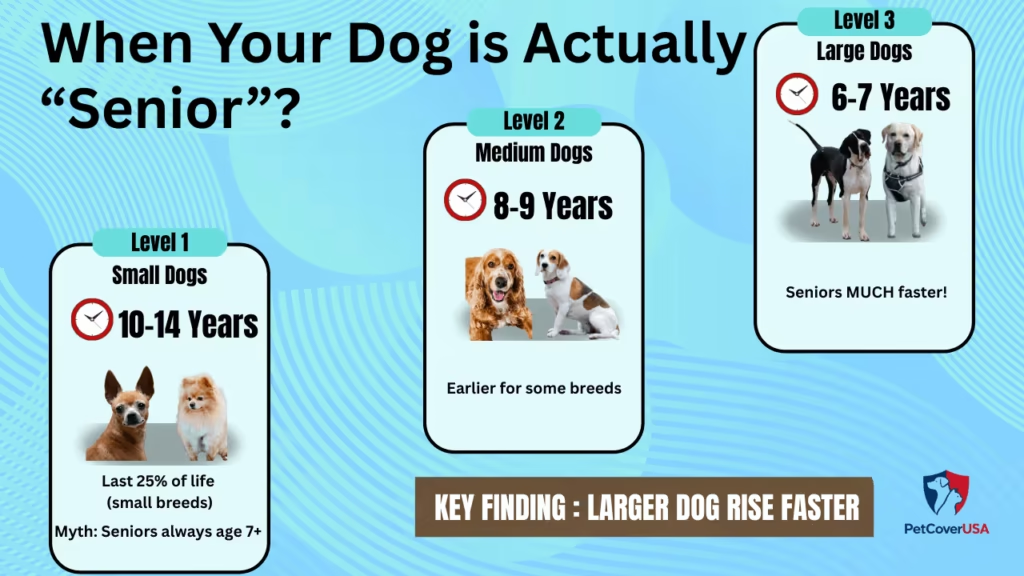
As a matter of fact, senior dogs come in different shapes, sizes, and life spans. According to the guidelines provided by AAHA, pets are considered senior animals when they reach their last quarter of the average life span, meaning the definition of “old” varies according to breeds, not age. Source: AAHA
Similar to regular pet insurance, the cost of dog insurance varies, as do related factors; hence there is no one-size-fits-all policy. This means that you should not be looking for the cheapest option but rather for the option which covers your senior dog’s needs.
When Is Your Dog Actually “Senior”?
Most people think that their dog will be “Senior” when it is 7-8 years old. That is not correct.
The American Animal Hospital Association considers a dog a senior when it is in the last 25% of its life. Small breeds like Pomeranians and Chihuahuas are usually considered seniors at 9+ years according to AAHA. Medium-sized breeds are seniors at 7+, and large breeds fall under the category at 6+ years old. Source: Insuranceopedia
In simple words, if you have a Labrador, your dog may be considered senior at the age of 7. If you own a Great Dane, you may be looking at senior status around age 5 or 6. This matters because large breeds may get higher premiums, so your chance to lock in lower rates may be shorter.
The Waiting Period Problem
A majority of pet insurance policies have waiting periods, which are periods of time that begin at the date of enrollment and end with the day that an illness, injury, or orthopedic problem is covered by the policy. In addition, waiting periods can vary depending on the type of injury or disease, as well as the insurance plan type and state regulations.
Wait times will differ from one condition to another and can extend considerably when it comes to orthopedic and hip and knee-related issues. While certain plans may list waiting periods longer than a few months when it comes to orthopedic issues, some only have a few weeks of waiting. To be sure, read the current policy before choosing between plans.
| Insurer | Waiting-Period Information to Verify |
|---|---|
| Pets Best | Some policy forms list a six-month cruciate ligament waiting period. |
| Figo | Orthopedic waiting periods may apply under certain plans. |
| MetLife | Cruciate ligament or IVDD waiting periods may apply in some policies. |
| Healthy Paws | Hip dysplasia waiting periods may apply in certain cases. |
| ASPCA | Orthopedic and ligament terms may vary by state and policy. |
| Pumpkin | Confirm current knee, ligament, and orthopedic terms before enrollment. |
In addition to waiting periods, pre-existing conditions must be considered. A pre-existing condition is a condition that was already showing symptoms before the start of the coverage.
Waiting-Period Waivers: What to Check
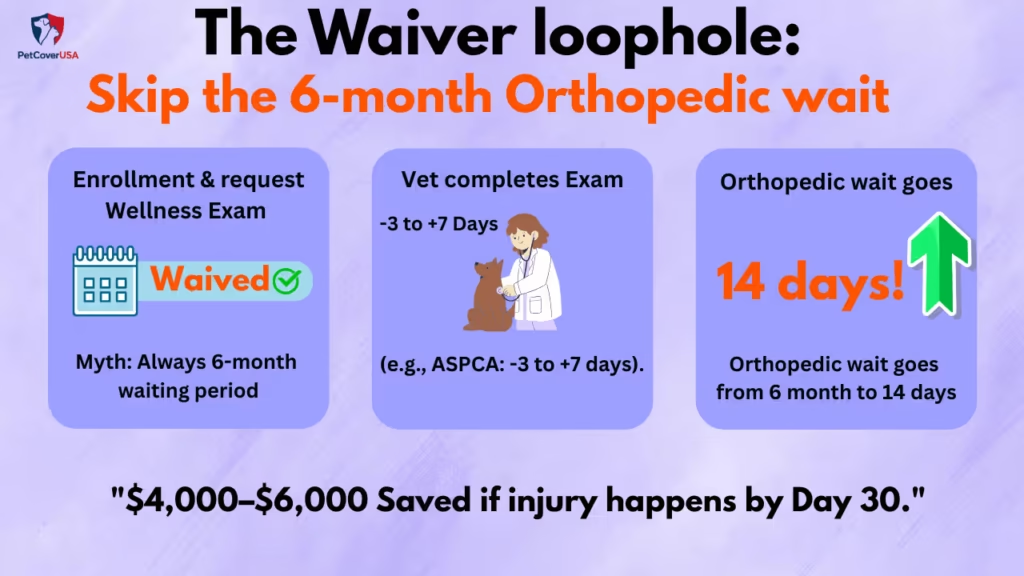
Some pet insurers could offer a reduction or waiver of the waiting period after a valid vet exam. The terms depend on the coverage provider, the state, the insurance policy, and the condition to be covered. A vet examination does not always exempt you from waiting periods or guarantee insurance coverage.
For instance, some companies may require that the examination be passed within a specific period before or after registering. Other insurers may provide waivers only for some hip, knee, or orthopedic problems, while some companies may not give this option at all.
Prior to relying on a waiver, find out from the insurance company:
- Which waiting times can be waived?
- What conditions are included?
- When must the vet examination be conducted?
- What examination or medical records are required?
- Is approval automatic?
Get the answers in written form and keep them with your policy documents. The waiver can decrease the waiting time before specific eligible conditions become covered but does not cover the cases of pre-existing conditions and does not guarantee that the future claim will be approved.
The Pre-Existing Condition Reality (Read This Carefully)
The reason behind claim denial for older dogs may be pre-existing conditions. But there is a way that can really work for you.
Curable vs. Incurable Pre-Existing Conditions
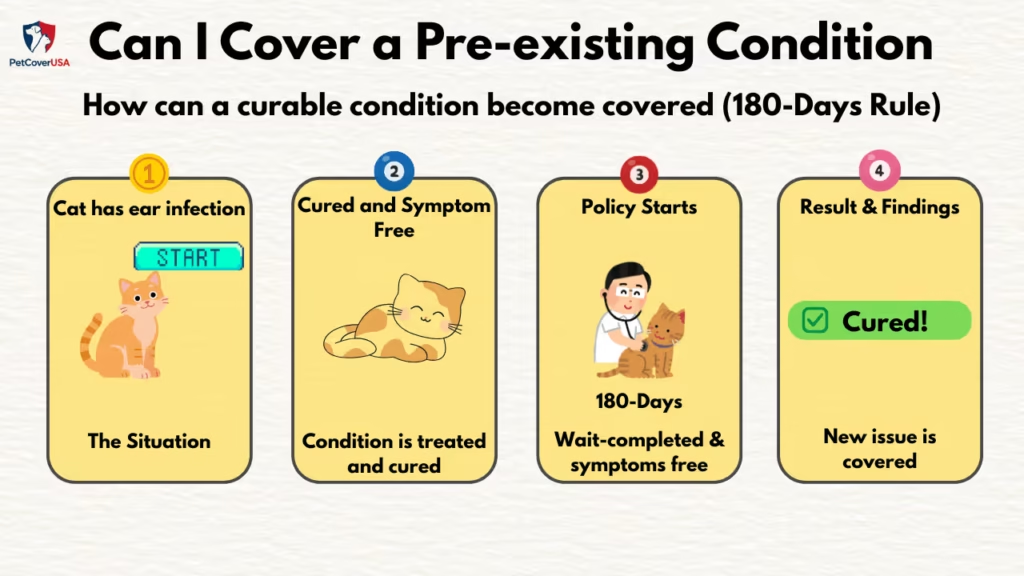
Insurance companies that cover pets may make a distinction between pre-existing conditions that are curable and those that are not. The rules governing the acceptable period required from the date of healing to the time at which maximum healing takes place differ across the insurers.
A case in point could be an animal that has suffered a throat infection, ear infection, or minor skin problem. There is a chance that the affected pet is declared free from the disease and becomes eligible again if the policy requires a waiting period to elapse and the respective species does not exhibit any symptoms for the specified time.
The AKC Pet Insurance informs its clients about the eligibility of pre-existing conditions, both curable and uncured, after the completion of 365 days of payout for the services rendered. The specification of eligibility is important when enrolling in AKC Pet Insurance.
The Vet Records Risk
During my research, one thing I found was that while reviewing a claim, the insurance company might ask for veterinary history records that will help them know when the disease occurred, whether it was previously treated, and if it is included in the pre-existing-condition exclusion. This information may differ by insurance company or claim. By obtaining the history records of your pet before signing up, one can know the types of exclusions that might be applicable. Even a small note from a vet visit two years ago, like stiffness after walking, may lead to additional questions or exclusions.
So, before you sign up, get a full copy of your pet’s vet records and read them yourself. If you see anything that looks like an early health issue, keep it in mind and ask the insurer clearly how they handle pre-existing conditions.
What Veterinary Guidance Can Tell You
It is true that as dogs get older, veterinary care can become more complex. Insurance is more of a financial decision rather than a replacement for preventative care. Pet insurance helps some of the pet owners manage their unexpected veterinary expenses, but it usually does not cover all types of diseases or provide all routine services. Pet owners should consult a qualified vet and discuss their dog’s past health problems and needs for the future. After that, they should compare the vet’s opinion with the exclusions and limits of their insurance policy.
Best Pet Insurance for Older Dogs: The Comparison Table
| Insurer | Monthly Cost | Age Rule | Orthopedic Wait | Curable Conditions | Direct Vet Pay |
|---|---|---|---|---|---|
| ASPCA | Quote required | Varies by plan/state | Policy-specific | Some may qualify after symptom-free period | Generally no |
| Pets Best | Quote required | Plan-specific | Up to 6 months may apply; waiver possible in some cases | Policy-specific | Generally no |
| Pumpkin | Quote required | Varies by plan/state | Confirm current policy | Some may qualify | Generally no |
| MetLife | Quote required | Plan-specific | Policy-specific | Policy-specific | Generally no |
| Trupanion | Quote required | Maximum age may apply | Policy-specific | Usually excluded | Available at some participating hospitals |
| Embrace | Quote required | Maximum age may apply | Extended wait may apply | Some may qualify | Generally no |
| Spot | Quote required | Varies by plan/state | Policy-specific | Some may qualify | Generally no |
Note: Premiums, age limits, waiting periods, and pre-existing-condition rules vary by state, plan, and pet profile. Always check the current policy documents before purchasing.
My honest opinion on this table:
Pets Best may be worth considering for owners prioritizing a lower quoted premium, but actual prices depend on the dog’s breed, age, location, deductible, reimbursement percentage, and annual limit. In the policy information reviewed for this article, ASPCA and Pumpkin list relatively short orthopedic or ligament waiting periods in certain plans and locations. Terms can vary, so confirm the current policy before purchasing, which matters most for senior large breeds.
Trupanion offers direct veterinary payment through participating hospitals and its applicable payment system. It is not available at every clinic, and the owner should confirm participation and payment terms in advance. You don’t have to pay first and wait for reimbursement. If upfront bills stress you out, this direct-pay system is a real advantage.
Deep Research Table
| Research Area | Forbes Advisor | U.S. News | Specialized Sites |
|---|---|---|---|
| Orthopedic waiting period waiver | Briefly mentioned | Limited mention | More detailed discussion |
| Curable vs. incurable pre-existing | Briefly explained | Basic mention | More detailed explanation |
| Vet records risk before enrollment | Not clearly emphasized | Not clearly emphasized | Covered in detail |
| Age-specific cost data | General examples | General senior examples | More detailed breed/size breakdowns |
| Trupanion direct-pay difference | Not emphasized | Not emphasized | Clearly explained |
| Premium increase pattern year-on-year | General mention | Limited mention | More data-driven discussion |
Is Pet Insurance Actually Worth It for a Dog Over 10?
Although pet insurance may still be beneficial for a dog that is over 10 years old, the right option will depend on a dog’s medical history, projected premiums, plus the owner’s ability to afford outside veterinary fees.
There is a greater likelihood that older dogs will develop illnesses, such as heart disease and other age-related problems; however, this will depend on several factors, such as breed, size, genetic predisposition, and health status. The veterinarian will be able to explain if screening or further monitoring is necessary.
While it is known that treatment of certain illnesses, such as cancer or care of the cruciate ligament, may require spending a few thousand dollars, the actual cost will vary depending on many factors, including the type of illness, the method of treatment selected, as well as specialists’ fees, tests undertaken, and follow-up care provided. It is advisable to ask a veterinarian for a written estimate to compare the potential expenses with the insurance policy.
Some insurers have established their guidelines for the maximum age of dogs for enrollment; others allow enrolling dogs of a higher age under some particular conditions of the plans. Make sure to check with the insurer about the age eligibility before applying for enrollment.
Practical Guidance for Owners:
If your dog is 10 to 12 years old and is completely healthy with no chronic disease, insurance companies like ASPCA, Pets Best, or Spot may still make sense for cancer coverage and acute emergencies. But if your dog already has arthritis, diabetes, or heart disease, premiums may be high, and coverage for those conditions may be refused. In that case, a dedicated savings account may be a practical alternative, but you should not cancel existing coverage if you already have it. If you switch mid-senior life, this may be a move that may reduce your coverage.
5 Things to Do Before You Buy Senior Dog Insurance
- Examine Your Fido’s Medical History
Prior to enrollment, request your dog’s complete medical record. Check for old symptoms and treatments received, for example, for cases involving joint pain, lumps and tumors, digestive problems, or dermatological issues. This information may help determine the classification of future claims. - Research Orthopedic Waiting Periods
Examine the waiting period for orthopedic problems, including ACL, hip, and knee. The waiting period differs among insurers, states, and policies. While a short waiting time is recommended for older or bigger dogs, it should not be the only determinant in your choice. - Inquire About Waiting Period Waivers
Some companies may offer the customer a waiver or cutting of the waiting time after a qualifying examination. Different companies have different requirements, and they may involve having the exam on a certain day, the history, and the condition itself. Be sure to send the details in writing before applying for it. - Be Aware of the Risks of Changing Policies
A new insurer may view existing health issues or illnesses as prior conditions. Before switching policies, compare the exclusions, waiting times, deductibles, reimbursement percentages, and maximum amounts. The low premium might not be worth it if important conditions are excluded. - Familiarize Yourself with Curable Condition Regulations
In some cases, a policy may revisit admissible curable conditions after the required waiting period without symptoms and treatments. The period of waiting and exclusion of conditions vary with insurers.
Frequently Asked Questions
Age eligibility varies by insurer, state and plan. Some providers may accept older dogs, while others apply maximum enrollment ages. Confirm the current age rule directly with the insurer before applying.
Premiums may change at renewal because of your pet’s age, location, breed, veterinary-cost trends and the insurer’s pricing practices. Ask the provider how renewal pricing is calculated before enrolling.
Many accident-and-illness policies may cover eligible cancer diagnosis and treatment if the condition is not pre-existing and the waiting period has ended. Coverage is subject to deductibles, reimbursement rates, annual limits and exclusions.
You may still be able to enroll your dog, but existing arthritis and related conditions may be excluded as pre-existing. Depending on the policy, unrelated future accidents or illnesses may still qualify for coverage.
Standard accident-and-illness plans often exclude routine checkups and preventive care. Some insurers offer optional wellness benefits for an additional cost, but these usually have separate limits and reimbursement rules.
Final Verdict: What I’d Actually Do
It is not possible to own the most appropriate insurance policy all the time. The best insurance plan is the one that protects your dog financially as well as does not create a burden on the family budget.
Get quotes based on the same deductible, reimbursement percentage, and limit of reimbursement for the year. A low-cost policy may come with long waiting periods or more exclusions than an already existing policy may have if your dog suffers from a chronic condition.
If any large veterinary bill is difficult to manage, request a direct payment option at your preferred veterinary clinic. Look through your dog’s complete record, compare exclusions spread across the policies provided, and select the best option with proper coverage.
Related Pet Insurance Guides
If you’re comparing coverage specifically for an older dog, start with our guide to pet insurance for senior dogs over 10 years old for additional considerations when choosing coverage.
Dental care can become an important consideration as dogs age. See our guide to Embrace coverage for older dogs and dental care for more information.
If you’re comparing providers, our Embrace pet insurance review examines one of the providers you may encounter during your research.
For another provider-specific comparison, you can also read our Lemonade pet insurance review .
Before choosing a policy, it’s also worth understanding exclusions. Our guide to pre-existing conditions and pet insurance explains an important limitation to consider when comparing plans.
📅 Last Updated:

About the Author
M. Nouman is an independent researcher and writer focused on U.S. pet insurance. He reviews insurer policy documents, coverage terms, waiting periods, reimbursement options, exclusions, and publicly available veterinary and regulatory resources to create clear, research-based guides. His goal is to simplify complex insurance information so pet owners can make informed decisions based on reliable sources rather than marketing claims. Articles are reviewed and updated as policies and industry information change.
Areas of Research: Pet Insurance Policies, Coverage Analysis, Policy Comparisons, Waiting Periods, Reimbursement Models, Policy Exclusions, Claims Education