
Important Notice: This guide shares general information about small dogs with digestive sensitivity using publicly available veterinary and regulatory sources. It is not veterinary advice. “Sensitive stomach” is not a formal diagnosis, and individual needs vary. Always consult a licensed veterinarian before changing your dog’s diet or managing ongoing symptoms.
Dog Food for Small Dogs with Sensitive Stomachs: What the Evidence Actually Says
There is no specific food that treats digestive problems in all small dogs, nor is there a trustworthy source which claims otherwise. What does exist, however, is the evidence that “sensitive stomach’’ cannot be considered a diagnosis, that “complete and balanced’’ foods can be defined as products with some AAFCO nutrient profiles, that small breeds and toy breeds may need to eat frequently for reasons other than the quality of the food they eat, and that if symptoms keep appearing or becoming worse one should go to the veterinarian instead of just changing food brands.
This article tackles the facts and findings, as well as a few important points that nobody mentions when writing about this subject.
Key Takeaways
- The term “sensitive stomach” refers to a collection of symptoms instead of a diagnosis; causes vary from trivial dietary problems to well-known gastrointestinal illnesses.
- When it comes to small toy dog breeds, the need for smaller portions served more frequently is a matter of blood sugar regulation and is not about digestibility. This is unrelated to choosing a proper type of food.
- Also, distinguishing vomiting from regurgitation allows you to narrow down what the veterinary doctor searches for at first.
- Grain-free diets should not be thought of as easy to digest, for the FDA has an unresolved problem of the link between some grain-free diets and possible heart disease.
- If your veterinary doctor prescribes an elimination diet, it usually takes weeks to reach a definitive result.
What “Sensitive Stomach” Actually Means (and Doesn’t Mean)
Sensitive stomach” is a common term used by owners and marketers, but it is not a formal veterinary diagnosis. Veterinary references describe it as a collection of symptoms rather than a single condition. As per the owner’s guide related to digestive disorders in dogs mentioned in the Merck Veterinary Manual, symptoms shown by dogs such as vomiting, diarrhea, and others may arise due to several reasons ranging from very minor issues such as indigestion to serious ailments such as inflammatory bowel disease or protein-losing enteropathy.
This difference is essential. A dog that occasionally has some loose stools after eating a new treat faces an entirely different situation from a dog that vomits for weeks on end. Though both dogs may be referred to as having a “sensitive stomach” by their owners, they will require different treatments.
In my opinion, this is the most crucial aspect that gets lost in other content revolving around the idea of sensitive stomachs. The very phrase makes it seem like every condition is treated in the same way (changing their diet, adding pumpkin, having probiotics), whereas different patients require different treatments, and what should be done depends on the severity and length of the symptoms.
Why Feeding Frequency Matters More for Small and Toy Breeds
This is a key consideration that is often overlooked in the general discussions about ‘sensitive stomach.’
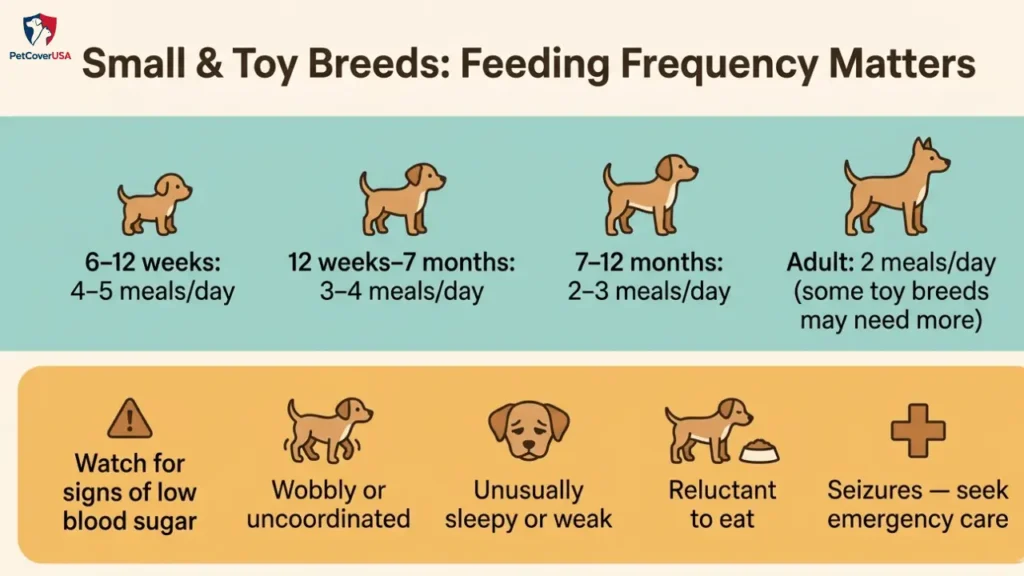
According to the American Kennel Club’s guidance on hypoglycemia in toy breed puppies, very young small-breed dogs may not be able to store enough glucose in the form of glycogen, and if they don’t eat anything for a long period of time, or expend a lot of energy due to stress or play, they may develop low blood sugar. Additionally, the AKC emphasizes the fact that young toy breed puppies are at high risk between about six weeks and 12 weeks of age and that more mature puppies continue to be at risk. Also, there are a few adult toy breed dogs that are at risk of low blood sugar.
The advice offered by the Purina Institute to feed puppies of small and toy breeds points out that small and toy breeds need increased energy per unit of weight than what larger dogs require, as the ratio of these weights is high.
This means that even a missed or postponed meal is critical for a small dog. If your small animal is looking sick before the meal or is weak, having trouble walking, or acting abnormally sleepy, mention that to your veterinarian, as it can signal feeding schedule problems, rather than simply asking the question “which food is better.”
Vomiting or Regurgitating? The Distinction Most Guides Skip
On almost every website featuring articles regarding sensitive stomachs, vomiting is featured as a symptom. However, only a few of them mention that regurgitation and vomiting are different processes, which isn’t just a matter of semantics from a diagnostic point of view.
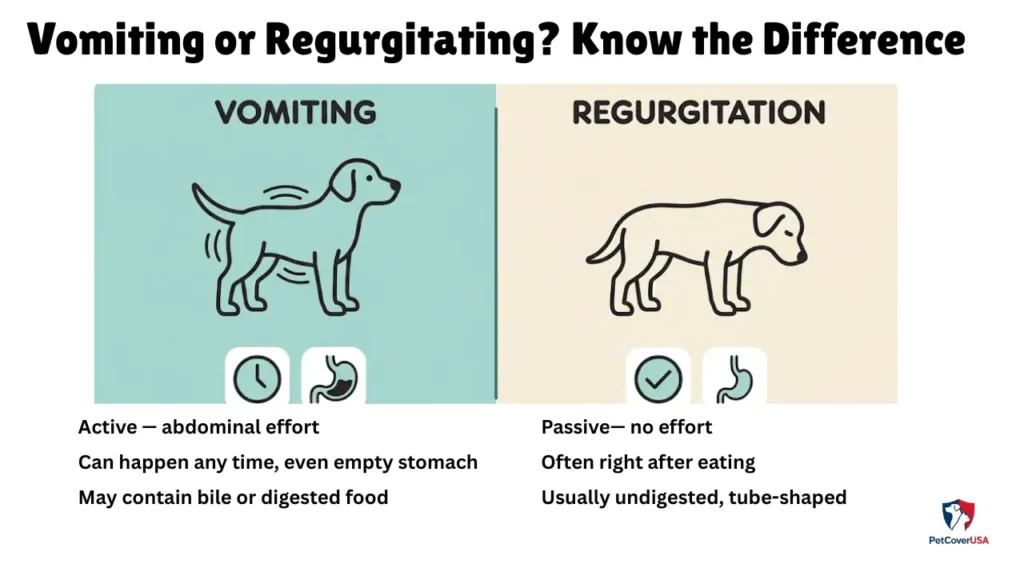
The Merck Veterinary Manual explains the difference between the terms in dogs in this way. Vomiting is a forceful ejection of the contents of the stomach and first part of the intestine, which is an active process that usually involves contractions in the abdomen. On the contrary, regurgitation is a passive event that does not include any contractions in the abdomen and means bringing up the food that is undigested.
| Vomiting | Regurgitation | |
|---|---|---|
| Effort | Active — abdominal heaving | Passive — no heaving |
| Timing relative to eating | Can happen any time, including hours after eating or on an empty stomach | Often happens shortly after eating |
| Appearance of material | May be digested, may contain bile | Usually undigested, sometimes tube-shaped, may be mucus-covered |
| What it can point to | Stomach/upper intestinal issue, dietary indiscretion, systemic illness | Esophageal issue (e.g., problems with muscle tone in the esophagus) |
Source: Merck Veterinary Manual, Vomiting in Dogs and Disorders of the Esophagus in Dogs.
If you can’t figure out whether your dog vomits or regurgitates the food, record a quick video of the episode to show it to the vet.
The Early-Morning Yellow Bile Pattern: Bilious Vomiting Syndrome
Here’s a likely reason to be amongst the most searched-for phrases that are as good as never referenced in any of the “sensitive stomach food” articles: it involves a dog that vomits some yellow frothy substance, usually in the morning on an empty stomach, and then continues behaving as if everything is perfectly fine.
This habituated behavior has its own name, bilious vomiting syndrome (BVS), and scientists have done research on it. A retrospective case series from Colorado State University described twenty dogs with bilious vomiting syndrome. The study noted improvement with feeding adjustments and medication in many cases, but BVS is generally considered a diagnosis of exclusion. The vomiting, according to the author’s assessment, occurs as a result of bile flowing from the intestines back to an empty stomach, causing irritation.
This paper mentions that, thanks to therapeutic treatment methods such as feeding food frequently, evening meals, and appropriate medication, the dogs’ condition improved in twelve out of the twenty cases, while in some other cases the problem might concern a different illness altogether, thus proving that BVS is generally considered to be a diagnosis of exclusion.
There is a point of importance that needs to be clarified: in an interview with AKC, Dr. Craig Webb (a coauthor of the case series and a professor at Colorado State University) states that BVS does not appear to be breed-specific, since it can happen to any dog regardless of breed, size, or age. Hence, it is not a breed-specific disorder. The relevant issue around small breeds is rather related to the fact that this breed may be more sensitive to the time between meals, and therefore the fact that the overnight fasting time is longer for small breeds may also be significant, although it was not tested in the case series.
If your dog is one of those showing these signs, i.e., being otherwise healthy and eating well but vomiting bile in the morning, it makes sense to consult a veterinarian about meal timing instead of assuming that there is a problem with food.
What the Evidence Supports Looking For in Food
In the U.S., food claiming to be a complete diet needs to either comply with the AAFCO Dog Food Nutrient Profiles or pass an AAFCO feeding trial, and this is the meaning of “complete and balanced” on a label according to the FDA. This is the minimum requirement and not a guarantee that a particular dog will accept any specific formula.
Adhering to the above, veterinary nutrition sources indicate some general factors that might offer help, but individual variability exists:
| Quality | What It May Help With | Caveat |
|---|---|---|
| Highly digestible, named protein source | May reduce undigested material reaching the lower gut | “Digestibility” isn’t standardized on pet food labels; it’s a formulation and processing factor, not something you can verify from the ingredient list alone |
| Limited ingredient list | May make it easier to identify a trigger ingredient if one exists | Over-the-counter limited-ingredient diets are not required to be free of trace cross-contamination during manufacturing |
| Consistent, gradual introduction | May reduce the microbiome disruption tied to abrupt diet changes | Even a well-formulated new food can cause temporary loose stool during transition |
| Prebiotic/probiotic content | May support gut bacteria balance, per the Merck Veterinary Manual’s overview of GI disease treatment | Response is described as variable (“may be beneficial in some cats and dogs”), not guaranteed |
Grain-Free Isn’t Automatically the Safer Choice
This is a prevalent theory that needs to be approached clearly, as it might influence pet parents to a decision that won’t necessarily be beneficial for digestion.
In July 2018, the FDA started investigating the possible connection between some diets containing a lot of peas, lentils, beans, or potatoes and canine dilated cardiomyopathy (DCM), a serious heart problem. Certain breed dogs were diagnosed with DCM despite not having genes triggering this illness. The FDA investigated a potential link between certain grain-free diets and canine dilated cardiomyopathy (DCM). As of 2022–2023, the FDA paused regular public updates while continuing to review the issue, and the AVMA has described the relationship as complex and not fully resolved. As a result, the FDA commented on the possible relationship between diet and DCM as a complicated issue involving different factors that make establishing causality difficult.
The implication for the wise sensitive-stomach choice is that a grain-free diet that is also understood as mild on digestion cannot be considered the best choice at this stage, as it has not yet been resolved, an issue involving other health problems in dogs.
If You Suspect a True Food Allergy: How an Elimination Diet Trial Works
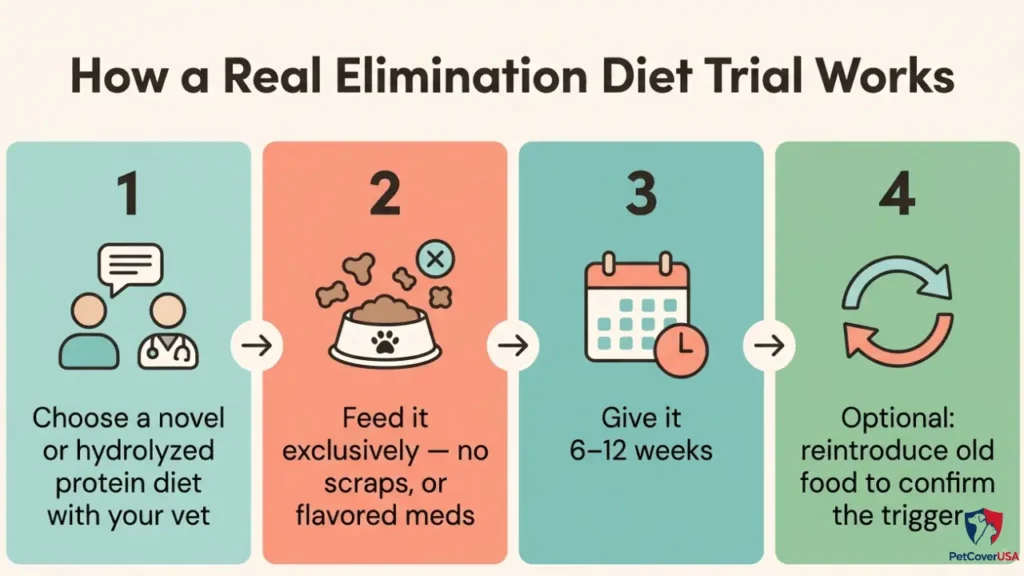
Almost all of the articles about the subject mention the terms “elimination diet” or “novel proteins” but might forget to describe what it actually means. According to veterinary references, the process consists of these stages:
- Select a diet: usually consisting only of a single novel protein (one that the dog hasn’t eaten) or a hydrolyzed protein diet, which is a method where proteins are broken into small pieces that the immune system is less likely to react to, according to NC State Veterinary Hospital.
- Feed exclusively. The Purina Institute states that this trial can be compromised by the use of treats, table scraps, flavored medication, supplements, and chews.
- Wait. Different sources vary in exact terms, with Veterinary sources commonly recommending 8–12 weeks for a strict elimination diet trial; though some gastrointestinal signs may improve sooner, they agree that it takes weeks, not days. Additionally, the Purina Institute states that GI signs may improve within 1-4 weeks, while skin issues can take 4-8 weeks or more.
- Consider testing again. According to VCA Animal Hospitals, this is the only way to know for sure if your dog has an actual food allergy, rather than just getting better automatically.
It is useful to know that one reason why “limited ingredient” diets that are sold without a prescription are usually not employed for elimination trials is that certain ingredients that are not mentioned on the label may manifest during the production process. This is why your veterinarian may suggest a therapeutic diet as part of an actual elimination trial, as per information obtained from the Purina Institute.
Is Your Dog’s Breed Linked to a Documented GI Condition?
Many online resources state that some dog breeds are more likely than others to have gastrointestinal problems without providing any further details. While there are a number of known specific cases that could be helpful to bring up with your veterinarian, they could help you ask a better question:
- Soft Coated Wheaten Terriers have a documented predisposition to protein-losing enteropathy and protein-losing nephropathy, according to the Merck Veterinary Manual, including protein-losing nephropathy.
- Irish Setter breeds are known for suffering from some form of gluten-sensitive enteropathy, again, according to the same resource.
- Basenji dogs are also known to have an inherited version of chronic intestinal inflammation, which has been called Basenji enteropathy.
Although none of these really applies to your particular breed and none of them is exhaustive, this proves that different GI problems exist in different strains with medical records. So, if your dog’s strain has some protocols tested, it’s better to aim your questions using proper terminology rather than using vague phrases like “this dog breed is sometimes predisposed to having a certain kind of illness.”
When a Food That Used to Work Suddenly Doesn’t
In the event of your pet’s well-tolerated diet suddenly causing issues, it is advisable to look at two aspects prior to thinking this indicates a change in your pet’s digestive system.
- First, check for any current recalls. The website of the FDA is constantly updated with information regarding recalls of animal feed and veterinary products. It is a matter of minutes to check the lot number on the package or bag against the recall registry.
- Second, determine if there has been any change made to the formula. The manufacturers can make changes in the recipe and use different ingredients – like fiber blends or their processing techniques. Though it is not something that is properly followed, dog owners do report such claims, and therefore it could be a good idea to check the ingredient label on the bag against a photo taken earlier, or contact the producer directly.
When to Contact Your Veterinarian
The following signs, drawn from the Merck Veterinary Manual and Merck’s page on vomiting in dogs, are generally considered reasons to involve a veterinarian rather than continuing to manage symptoms at home:
| Sign | Why It Matters |
|---|---|
| Vomiting or diarrhea lasting more than a few days | Merck notes that short-term vomiting (under 3–4 days) with no other signs is generally evaluated differently than longer, repeated vomiting |
| Blood in vomit or stool | Can indicate irritation, ulceration, or a more serious underlying issue |
| Weight loss | Especially alongside other digestive signs |
| Lethargy, weakness, or dehydration signs | May indicate the body is struggling to compensate |
| A very small or young dog going long stretches without eating | Relevant to the small/toy-breed blood sugar point above |
This list is general guidance, not a substitute for your vet’s judgment about your specific dog.
FAQ’s About Dog Food For Small Dogs With Sensitive Stomachs
Foods marketed this way are generally formulated with more digestible protein sources, often fewer ingredients, and sometimes added prebiotics or probiotics. They still need to meet the same AAFCO complete-and-balanced standards as any other complete diet — the “sensitive stomach” label itself isn’t independently regulated or verified by AAFCO.
There’s no single universally cited number for this specific question in the sources reviewed here. A gradual transition over roughly a week is commonly recommended, and if loose stool or vomiting continues well past the transition period, that’s generally a reason to check in with your vet rather than continuing to experiment on your own.
Individual response can vary, and the Merck Veterinary Manual describes probiotic and prebiotic benefit in GI disease as something that “may be beneficial in some” dogs — not a guaranteed fix. If a home remedy seems to coincide with worsening symptoms, that’s worth mentioning to your vet rather than continuing it by default.
Not based on the sources reviewed here. Grain-free formulation addresses grain content specifically, which is relevant mainly for dogs with a diagnosed grain-related sensitivity — and it currently carries the separate, unresolved DCM question described above.
Based on the bilious vomiting syndrome research described above, this pattern is often manageable with feeding-schedule changes when the dog is otherwise well. That said, any recurring vomiting pattern is worth discussing with your vet to rule out other causes, since BVS is generally diagnosed by ruling other things out first.
Where This Leaves You
If your little dog is experiencing mild digestive issues from time to time, then the general guidelines described above: digestible protein, gradual switching, and feeding routines should be followed. If the problems persist, or if they become worse, or if they are accompanied by these alarming symptoms, the best action according to the information provided here is to visit a veterinarian, not switch brands. If the dog’s symptoms specifically consist of vomiting in the morning without any food in the stomach, then it would be wise to consult the veterinarian about bilious vomiting syndrome and when to feed the dog, as it is a condition that is pretty straightforward yet frequently overlooked.
This article summarizes publicly available veterinary and regulatory information. It is not a diagnosis and does not replace an examination by a licensed veterinarian.
📅 Last Updated:
Related Dog Care Guides
If your dog has ongoing care needs, our guide to taking care of a puppy at home covers other important areas of everyday dog care.
Dental health is another important part of your dog’s overall care. See our dog dental care tips for healthy teeth for practical oral-care guidance.
If you’re researching pet insurance alongside your dog’s healthcare needs, our guide to comprehensive pet insurance coverage explains broader policy considerations.
If your dog has an existing health issue, it’s also useful to understand how pet insurance handles pre-existing conditions .
For owners preparing for a new puppy, our guide to helping a puppy stop crying in the crate at night provides another practical dog-care resource.

About the Author
M. Nouman is an independent researcher and writer focused on U.S. pet insurance. He reviews insurer policy documents, coverage terms, waiting periods, reimbursement options, exclusions, and publicly available veterinary and regulatory resources to create clear, research-based guides. His goal is to simplify complex insurance information so pet owners can make informed decisions based on reliable sources rather than marketing claims. Articles are reviewed and updated as policies and industry information change.
Areas of Research: Pet Insurance Policies, Coverage Analysis, Policy Comparisons, Waiting Periods, Reimbursement Models, Policy Exclusions, Claims Education