
Does Pet Insurance Cover Emergency Vet Visits?
Most pet insurance policies that cover accidents and illness provide partial coverage for vet emergency services, potentially including costs of consultations, diagnostics, surgery, and confinement in a vet clinic. Coverage levels depend on how the policy interprets the concept of emergency, whether the condition is pre-existing, and the optional services selected. Moreover, the coverage works in a manner different from using a credit card, since most policies function such that the client pays for the vet services before seeking reimbursement.
- Key Takeaways
- What Actually Counts as an “Emergency” in a Policy?
- What Emergency Vet Insurance Typically Covers
- What Emergency Coverage Often Doesn’t Include
- What Could an Emergency Vet Visit Actually Cost?
- How the Claims Process Works And the Part Most Articles Skip
- Why Emergency Claims Get Denied
- Urgent Care vs. Emergency Room: Does Insurance Treat Them Differently?
- Does Coverage Include the After-Hours Surcharge Itself?
- What Happens With a Second Emergency in the Same Year?
- Does Emergency Coverage Travel With You?
- Does an Emergency-Related Euthanasia Get Covered?
- Key Terms Worth Knowing
- Choosing a Plan With Emergencies in Mind
- FAQ’s About Pet Insurance Covering Emergency Vet Visits
- Before You Decide
Key Takeaways
- Typically, emergency protection is included in a wider plan that covers accidents and illnesses, although there are a few standalone emergency fund-style products available.
- The majority of old-fashioned policies stipulate that the bill must be paid by the pet’s owner first before making a claim, which is an important fact to keep in mind.
- Pre-existing conditions, waiting times, and (sometimes) bilateral exclusions are usually the main reasons why some accidents that would otherwise be covered by the insurance plan are only partially reimbursed.
- Very rarely is the clarification given in the marketing materials of insurance plans regarding coverage for the after-hours charge, out-of-state emergencies, or euthanasia after an emergency, so it is better to check with the provider directly.
What Actually Counts as an “Emergency” in a Policy?
Insurance companies do not consistently describe “emergency” the same way that you, or your pet veterinarian, might describe the term. Basically, an emergency means an unexpected injury or illness requiring immediate attention from a veterinarian, for example, a broken leg, a poisoning case, bloating, or trouble breathing.
The issue arises when it concerns injuries that happen during normal activities. One CBC News report described a disputed injury claim involving an insurer’s activity-related exclusion. The case shows why readers should review excluded-activity language rather than assume every accidental injury is covered. The insurance company reversed its claim denial only after they were asked to comment by a news agency.
It is, however, worth mentioning that these clauses are often hidden within policies and can come to light only when claims are made; thus, it is worth checking the “excluded activities” section of any pet insurance policy before signing any contracts.
What Emergency Vet Insurance Typically Covers
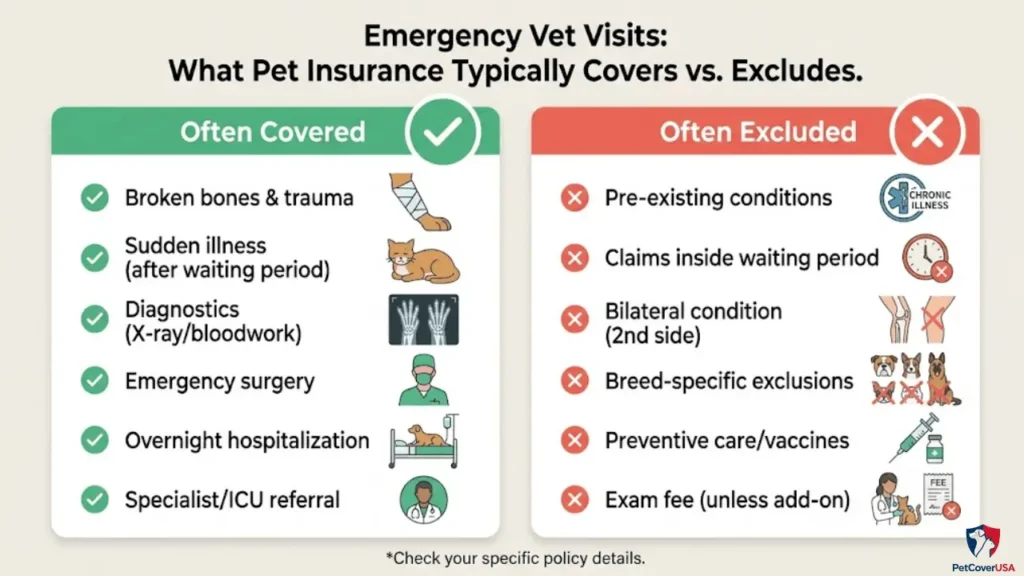
Based on publicly available plan summaries from several providers, an accident-and-illness policy can generally include the following. Specific inclusions still depend on your plan tier and insurer.
| Category | Examples | Typically Covered? |
|---|---|---|
| Accidents & trauma | Broken bones, car-accident injuries, bite wounds | Usually yes |
| Sudden illness | Bloat, pancreatitis, seizures, urinary blockages | Usually yes, after the illness waiting period |
| Diagnostics | X-rays, ultrasound, bloodwork, CT/MRI | Usually yes, as part of treating a covered condition |
| Surgery & hospitalization | Emergency surgery, overnight monitoring, IV fluids | Usually yes |
| Emergency exam fee | The fee just for walking into the ER | Varies — some plans exclude it or sell it as an add-on |
| Specialist/referral care | Cardiology, oncology, mid-emergency ICU transfer | Often included under the same claim, but this isn’t always spelled out in plan summaries — confirm directly |
What Emergency Coverage Often Doesn’t Include
- Pre-existing conditions. Any condition that your pet had before your policy (or waiting period) began is usually excluded from coverage, even if it becomes an emergency later.
- Waiting periods. Illness coverage usually has a waiting period of 14 days or so, but accident coverage may be available sooner. Any emergency that occurs during that time may not be eligible for reimbursement.
- Bilateral exclusions. For conditions that appear on paired body parts (e.g., knees or hips), if one side had a problem before coverage began, the insurer may exclude treatment for the other body part, depending on how the insurance provider phrases it in the policy language.
- Breed- or activity-specific exclusions. Some providers exclude coverage for issues strongly associated with certain breeds and/or injuries that arise from particular activities similar to the previous CBC case.
- Preventive or elective care. Vaccinations, grooming, and other elective treatments are generally excluded from emergency coverage, regardless of anything else.
What Could an Emergency Vet Visit Actually Cost?
While the precise amounts charged depend on a number of factors, including the clinic or region, as well as the severity of the case, some sources from the industry provide an illustration of what to expect:
| Emergency Type | Reported Cost Range |
|---|---|
| Emergency exam fee alone | Roughly $100–$250 |
| Diagnostics (X-ray, bloodwork, ultrasound) | Roughly $180–$700 |
| Foreign-object ingestion/obstruction surgery | Roughly $800–$5,000+ |
| Bloat (GDV) surgery | Roughly $3,000–$7,000 |
| Overnight hospitalization | Roughly $600–$2,500 per night |
Some consumer cost reports describe emergency veterinary bills in the thousands, but emergency frequency and lifetime cost vary greatly by pet and should not be treated as a universal estimate. This is the amount that really makes most of the above policies work – that is, the “pay now, get reimbursed later” principle, which works if you understand it beforehand rather than when you are already in front of the counter.
How the Claims Process Works And the Part Most Articles Skip
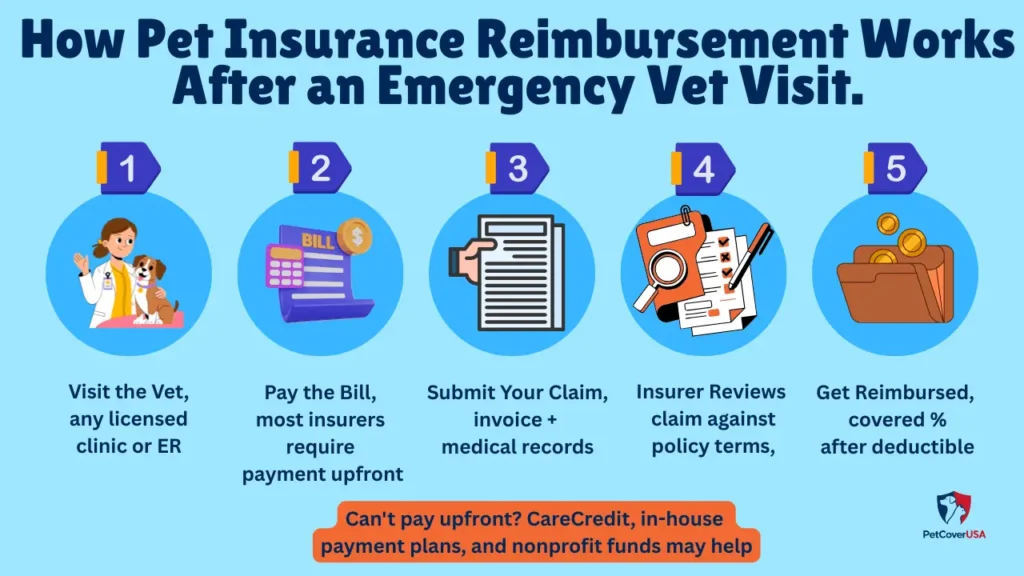
The normal process followed by most insurance companies is summarised in the following steps:
You take your pet to a vet clinic.
You make full payment of the cost of treatment on that day.
You visit your insurance company’s website and send them the receipt and medical records.
The insurer checks the receipt against the policy.
Once approved, you receive a cheque for the percentage of the insured amount.
A few companies provide direct vet payments; in these cases, the insurance pays the vet directly. This is something worth trying, but it is mostly dependent on whether the vet is working within the insurance bracket. It will not be available in all areas where the insurance is valid.
What if you can’t pay the bill upfront?
This is the part most articles that cover emergencies tend to miss out on, yet it is the most significant one when you require assistance. If funds aren’t available when you need treatment, your options are:
- Medical cards like CareCredit can be used to finance treatment instantly at certain veterinary clinics; however, not every vet accepts this type of card, and interest can be charged if it is not paid off during a promotional period.
- In-house payment plans are sometimes provided by veterinarians, although this is not a rule across the board.
- There are some nonprofit funds that provide help to given breeds or genera as well as grants where the patients meet the criteria for financial hardship.
- Crowdfunding is another way to pay the costs of the treatments, but it cannot help make the payment right away.
Pet insurance itself typically isn’t a same-day funding source in an emergency; it’s reimbursement for money you’ve already spent. That distinction is worth understanding clearly, ideally before you’re in the waiting room.
Why Emergency Claims Get Denied
Some of the most common reasons emergency claims are denied or stalled are due to the unavailability of medical records or the records that are incomplete, the insurance company categorizing the condition as something that existed prior to the issuance of the coverage, the procedure being done during a waiting period, or the injury not being covered by the insurance policy. Most reports suggest that one of the most usual causes of refused claims is wrong or missing data, as well as misunderstanding of the insurance policy by the insured person.
In case a claim was denied while the necessary documentation is available, a modern insurer has the option of appealing in writing, usually with the relevant information from the veterinarian. The periods of response and the terms of appeal depend on a particular company.
Urgent Care vs. Emergency Room: Does Insurance Treat Them Differently?
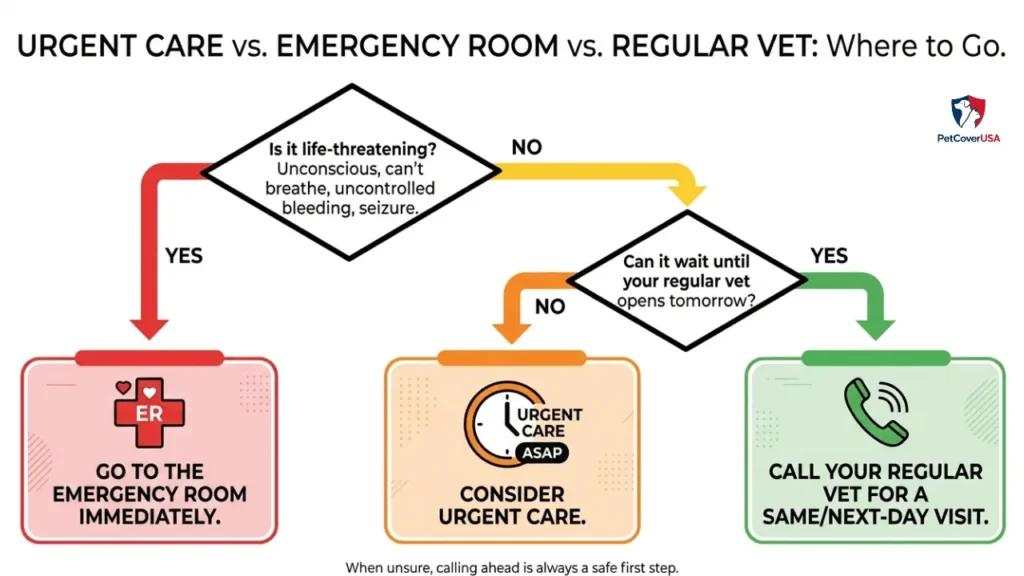
There are many instances that warrant an emergency room visit; however, not all after-hours emergencies require a trip to the ER. Veterinary emergency professionals recommend using urgent care for non-life-threatening situations and saving the ER for emergencies that require immediate medical attention. In terms of insurance, both types of services are treated essentially the same because both are provided by licensed veterinarians, meaning reimbursement will often depend on the bill’s wording and the doctor’s timing, not which facility you utilize. One thing worth checking directly with your insurance provider is how they utilize the various terms for reimbursement so you understand your options.
Does Coverage Include the After-Hours Surcharge Itself?
Emergency facilities generally apply a fee to the base charge for treatments rendered after hours, on weekends, or on holidays, which emergency clinics may apply after-hours, weekend, or holiday fees, but the amount varies by clinic and location. Whether an insurer reimburses that charge depends on the policy and the way the fee appears on the invoice charged by the ER. It is not clear in the sample plans if such a fee will be refunded along with the basic treatment. However, it appears in practice that it falls under the charge for the operations it is connected to, which is better to be checked directly with the health insurance company.
What Happens With a Second Emergency in the Same Year?
Most of the major companies prefer the use of annual deductibles. This means that once you have paid the deductible through one claim, any further claims can be made at any time within the same policy year without the need to pay the deductible once again. In essence, you will only need to pay the deductible once. Per-incident deductibles are quite different since they will apply to each new incident separately. A choice between any of the two methods may significantly influence your overall costs if your pet experiences several emergencies in one year, so make sure to find this out beforehand.
Does Emergency Coverage Travel With You?
Reimbursement-type coverage is often described by providers as being applicable to any licensed veterinarian (or emergency clinic) in one’s home country, and some policies may provide limited coverage outside the home country, but international terms vary substantially. Confirm geographic limits, documentation requirements, currency rules, and time limits before travelling where one is travelling to. International coverage, however, is less standard and generally varies from policy to policy; different providers have different policies about coverage of foreign incidents, with some offering very limited coverage abroad and others not offering any at all. Therefore, if one travels with their pet, it might make sense to check the specifics of international pet insurance coverage beforehand.
Does an Emergency-Related Euthanasia Get Covered?
While euthanasia is not often discussed under “emergency vet visit” topics because it is a possibility in some emergencies, based on reports from several insurance companies, some policies may cover veterinarian-recommended euthanasia in eligible circumstances, while others restrict it, exclude it, or place it under a separate end-of-life benefit. Check the policy’s exact wording before relying on this coverage, as long as it was suggested by a licensed veterinarian that it is needed in the particular case.
The standard rules that govern the rest of the coverage also apply to that procedure. While some companies include euthanasia in their regular accident-and-sickness coverage, others consider it a unique end-of-life benefit. If it is of interest to you, your insurance policy’s end-of-life section should be checked carefully instead of relying on the general information about euthanasia coverage as included in your insurance.
Key Terms Worth Knowing
| Term | What It Generally Means |
|---|---|
| Waiting period | The time after enrollment before a specific type of claim becomes eligible |
| Pre-existing condition | A condition showing symptoms, diagnosed, or treated before coverage began |
| Bilateral exclusion | When coverage for one side of a paired body part can affect coverage for the other |
| Reimbursement percentage | The share of a covered bill the insurer pays back, commonly 70–90% |
| Annual deductible | The amount you pay before reimbursement starts, reset each policy year |
| Direct vet pay | A structure where the insurer pays the clinic directly, where available |
Choosing a Plan With Emergencies in Mind
This should be taken into account if:
- You wish to be assured that your test costs are covered before the ER visit, rather than the other way around.
- Your pet is from a breed that has a high risk for conditions such as bloat or hip dysplasia, which may have longer waiting periods.
- If you go on a trip with your pet, you would be reassured by knowing that the insurance will be valid wherever you go.
However, you may want to consider different options if:
- Your main concern is injury coverage, and you would rather pay lower costs for an accident-only insurance instead of a full injury-and- illness insurance policy.
- You would prefer to use the funds on an emergency fund plan rather than in a regular policy.
FAQ’s About Pet Insurance Covering Emergency Vet Visits
Does pet insurance cover emergency vet visits immediately after signing up?
Generally not. Most policies apply a waiting period, often a few days for accidents and around two weeks for illnesses, before a claim becomes eligible.
Can I get reimbursed if I don’t have money to pay the ER upfront?
Typically, no. Most pet insurance plans reimburse after you’ve paid the clinic rather than paying at the time of service, unless your specific insurer and vet participate in a direct-pay arrangement.
Is a torn nail or minor limp considered an emergency for claims purposes?
This depends on your policy’s definitions and your vet’s assessment. It’s worth confirming with your insurer directly, since “emergency” isn’t defined identically across providers.
Does pet insurance cover the ER exam fee, or just the treatment?
It varies by provider. Some include exam fees in the base policy, others offer it only as an optional add-on, and some exclude it entirely. Check your plan’s fee schedule directly.
Will my premium increase after filing an emergency claim?
This depends on the insurer and, in some cases, your state’s regulations. Some companies factor claims history into renewal pricing; this isn’t guaranteed to happen, and practices vary by provider.
Before You Decide
This article outlines some common features on the basis of the publicly accessible information on how pet insurance works. It should not be treated as a replacement for reading the specific policy conditions and does not constitute any sort of legal, financial, or veterinary advice. Each insurance company has different conditions and exclusions in terms of coverage and costs, and the terms may also change over time. It is advisable to confirm your policy information with your insurer before using it in an emergency.
📅 Last Updated:
Explore More Emergency Pet Care Resources
Unexpected veterinary emergencies can happen at any stage of your pet’s life. Explore these expert resources to compare insurance coverage, estimate treatment costs, and choose a policy that provides reliable financial protection when urgent care is needed.
Pet Insurance With the Most Complete Coverage
Compare comprehensive insurance plans that include accidents, illnesses, emergency care, surgery, hospitalization, and other eligible treatments.
How to Choose the Right Pet Insurance Policy
Learn how deductibles, reimbursement rates, annual limits, and waiting periods affect emergency veterinary coverage.
Estimate Emergency Vet Visit Costs
Use our calculator to estimate veterinary visit expenses before choosing an insurance plan that fits your budget.
Pet Insurance Risk & Cost Calculator
Estimate your pet’s insurance risk profile and compare expected healthcare costs based on age, breed, and lifestyle.
Compare Pet Insurance Costs by State
Estimate monthly premiums based on your location and understand how state-specific pricing affects overall insurance costs.
Complete Guide to Pet Insurance in the USA
Explore our complete guide to compare providers, understand policy features, and choose the right insurance coverage before an emergency happens.

About the Author
M. Nouman is an independent researcher and writer focused on U.S. pet insurance. He reviews insurer policy documents, coverage terms, waiting periods, reimbursement options, exclusions, and publicly available veterinary and regulatory resources to create clear, research-based guides. His goal is to simplify complex insurance information so pet owners can make informed decisions based on reliable sources rather than marketing claims. Articles are reviewed and updated as policies and industry information change.
Areas of Research: Pet Insurance Policies, Coverage Analysis, Policy Comparisons, Waiting Periods, Reimbursement Models, Policy Exclusions, Claims Education