
Dog Dental Care Tips for Healthy Teeth (And the Stuff Most Guides Skip)
If you have ever noticed something off about your dog’s breath, it is good that you are asking questions. Bad breath is not merely bad breath: it is likely a sign that something is happening in your dog’s mouth in terms of the accumulation of plaque or bacteria. The good news is that dental health issues in dogs can be prevented and that it does not take much effort in terms of dog dental care.
The only problem is that since so many articles exist related to dog dental care and health and have only covered dogs’ breath and tips and tricks, most of these articles stop short of actually answering questions related to cleaning, anesthesia, and what to do when your dog does not let you perform dental cleaning on them.
- Why Dog Dental Care Matters More Than It Seems
- Signs You Shouldn’t Ignore
- Daily Home Care: What Actually Helps
- What If Your Dog Won’t Let You Brush Their Teeth?
- Professional Cleanings: Why Anesthesia Comes Up
- What Does It Actually Cost?
- Does Pet Insurance Cover Dental Care?
- Two Things Even Attentive Owners Often Miss
- FAQ’s About Dog Dental Care Tips for Healthy Teeth
- Where This Leaves You
Why Dog Dental Care Matters More Than It Seems
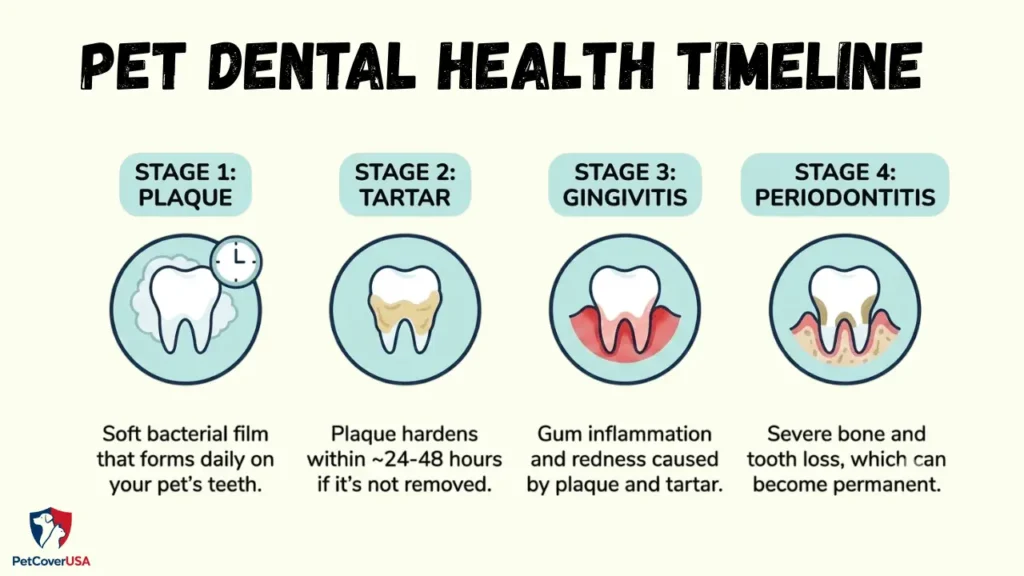
Oral diseases are one of the most widespread health issues seen by veterinarians in dogs; some studies suggest that approximately 75% to 90% of canines over the age of three show some degree of dental disease, although the estimate varies from study to study. However, even more interesting is the reason it occurs: unlike the case with humans, dogs are less prone to getting cavities than developing periodontal diseases due to differences in the bacteria in the mouths of dogs and their diets.
This is the important point that tends to be overlooked: the moment bacteria from an infected gum line enter the blood vessel, it does not limit itself to the dog’s mouth only. It travels across the dog’s body and affects vital organs like the heart, liver, etc.
Signs You Shouldn’t Ignore
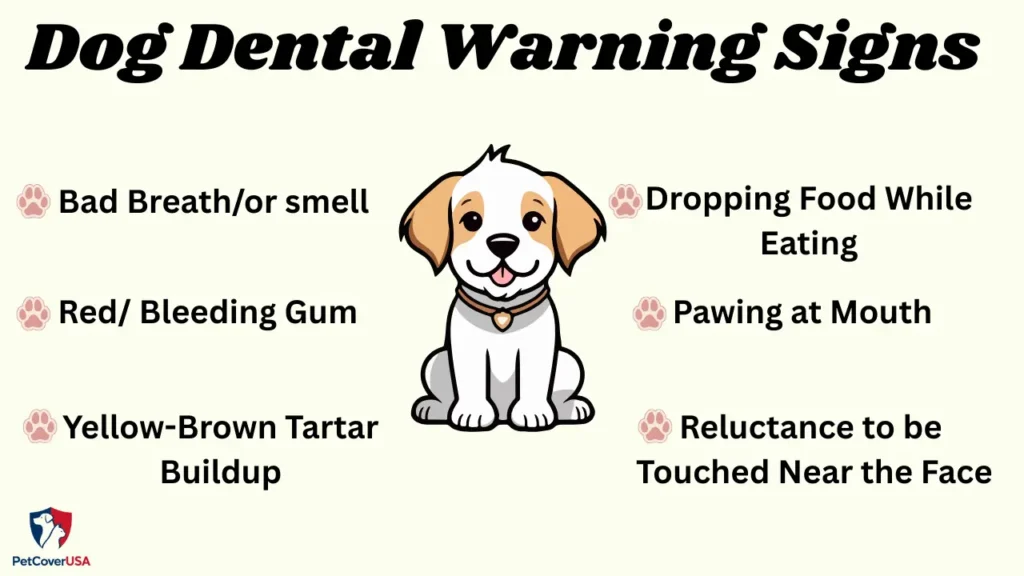
You are familiar with the normalization of your dog’s behavior. The following paragraphs will point out the symptoms that can indicate any abnormalities in your dog’s mouth:
- Continuous bad breath (which is not to be confused with the typical “dog breath”)
- Red, inflamed, bleeding gums
- The presence of yellow-brown coating on gums
- Dropping foods, chewing on one side of the mouth, or a preference for soft food only
- Using paws to scratch the mouth or increased salivation
- Refusal to be touched on the face
If you notice any of the symptoms, it is better to see a vet instead of waiting for the annual appointment.
Daily Home Care: What Actually Helps
| Method | How Often | What It Does |
|---|---|---|
| Brushing with dog toothpaste | 3–4x/week minimum, daily ideal | Removes plaque before it hardens into tartar |
| VOHC-accepted dental chews | Daily | Mechanically reduces plaque/tartar buildup |
| Water additives | Daily | Reduces bacterial load in the mouth |
| Dental/dry diets | Ongoing | Kibble texture helps scrape teeth while chewing |
Be aware of the brushing frequency. The only thing that is common among different experts is the fact that brushing your pets’ teeth on a daily basis is ideal.
You should know the following: the plaque can harden in just 24 hours, meaning your choice of “I’ll brush the teeth this weekend” will not work.
What If Your Dog Won’t Let You Brush Their Teeth?
That is without a doubt one of the most frequent irritations out there, and it is hardly addressed in articles. If brushing has turned out to be a struggle each time, you aren’t necessarily doing it wrong – some pups simply won’t tolerate it, especially when it comes to older dogs.
Here are a few practical alternative options, shown by effectiveness:
Flavored gauze wrapped around your finger (easier option than brushing);
Dental gels or sprays directly applied onto your dog’s gums (not needing brushing at all);
VOHC-approved water additives mixed with drinking water;
Textured dental chews or toys providing your dog with mechanical cleaning while chewing.
To be honest, none of these alternatives gives you the same results as brushing. In case your pet simply doesn’t want to tolerate brushing, home dental care probably won’t be enough in your case, and it may be advisable to consult your vet about increasing the professional cleaning frequency.
Professional Cleanings: Why Anesthesia Comes Up
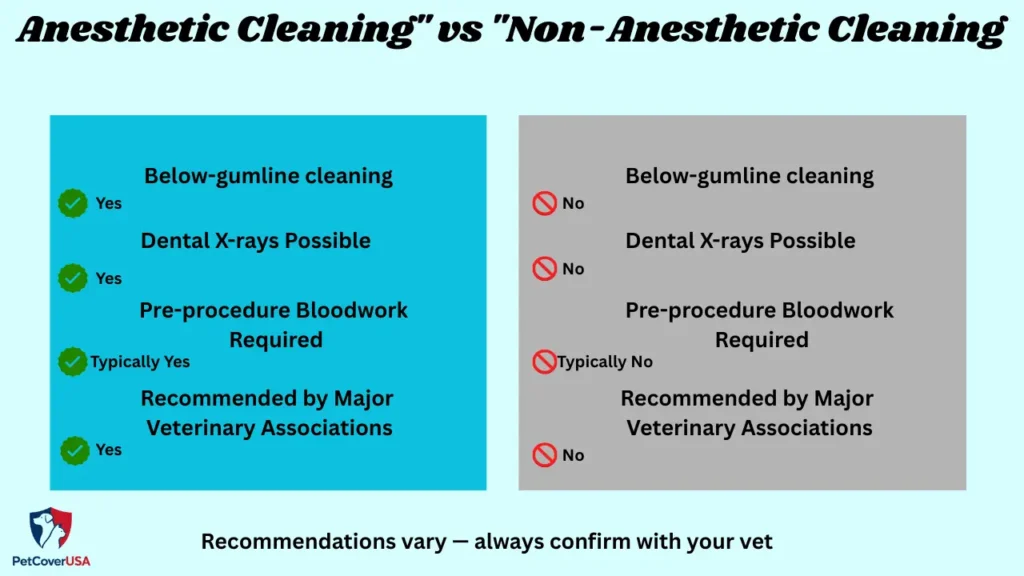
Pet Owners often struggle at this point. Professional dental cleaning done under anesthesia allows for X-ray images, cleaning of the areas below the gumline, and examination of the mouth, all of which can’t be done on a wriggly dog. Most of the tooth structure is below the gumline, and so is the majority of the disease — thus, with simple visual inspection you miss a lot.
You might have also heard of anesthesia-free or non-anesthetic cleaning, usually available at grooming salons and pet stores. Leading veterinary organizations like AVMA and AVDC do not support these methods. The main reason is this: without anesthesia, it is not possible to clean or understand what is happening below the gumline. Moreover, the pet must be restrained during the cleaning process.
Table: Anesthetic vs. Non-Anesthetic Cleaning (General Comparison)
| Anesthetic Cleaning | Non-Anesthetic Cleaning | |
|---|---|---|
| Below-gumline cleaning | Yes | No |
| Dental X-rays possible | Yes | No |
| Pre-procedure bloodwork | Typically required | Typically not required |
| Recommended by major vet associations | Yes | Generally no |
What Does It Actually Cost?
Prices can vary widely based on your location, the size of your pet, and whether or not you need to have extractions done. For this reason, any number listed should be taken as a general range rather than an actual quotation. A standard cleaning would usually cost between $300 and $700, and the figure can increase if X-rays show that other treatments are needed. Anesthesia is usually the main expense.
If costs are an issue for you, be sure to go to your veterinarian’s office and find out what the estimate will be before getting anything done. Most vet offices can provide you with an itemized estimate that breaks down all the costs separately.
Does Pet Insurance Cover Dental Care?
Nevertheless, this will depend on the insurance coverage since the best way would be to check with the insurance company rather than assuming anything. Typically, dental injuries (such as a chipped tooth from an injury) can be included under the coverage for injuries, while dental illness (e.g., gum disease, periodontitis, etc.) may require illness coverage, while routine checkups also need to be covered by a wellness rider, which is not automatically included.
Most policies also involve a waiting time between two and 30 days before the coverage starts. In addition, the conditions one received treatment for before acquiring the insurance will not be covered by dental policies. In case there are concerns about the expenses, one should check the specific insurance policy wording.
Two Things Even Attentive Owners Often Miss
Tooth resorption
Tooth resorption is a disease where the tooth begins to degenerate. Typically, it begins in the root, making it hard to detect under the gum. The incidence of tooth resorption increases with age, but the problematic aspect is the fact that most dogs suffer from the disease without presenting any clinical symptoms, and this fact becomes known only after an X-ray is performed. Moreover, this proves the importance of X-ray examinations in dogs.
Retained baby teeth
Retained baby teeth refer to a situation when puppies lose their first teeth at around 14-16 weeks and then their permanent teeth at 4-6 months. However, in some cases, the baby tooth may fail to fall out and remain next to the bigger tooth. If neglected, retained baby teeth in dogs may become a source of food and bacterial accumulation. Thus, it is recommended to inform a veterinarian about the situation and seek his/her guidance.
FAQ’s About Dog Dental Care Tips for Healthy Teeth
Do dogs get cavities?
True cavities are considered uncommon in dogs, mainly because their mouth bacteria, diet, and tooth shape differ from humans. Dogs are more prone to gum disease than tooth decay.
Is anesthesia safe for senior dogs during a dental cleaning?
Age by itself generally isn’t a reason to avoid a needed cleaning. Vets typically run pre-anesthetic bloodwork and adjust the anesthesia plan based on your dog’s health, not just their age.
Why does my dog need a dental X-ray if their teeth look clean?
Because most of the tooth and most disease is below the gumline, where a visual exam can’t reach. X-rays are the only way to check that area.
What’s the difference between plaque and tartar?
Plaque is a soft bacterial film that forms daily and can be brushed away. Left alone, it hardens into tartar within about a day or two, and tartar can only be removed with a professional cleaning.
Where This Leaves You
When your dog allows brushing, you can put together the best home regimen of daily brushing paired with a VOHC-approved chew. If not, gels, water additives, or chews do help but can’t effectively replace brushing, meaning you probably need to be going for more professional cleanings. In any case, an annual dental examination with your vet is necessary to discover things you can’t spot at home, including things hiding below the gumline. Whenever you aren’t sure about cost, coverage, or urgency, the best place you can get information relevant to your pet is your vet’s office.
Related Dog Dental Guides
If you’re looking for more detailed cleaning guidance, see our guide to dog dental cleaning at home and professionally .
If you’re researching whether dental procedures may be covered, read our guide to dog dental cleaning and pet insurance coverage .
For a broader look at dental-related insurance benefits, see our guide to pet insurance that covers dental care for dogs .
If you’re comparing the cost of dental coverage, our guide to affordable dog dental plans in the USA provides another useful comparison.
You can also learn about policies that may have no waiting period in our guide to pet dental insurance with no waiting period .
📅 Last Updated:

About the Author
M. Nouman is an independent researcher and writer focused on U.S. pet insurance. He reviews insurer policy documents, coverage terms, waiting periods, reimbursement options, exclusions, and publicly available veterinary and regulatory resources to create clear, research-based guides. His goal is to simplify complex insurance information so pet owners can make informed decisions based on reliable sources rather than marketing claims. Articles are reviewed and updated as policies and industry information change.
Areas of Research: Pet Insurance Policies, Coverage Analysis, Policy Comparisons, Waiting Periods, Reimbursement Models, Policy Exclusions, Claims Education