
Some links on this page may be affiliate links.
Lemonade Pet Insurance Review 2026: What I Would Check Before Buying
While checking Lemonade Pet Insurance, you may be focused on the monthly premium as one of the first aspects.
However, you shouldn’t rely solely on this figure for making your choice.
When you go through the process of receiving your quote, a pet insurance policy may look straightforward, but later you’ll meet more complex questions:
- What happens if my pet falls ill while there is a waiting time?
- What if my dog had some issues before I purchase the policy?
- What medical reports will Lemonade request?
- How much of the big bill will I be reimbursed for?
- Do I need to pay the vet first before the reimbursement takes place?
- What will happen if the issue affects both sides of the pet’s body?
- How long I am given to file a claim?
I have reviewed the current information about Lemonade and have compared important information with the general recommendations available from organizations such as AAHA, AVMA, and NAPHIA.
Thus, this analysis is not supposed to claim that “Lemonade is the best.”
Rather, it serves the purpose of giving you more clarity on what you are actually agreeing to when purchasing Lemonade.
Research note: I used Lemonade’s current guidelines and claims-related information for Lemonade-related details. Moreover, I relied on independent vets on industry concepts for general information. Customer comments and forum conversations are not being treated as legitimate data about Lemonade.

- The Lemonade Promise vs. The User Reality
- Deep Research Table: Lemonade vs. Top 2 Competitors
- Important Coverage Details to Check Before Choosing Lemonade
- The Bilateral Condition Risk
- User Research: Here’s What Actually Happens
- The Customer Service Reality: Getting Human Help When AI Fails
- State-by-State Premium Variations
- Pre-existing Conditions Deep Dive
- Wellness Plans: Are They Worth It?
- Senior-Pet Eligibility and Renewal”
- When Lemonade Makes Sense (And When It Absolutely Doesn’t)
- My Alternative Recommendations Based on Your Situation
- FAQ’s About Lemonade Pet Insurance Review 2026
- Final Verdict
Lemonade Pet Insurance at a Glance
Lemonade provides insurance plans for dogs and cats. Its basic pet insurance policy covers accidents and illnesses that are eligible under the terms of the policy, including the amount of the deductible, percentage of reimbursement, limits, exclusions, and waiting periods.
An important thing to note is that purchasing a pet insurance plan doesn’t mean you will be fully covered for your vet bills in the future.
Your policy details matter.
So that is why I would look at the following factors before trying to find out how much dog insurance per month costs.
| What to check | Why it matters |
|---|---|
| Waiting periods | A condition may not be eligible immediately |
| Medical history | Earlier symptoms or treatment can affect eligibility |
| Deductible | You pay this amount before reimbursement applies |
| Reimbursement | This determines the percentage used after the deductible |
| Annual limit | Your policy can have a maximum amount it will pay |
| Vet visit fees | These may depend on the coverage or add-on you selected |
| Claim deadline | You cannot wait forever to submit a claim |
| Medical records | Lemonade uses records when reviewing claims |
| Bilateral conditions | A problem on one side can affect the other side |
| Upfront vet payment | You may need to pay the veterinarian first |
What Does Lemonade Pet Insurance Actually Cover?
Information on pet insurance provided by Lemonade indicates coverage of possible accidents and diseases.
According to Lemonade’s examples, possible coverages include diagnostics, treatments, drugs, hospitalization, surgery, and emergency treatment.
The last part is vital.
The term ‘eligible’ is extremely important in any pet insurance policy.
A given treatment could be one of the treatments covered by Lemonade, but you cannot be certain about your claim due to:
- a waiting period
- a pre-existing condition
- your deductible
- your reimbursement percentage
- your annual coverage limit
- an exclusion in the policy
Lemonade lists these as factors that can affect whether a claim is paid.
The simple way to think about it
Don’t ask only:
“Does Lemonade cover surgery?”
Ask:
“Would this particular surgery be eligible under my policy, for this particular pet, at this particular time?”
That is a much better question to ask before buying any pet insurance.
Waiting Periods: When Does Coverage Actually Start?
My first step after getting a Lemonade quote would be to note down this fact.
I have taken down information from the current waiting-period guide of Lemonade that includes:
- 0 days for accidents
- 14 days for illnesses
- 30 days for orthopedic conditions
The waiting period for any condition starts at the beginning of one’s health insurance policy, and the coverage begins only after the waiting period is over.
Nonetheless, I will not just copy those waiting periods over all other health insurance policies for all insurance needs.
It has to be noted that Lemonade does have some stipulated conditions that differentiate policies of certain states, while your own insurance policy documents occupy a primary place among other sources I trust when purchasing insurance.
A simple example
Let’s say your insurance goes into effect on the first of June.
Within the next week, your dog starts showing symptoms of a health concern.
One misconception you should avoid is that “the policy covers the costs since I’ve taken the policy.”
Waiting periods play the role of a critical part of the pet insurance contracts.
For this reason, there’s a noticeable difference between getting pet insurance prior to your pet’s trouble and doing so after noticing a medical issue.
What If My Pet Shows Symptoms Before the Waiting Period Ends?
| Feature | Lemonade | ASPCA | Healthy Paws |
|---|---|---|---|
| Premium | Varies by pet, location, and plan | Varies by pet, location, and plan | Varies by pet, location, and plan |
| Illness waiting period | Check current policy | Check current policy | Check current policy |
| Orthopedic/ACL waiting period | State- and policy-specific | State- and policy-specific | State- and policy-specific |
| Reimbursement | Available options vary by policy | Available options vary by policy | Available options vary by policy |
| Annual limit | Selected plan terms apply | Selected plan terms apply | Plan terms apply |
| Wellness option | Optional preventative packages may be available | Optional preventive coverage may be available | Check current availability |
| Medical records | May be requested during claim review | Policy terms apply | Policy terms apply |
| Direct vet payment | Generally reimbursement-based | Generally reimbursement-based | Generally reimbursement-based |
| Renewal and age rules | Confirm current state policy | Confirm current policy | Confirm current policy |
Lemonade could be a good option for people who like to do everything online and pick and choose the aspects of the policy they need. Nonetheless, which policy is best depends on various factors such as the age and breed of the pet, location, risk of orthopedic injury, amount of deductible, reimbursement rates, annual limit, exclusions, and conditions of renewal. Make sure to obtain quotes and policy docs instead of only checking premiums.
Important Coverage Details to Check Before Choosing Lemonade
Orthopedic and Cruciate Waiting Periods
Lemonade has a waiting period of 14 days in case of other illnesses and a waiting period of 30 days in case of orthopedic conditions. However, some policy documents and states may have different rules regarding ACL/CCL, and thus dog owners are required to check the effective waiting time for their policies before starting the enrollment. Source : Lemonade
This is especially significant for dog owners of active dogs and those breeds that are more vulnerable to joint and ligament issues. Particular breeds are at risk of injury but are not necessarily affected.
Before acquiring coverage, one is required to ask Lemonade:
- What is the ACL/CCL waiting period in my state?
- Does the orthopedic waiting period include diagnosis and treatment together with any exemptions?
- Will the symptoms present during the waiting period be taken into consideration in future claims?
It is recommended not to make comparisons between the insurance companies based on general statistics only, since waiting periods differ among the states, policy types, coverage types, and dates when they become effective.
If your dog is active or is more prone to orthopedic problems, do not take decision by just reviewing general waiting periods. Check your state’s actual policy wording and ask Lemonade specifically how ACL/CCL and other orthopedic conditions are handled.
Medical Records and Pre-Existing Conditions
Lemonade possesses the ability to request veterinary records or other necessary documents during the time of evaluating a claim. These documents help the insurer identify whether the injury/illness in question existed before the beginning of the coverage or during the waiting period. According to Lemonade, the records are helpful in determining the nature of the illness or injury. Source: Lemonade
A previous problem does not automatically imply that a subsequent claim will be turned down. The insurer will usually take into account the time of the occurrence of the illness as well as the status of the existing claim.
For instance, an old entry about limping could be relevant when it comes to a certain knee claim, while an ear infection that has nothing to do with this claim will not be crucial.
Before enrolling, request veterinary records from your pet and check for:
- Diagnoses, recurring problems, information on limping, allergies, vomiting, etc.,
- Recommended medical procedures that had already been mentioned,
- Diseases that might have appeared during the previous period of waiting.
In addition, you can ask the insurer the question as to whether a certain problem is going to affect future coverage.
Get a copy of your dog’s medical records from your vet before making any Insurance and review previous symptoms, diagnosis, or recommended treatments. If you are unsure whether something could affect your future coverage, ask the insurer before enrolling and keep the response for your records.
Claim Review Can Vary
Although simple claims could require very little documentation, complex claims could need invoices, medical records, treatment notes, or clarification from the veterinarian. Lemonade states that its claims could be processed with the help of automated systems or its claims staff.
Various public reviews show different experiences. While some customers claim that simple claims have been processed very quickly, others have gone through long processes after additional documentation or information was requested. These reports should not be taken as a rule.
Do not assume that:
- All claims will be processed quickly.
- A claim will be processed based on another customer’s claim.
- If a claim was approved before, it will be approved again.
- If you get your claim denied, it means that the insurer has done something wrong.
In case of getting your claim delayed or denied, read the explanation attentively and send in the documents mentioned in the policy or correspondence regarding your claim.
Keep receipts, veterinary records, and communications from the insurance provider in one place. If Lemonade insurance asks for more documentation later, being organized will let you see what is being requested.
Premiums and Renewal Pricing
There are various determinants contributing to the variation in premiums of lemonades, like the age and breed of the pet, the policyholder’s location, the deductible, the reimbursement percentage, the annual limit, and the add-ons that have been selected. A quote is not a commitment to the renewal price.
Premiums might change at the time of the renewal due to the change in the age of the pet and due to the change in the pricing and veterinary costs. However, the amount varies per policyholder and cannot be construed as the national average.
The following important aspects need to be noted while comparing quotes:
- Age and breed of the pet.
- Zip code.
- Deductible.
- Reimbursement percentage.
- Annual limit.
- Optional coverage.
- Quote date.
- The amount charged every month.
Save your quote and policy terms on renewal, as well as the current premium and its parallels with the old one, to verify if the deductible/limits/reimbursement rate/other terms have changed.
What to Check Before Enrolling
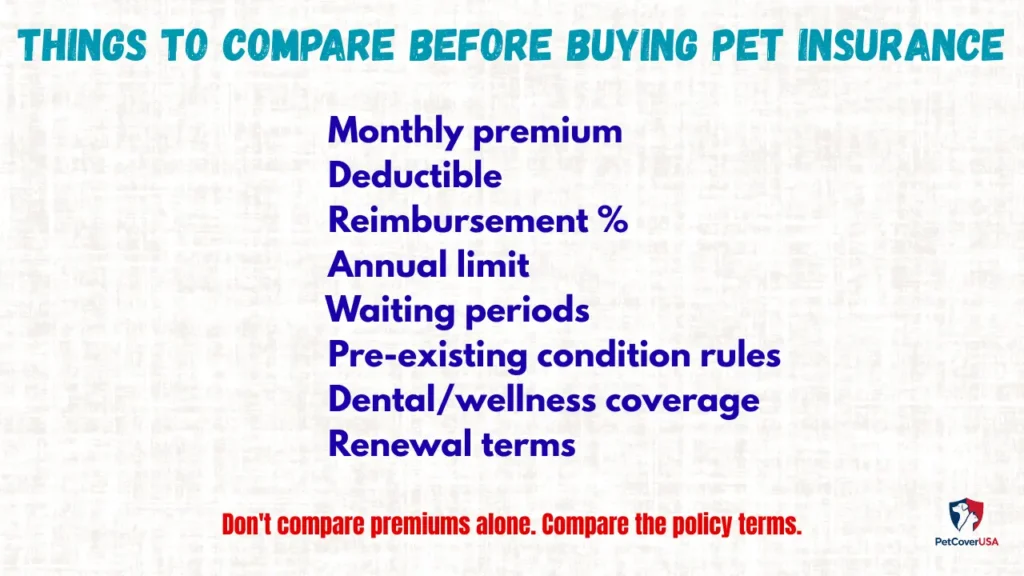
For those interested in app-based management of pet insurance and preferences for customization, Lemonade can be a suitable choice. However, before proceeding with a purchase, be sure to check the following points:
- Waiting period for illnesses and orthopedic problems.
- Rules for cruciate ligaments and conditions on both sides of the body.
- Definitions of existing conditions.
- Limits for payments and percentage of reimbursement.
- Amount to pay as a deductible.
- Limitations on routine or preventive treatment packages.
-Limits on how age and location may impact the policy.
-Rules pertaining to renewals of insurance.
-Claims submission requirements.
It is worth noting that it is not sufficient to only find out whether Lemonade’s prices are low; one must also find out if waiting periods, exclusions, limits, and rules regarding renewals fulfill one’s needs as well as fall within budget.
Source: The information published by the company indicates that there are two waiting periods – one is 14 days for illness and 30 days for orthopedic problems, and there is a process for reviewing medical records related to existing conditions. The coverage can vary based on location.
The Bilateral Condition Risk
A bilateral condition refers to the condition in which two corresponding body parts, such as hips, knees, eyes, or elbows, are affected. If one side of the affected part shows symptoms before the policy starts or during the waiting period, any claim in relation to the condition pertaining to the other affected side may also be impacted in subsequent policies.
The insurer may take into account the diagnosis of the condition, timing, medical history, and policy terms and conditions in order to judge whether both conditions are related to each other. According to PetMD, examples of bilateral conditions include hip dysplasia, ruptured cruciate ligament, glaucoma, cataracts, and patellar luxation. Any condition may still be considered pre-existing even if there is no formal diagnosis, provided there are symptoms available in records beforehand.
When a pet shows signs on either knee, hip, eye, or other paired area of the body, figure out how that history can influence the other side of his body rather than just looking for confirmation of whether policies include expressly stated “bilateral conditions” or not.
User Research: Here’s What Actually Happens
According to customer conversations, claims experiences can differ quite a bit. While some people report that straightforward wellness or small claims get resolved in no time, others find that complicated cases involving surgeries, emergency treatments, or questions about pre-existing conditions take more time and documentation.
Some of the most common problems raised in consumer discussions include:
- Requests for itemized bills or vet records.
- Questions about whether a condition was pre-existing.
- Claims related to bilateral conditions.
- Claims lacking complete records and documents.
- Disagreements regarding whether a treatment is covered.
The examples mentioned are anecdotal cases and should not be considered as the processing times, approval rate, or average reimbursement at Lemonade. The processing time depends on the claim, the terms of the policy, medical records, and information that the company receives.
For accurate claim-status information, policyholders are advised to refer to the Lemonade app or contact Lemonade directly.
The Customer Service Reality: Getting Human Help When AI Fails
Through its application, email, and telephone, Lemonade takes a digital-first approach to support. Clients can reach Lemonade at 844-733-8666 or help@lemonade.com.
Some questions can be answered using automated support, while more complicated coverage or claim topics may need support from the claims team or the support team. Since customers experience different and varying response times, there is no guarantee of the time taken for a response.
You should keep your claim number, payment receipts, veterinary documents, and other messages on hand when contacting Lemonade. To know about the support hours and contact options, one has to visit Lemonade’s website.
State-by-State Premium Variations
The premiums for Lemonade can vary depending on the area, as there are differences in terms of veterinary services, regional pricing, and the availability of policies. Furthermore, while the estimates may provide some guidance on the prices used, the premium for your policy will depend on several factors such as your pet’s age, breed, location, policy deductible, percentage of reimbursement, and annual limit, among others.
For example, a look at the published cost guide confirms that the price estimates will be available for different states, while independent quote comparison shows that even the same breed will command different premiums in different locations. In other words, the quoted price is more of an example and does not guarantee the premium you will pay.
Before you start applying policies, it is advisable to compare and use the same elements in each quote:
- Pet breed
- Location ZIP code
- Deductibles
- Reimbursement percentage estimates
- Annual limit
- Optional add-ons
While the starting price advertised here may not be an average throughout the country, the importance of obtaining quotes relating to your particular pet and address cannot be overstated.
Pre-existing Conditions Deep Dive
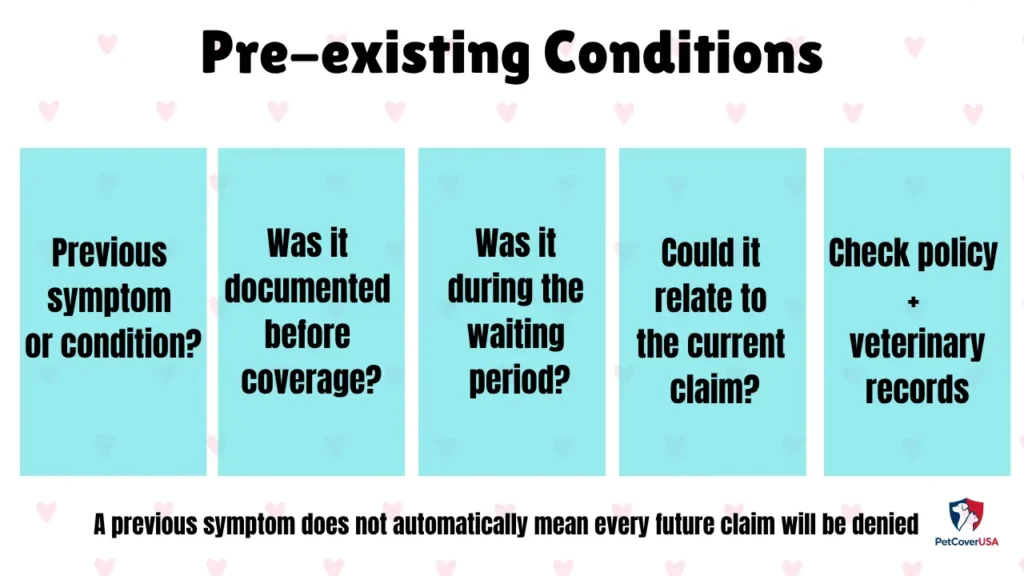
A pre-existing condition typically refers to an illness, injury, diagnosis, treatment, or related signs that were present before the policy came into effect or before the waiting time was completed. Lemonade might look into your pet’s medical history to determine whether the claim is related to any previous illness.
Specifically, a previous note about an episode of lameness may be of relevance to a future knee or hip claim. Past allergy signs can be considered when filing a future skin-related claim. Past occurrences do not mean that each claim will be rejected, as the final decision depends on the nature of the illness, the time, history, and insurance policy.
Lemonade might reconsider some curable conditions after the recommended waiting time specified by the policy is fulfilled and the pet is symptom-free. Long-term conditions and some orthopedic or ligament health problems are not included.
Things to do before enrollment:
- Ask for veterinary records about your pet’s previous treatment.
- Find out about the diagnoses, signs, treatment, medication, and any other notes in your pet’s records.
- Ask Lemonade what effect a medical condition will have on your pet’s health coverage.
- Keep a copy of the answer as part of your insurance papers.
- Do not postpone veterinary help in order to wait for the symptom-free period.
Lemonade may require medical history covering the last year, including the waiting period for the disease; if your pet is less than one year old, it may require records from birth to the waiting period.
Take into account that the policies differ between states, and policy terms are subject to change.
Wellness Plans: Are They Worth It?
Lemonade has introduced a variety of preventative-care plans, which include the Preventative, Preventative+, and Puppy/Kitten plans. The plans cover various treatments such as wellness exams, vaccinations, blood tests, parasite prevention, spay/neuter, and microchipping. Eligible states have included dental cleaning. Source: Lemonade
The Puppy/Kitten packages are meant for pets that are less than 2 years old. Along with the regular services, the Puppy/Kitten package includes the spay/neuter and microchipping of pets. The Preventative+ package includes the dental cleaning once a year as well as medications for fleas, ticks, or heartworms.
It is worth looking into a wellness plan if you intend on utilizing most of its offerings. To assess the value of the package, take its annual fee and determine how it stacks up against reimbursement limits for the treatments in question. Don’t compute the package cost against full retail prices for procedures because the actual treatment costs could be more than what is covered.
Routine dental cleaning and treatment of dental disease are not exactly the same thing. The person treating your pet might find dental issues, and either would treat it according to another policy, or routine dental cleaning is not included. Make sure you know what’s covered before you book the appointment.
Source: Lemonade
Senior-Pet Eligibility and Renewal
When comparing different pet insurance companies, age is an important factor. The age of the pet, including its breed and state, as well as policy requirements, may all have a different effect on Lemonade’s acceptance of pets for enrollment in its insurance program. Older pets could incur higher costs for their insurance, while certain pre-existing conditions may not be covered. Confirm Lemonade’s current eligibility requirements before enrolling your pet in its program.
Source: Finance.Yahoo
Pet owners with senior pets need to find out from their new insurance company if they will be able to renew the policy after their pet is enrolled and if previously covered conditions will still qualify for coverage upon renewal. This information may be more important than the introductory price since the specific condition that was diagnosed prior to switching insurance companies may become non-coverable even if the previous condition was able to be covered before.
When Lemonade Makes Sense (And When It Absolutely Doesn’t)
After all this research, here’s my honest recommendation framework:
Lemonade may be worth considering if:
- You have a young pet with limited prior medical history.
- You prefer app-based enrollment, policy management, and claims.
- You want customizable deductibles, reimbursement rates, and annual limits.
- You may use optional preventive-care benefits.
- You insure multiple pets; Lemonade advertises up to a 10% multi-pet discount.lemonade
- You are comfortable paying the veterinarian first and seeking reimbursement for eligible expenses
When You Should Compare Alternatives
Compare other providers carefully if:
- Your dog may be at higher risk for orthopedic or cruciate ligament problems, and the applicable waiting period is important to you.
- Your pet already has a medical history that could affect pre-existing-condition exclusions.
- You want predictable renewal pricing or specific senior-pet eligibility.
- You prefer direct veterinary payment instead of reimbursement.
- You need a particular coverage limit, dental benefit, or wellness package.
- You live in a location where quotes are higher than expected.
Premiums, waiting periods, discounts, age eligibility, and coverage limits vary by state, pet, policy, and selected options. Get a quote using your own ZIP code and compare the policy documents—not just the starting premium—before enrolling.
My Alternative Recommendations Based on Your Situation
ASPCA Pet Health Insurance
ASPCA may be worth comparing if you want customizable accident-and-illness coverage, optional preventive benefits, and coverage options that vary by pet and state.
May suit:
- Owners comparing long-term coverage.
- People who want optional preventive-care benefits.
- Pet parents looking for alternatives to Lemonade.
Premiums, waiting periods, limits, exclusions, and renewal terms vary by pet, location, and policy. Check the current policy documents before enrolling.
Pets Best
Pets Best may be worth considering if you want flexible coverage options and a range of deductible or reimbursement choices.
May suit:
- Budget-conscious pet owners.
- First-time insurance buyers.
- Owners are comparing basic accident-and-illness plans.
Do not describe Pets Best as the “lowest-priced” provider without comparing identical quotes for the same pet and coverage settings.
Healthy Paws
Healthy Paws may appeal to owners who prefer unlimited annual coverage. Its published coverage information also includes specific rules for cruciate ligament and bilateral conditions, so active-dog owners should review those terms carefully.
May suit:
- Owners who value unlimited annual benefits.
- People are comparing coverage for active dogs.
- Pet parents who do not need a wellness add-on.
Confirm the current orthopedic waiting period, hip dysplasia rules, deductible, and state availability before enrolling.
Trupanion
Trupanion uses a per-condition deductible structure rather than a traditional annual deductible, and its VetDirect Pay option may allow participating veterinary hospitals to receive payment directly. Availability depends on the veterinary hospital and policy terms. marketwatch
May suit:
- Owners concerned about chronic or recurring conditions.
- People are comparing per-condition deductibles.
- Pet parents whose veterinarian supports direct payment.
Trupanion may cost more than some alternatives, so compare the deductible, reimbursement percentage, waiting periods, and monthly quote for your pet.
FAQ’s About Lemonade Pet Insurance Review 2026
In most states, Lemonade may reconsider certain temporary pre-existing conditions if they fully resolve and remain free from recurrent signs, symptoms, and continued treatment for at least 12 consecutive months. Chronic or recurring conditions may remain excluded. Eligibility depends on the policy, state, condition, and veterinary records.
Lemonade treats cruciate ligament conditions as orthopedic conditions that may have a longer waiting period than illnesses. Lemonade’s published information lists a 30-day orthopedic waiting period, but the applicable terms can vary by state and policy. Check your policy documents for the exact waiting period before enrolling.
Your premium may change at renewal. Pricing can be affected by factors such as your pet’s age, location, veterinary-cost trends, selected coverage, and policy changes. The amount varies by pet, state, and renewal period, so review each renewal notice carefully.
If Lemonade denies a claim, review the denial explanation and follow the appeal instructions included in your claim correspondence or policy documents. Provide relevant invoices, veterinary records, and supporting information within the stated deadline. Appeal requirements may vary by state and policy.
You can apply for Lemonade after having another pet insurance policy, but conditions or symptoms that existed before the new policy or during its waiting periods may be treated as pre-existing. The new policy will apply its own exclusions, waiting periods, and underwriting rules. Compare both policies before cancelling existing coverage.
Dental coverage depends on the policy and any dental or preventative add-on selected. Routine dental care and treatment for dental illness may be handled differently. Pre-existing dental conditions and treatment during applicable waiting periods may be excluded. Check your policy documents for covered services, limits, and eligibility requirements.
A bilateral condition involves paired body parts, such as the hips, knees, or eyes. If signs of a related condition appear before coverage begins or during an applicable waiting period, a later claim involving the other side may be affected under the policy terms. The outcome depends on the diagnosis, timing, medical records, and policy wording.
Processing time depends on the claim type and whether Lemonade needs additional invoices, medical records, or veterinary information. Simple claims may be handled more quickly, while complex emergencies or surgeries may require additional review. Check the Lemonade app or contact customer service for the status of a specific claim.
The initial quote and renewal price may differ because premiums can change with factors such as your pet’s age, location, veterinary-cost trends, coverage selections, and policy changes. Long-term cost varies by pet and policy. Compare the renewal terms and premium instead of relying only on the introductory price.
Update your address with Lemonade when you move because premiums, availability, and policy terms may vary by state. If Lemonade does not offer coverage in your new state, contact the company about your options, cancellation terms, and any applicable refund. Do not cancel existing coverage until you understand how the move affects your policy.
Final Verdict
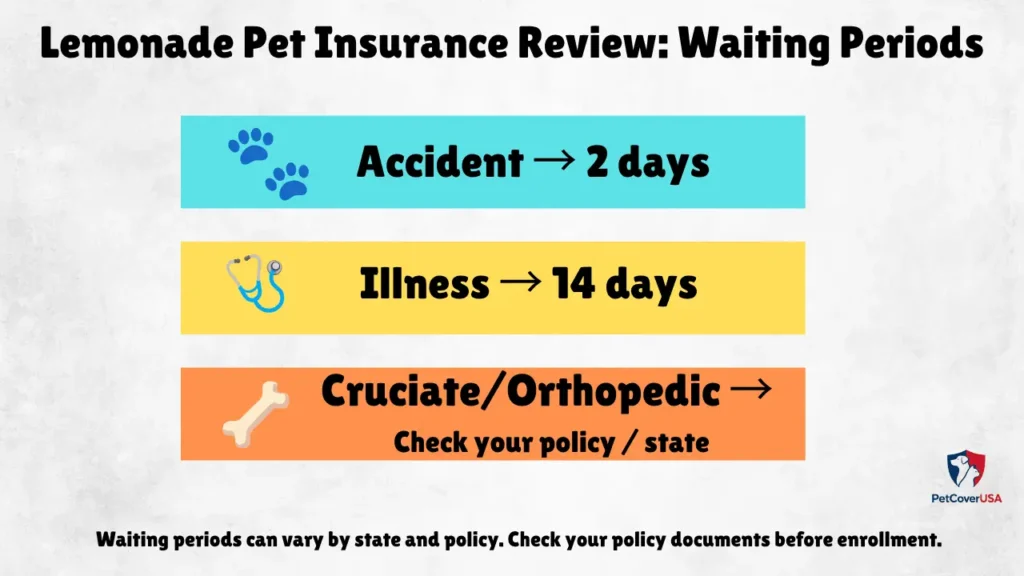
If you are looking for an online service that has customizable plans and wellness benefits, you might want to check out Lemonade. Lemonade has stated on its website that illnesses have a waiting period of 14 days, while for orthopedic conditions, the waiting period is 30 days. Moreover, some state-mandated policy disclosures also state that the waiting time for accidents is only two days, and the waiting time for cruciate ligament conditions is six months. Please check your specific policy documents based on your state before you enroll, as policies differ from state to state.
It’s possible that Lemonade would be a good option for younger and healthy pets, but age isn’t the only factor to consider. Owners may also think about breed specifics, medical history, deductibles, reimbursements, and options for other prices and benefits.
Compare Lemonade If
- You prefer app-based policy management.
- You want customizable coverage options.
- You may use preventative care benefits.
- You are comfortable paying the veterinarian first and requesting reimbursement.
- The applicable orthopedic and cruciate waiting periods fit your needs.
Compare Other Providers If
- Your dog may need protection for orthopedic or cruciate conditions sooner.
- You prefer direct veterinary payment where available.
- You want a per-condition deductible structure.
- You need unlimited annual coverage.
- You are comparing senior-pet eligibility or long-term renewal terms.
- Your pet already has a medical history that may affect exclusions.
Lemonade should not be assessed solely based on its initial premium or app function, in my opinion. The key things to compare are present policy terms, waiting periods, exclusions, renewal pricing, reimbursement scheme, and claim requirements.
To make an informed decision, it is vital to receive quotes for the same pet from Lemonade and two other providers, wishing to compare monthly premiums, deductibles, reimbursement rates, annual limits, rules on orthotic procedures, exclusions of previously existing conditions, optional coverages, and renewal terms. Five- or ten-year estimates can provide insight, but they are merely estimates deemed uncertain since premiums and terms can change.
No provider is the best provider for all pets; one has to choose a plan that suits the specific circumstances and the ability of the owner to cope with unexpected veterinary expenses.
Related Pet Insurance Guides
If you’re comparing Lemonade with other pet insurance options, our guide to pet insurance coverage and benefits explains what different policies may include.
If affordability is one of your main concerns, see our guide to affordable pet insurance plans for dogs and cats to explore coverage and cost considerations.
Waiting periods can affect when certain benefits become available. Our guide to pet insurance with no waiting period explains this part of pet insurance in more detail.
Another important consideration is whether a policy covers conditions that existed before enrollment. Learn more in our guide to pre-existing conditions and pet insurance .
Finally, if you’re comparing Lemonade with another major provider, read our Embrace pet insurance review for another provider-specific perspective.
📅 Last Updated:

About the Author
M. Nouman is an independent researcher and writer focused on U.S. pet insurance. He reviews insurer policy documents, coverage terms, waiting periods, reimbursement options, exclusions, and publicly available veterinary and regulatory resources to create clear, research-based guides. His goal is to simplify complex insurance information so pet owners can make informed decisions based on reliable sources rather than marketing claims. Articles are reviewed and updated as policies and industry information change.
Areas of Research: Pet Insurance Policies, Coverage Analysis, Policy Comparisons, Waiting Periods, Reimbursement Models, Policy Exclusions, Claims Education
Looks like L does not cover male castration.
AI is not customer friendly. No customer service phone number. If costs do not align with line items, there is no way to resolve claims.
Previous claims were either denied or paid minimal amount due to co-pays being so high.
Very unsatisfied. I do not recommend Lemonaid Pet Insurance.
Thank you for sharing your experience, Donald. We’re sorry to hear about the challenges you faced with Lemonade Pet Insurance. It’s true that not all plans cover elective procedures like castration, and high co-pays can feel frustrating. We’ll be updating our review to reflect more details about claim processes and customer support so pet parents can make the most informed choice